Haight-Ashbury

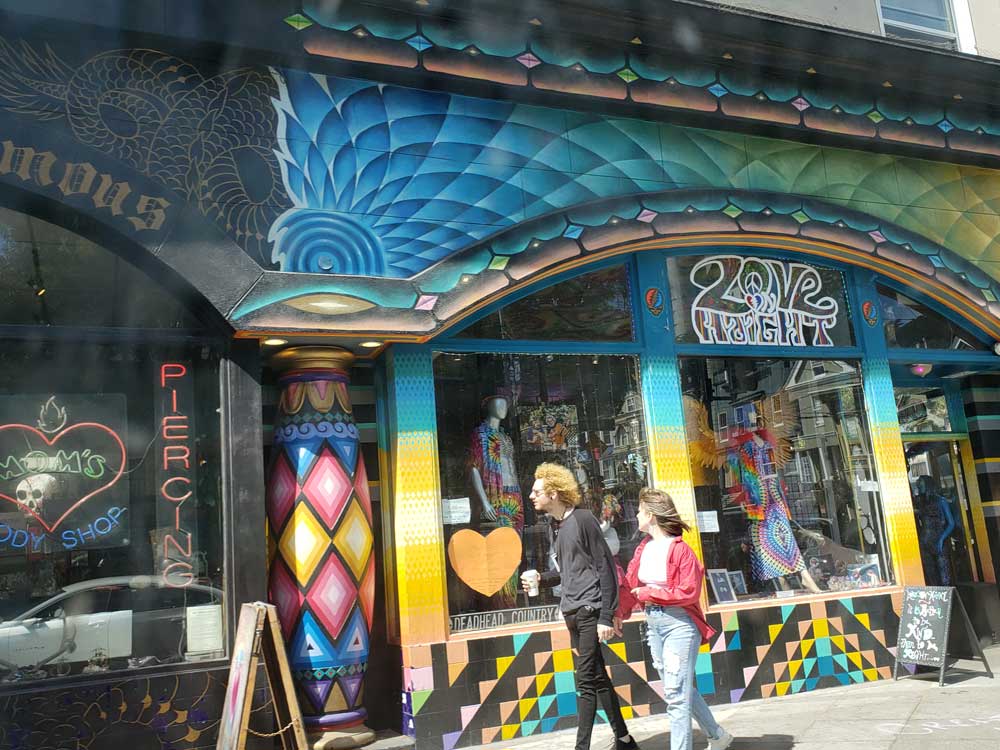
Mike McBey, CC BY 2.0, via Wikimedia Commons; Image Size Adjusted

Neighborhood is known as one of the main centers of the hippie and counterculture of the 1960s

General Information
Hours:
24/7
Fees:
No entrance fees
Pet Policy:
Pets allowed
Closest cities with hotels:
San Francisco
Seasons:
Seasons: All year
Location:
Website:
Rating:
5.0

Head southwest on Market St toward 12th St. Turn right onto Haight St. Turn left onto Central Ave. Turn right onto Waller St. Turn right onto Clayton St.

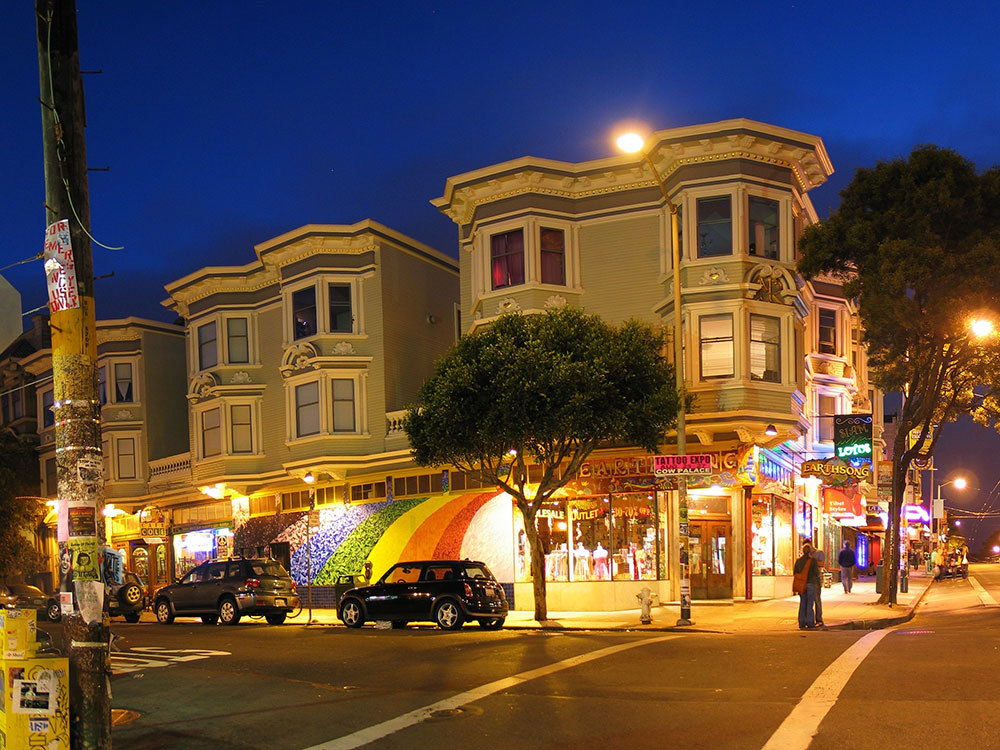
Haight-Ashbury is a district of San Francisco, named for the intersection of Haight and Ashbury streets. The neighborhood is known as one of the main centers of the hippie and counterculture of the 1960s.

The district generally encompasses the neighborhood surrounding Haight Street, bounded by Stanyan Street and Golden Gate Park on the west, Oak Street and the Golden Gate Park Panhandle on the north, Baker Street and Buena Vista Park to the east and Frederick Street and Ashbury Heights and Cole Valley neighborhoods to the south.

The street names commemorate two early San Francisco leaders: pioneer and exchange banker Henry Haight, and Munroe Ashbury, a member of the San Francisco Board of Supervisors from 1864-70.

The Beats had congregated around San Francisco's North Beach neighborhood from the late 1950s. Many who could not find accommodation there turned to the quaint, relatively cheap and underpopulated Haight-Ashbury. Later, the Haight-Ashbury district is noted for its role as one of the main center of the hippie movement. The Summer of Love (1967) and much of the counterculture of the 1960s have been synonymous with San Francisco and the Haight-Ashbury neighborhood ever since.

The Haight-Ashbury's elaborately detailed, 19th century, multi-story, wooden houses became a haven for hippies during the 1960s, due to the availability of cheap rooms and vacant properties for rent or sale in the district; property values had dropped in part because of the proposed freeway. The alternative culture that subsequently flourished there took root, and to a great extent, has remained to this day.

The mainstream media's coverage of hippie life in the Haight-Ashbury drew the attention of youth from all over America. Activities in the area were reported almost daily. The Haight-Ashbury district was sought out by hippies to constitute a community based upon counterculture ideals, drugs, and music. This neighborhood offered a concentrated gathering spot for hippies to create a social experiment that would soon spread throughout the nation.

The first head shop, Ron and Jay Thelin's Psychedelic Shop, opened on Haight Street on January 3, 1966, offering hippies a spot to purchase marijuana and LSD, which was essential to hippie life in Haight-Ashbury. Along with businesses like the coffee shop The Blue Unicorn, the Psychedelic Shop quickly became one of the unofficial community centers for the growing numbers of hippies migrating to the neighborhood in 1966-67. The entire hippie community had easy access to drugs, which was perceived as a community unifier.

During the 1967 Summer of Love, psychedelic rock music was entering the mainstream, receiving more and more commercial radio airplay. The Scott McKenzie song "San Francisco (Be Sure to Wear Flowers in Your Hair)," became a hit that year. The Monterey Pop Festival in June further cemented the status of psychedelic music as a part of mainstream culture and elevated local Haight bands such as the Grateful Dead, Big Brother and the Holding Company, and Jefferson Airplane to national stardom. A July 7, 1967, Time magazine cover story on "The Hippies: Philosophy of a Subculture," an August CBS News television report on "The Hippie Temptation" and other major media interest in the hippie subculture exposed the Haight-Ashbury district to enormous national attention and popularized the counterculture movement across the country and around the world.

The Summer of Love attracted a wide range of people of various ages: teenagers and college students drawn by their peers and the allure of joining a cultural utopia; middle-class vacationers; and even partying military personnel from bases within driving distance. The Haight-Ashbury could not accommodate this rapid influx of people, and the neighborhood scene quickly deteriorated. Overcrowding, homelessness, hunger, drug problems, and crime afflicted the neighborhood. Many people left in the autumn to resume their college studies. On October 6, 1967, those remaining in the Haight staged a mock funeral, Digger happening, "The Death of the Hippie" ceremony.

In the 1980s, the Haight became an epicenter for the San Francisco comedy scene when a small coffee house off Haight Street called The Other Café at 100 Carl Street (currently the restaurant Crepes on Cole) became a full-time comedy club that helped launch the careers of Robin Williams, Dana Carvey, and Whoopi Goldberg.

This article uses material from the Wikipedia article "Haight-Ashbury", which is released under the Creative Commons Attribution-Share-Alike License 3.0

Tony Hisgett from Birmingham, UK, CC BY 2.0, via Wikimedia Commons ; Image Size Adjusted
Tobias Kleinlercher / Wikipedia, CC BY-SA 3.0, via Wikimedia Commons ; Image Size Adjusted
David Ohmer from Cincinnati, USA, CC BY 2.0, via Wikimedia Commons ; Image Size Adjusted
Daniel Schwen, CC BY-SA 2.5, via Wikimedia Commons ; Image Size Adjusted