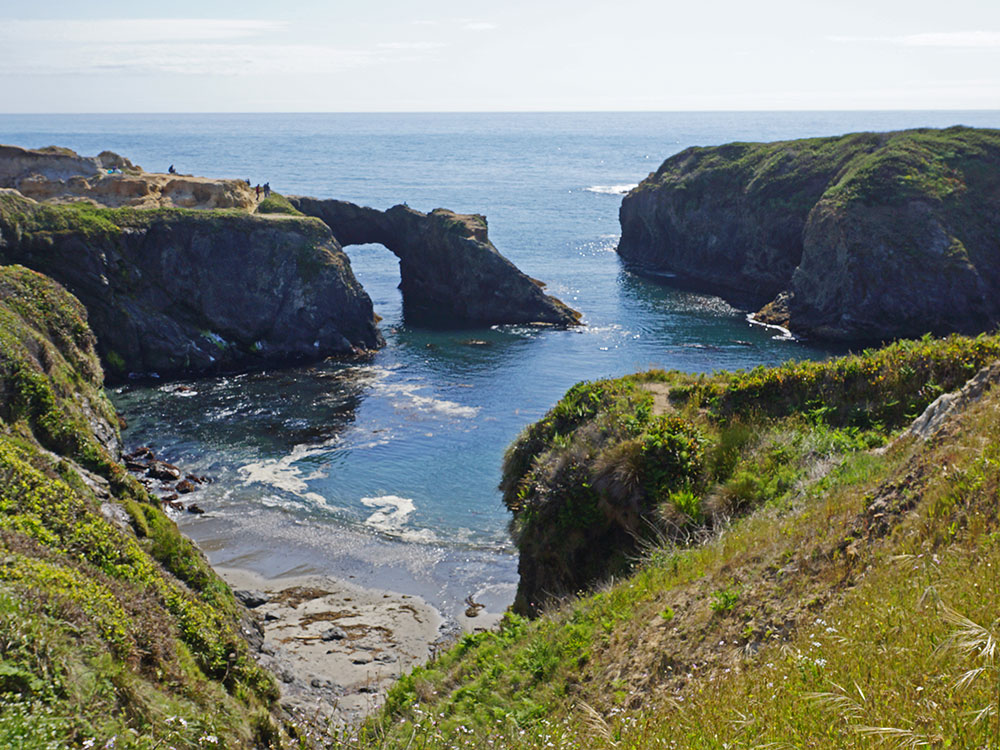

Park features 7,630 ft of rocky ocean shores .75 mi wide from north to south at its widest point, and extends for three miles from east to west
General Information
Some trails may be seasonally closed due to weather or maintenance
Senior discount: $7
Walk-in and bike access: Free
How to Get There
From Mendocino, CA (2 mi): Head north on CA-1 for approximately 2 miles; turn left onto Russian Gulch State Park Road and follow signs to the park entrance.
Overview
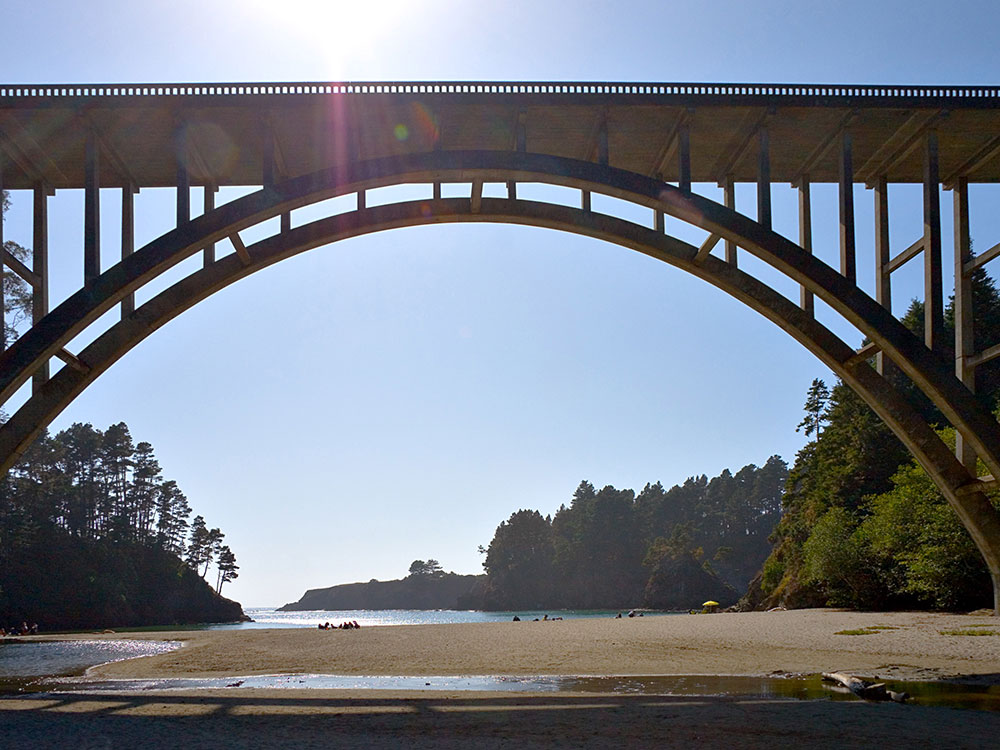
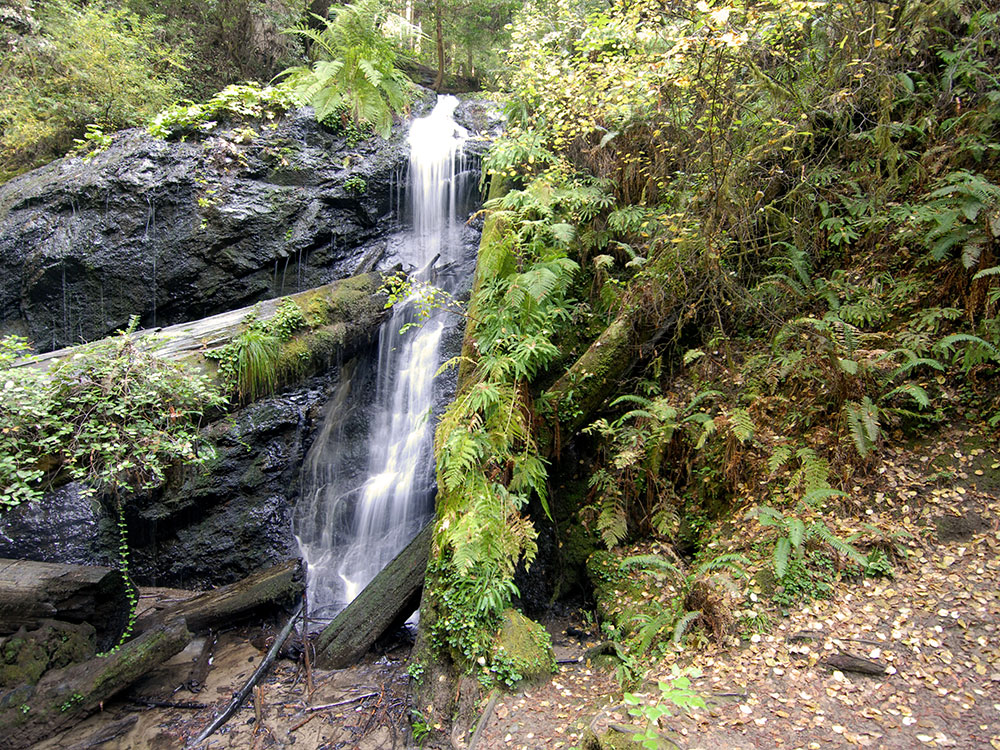
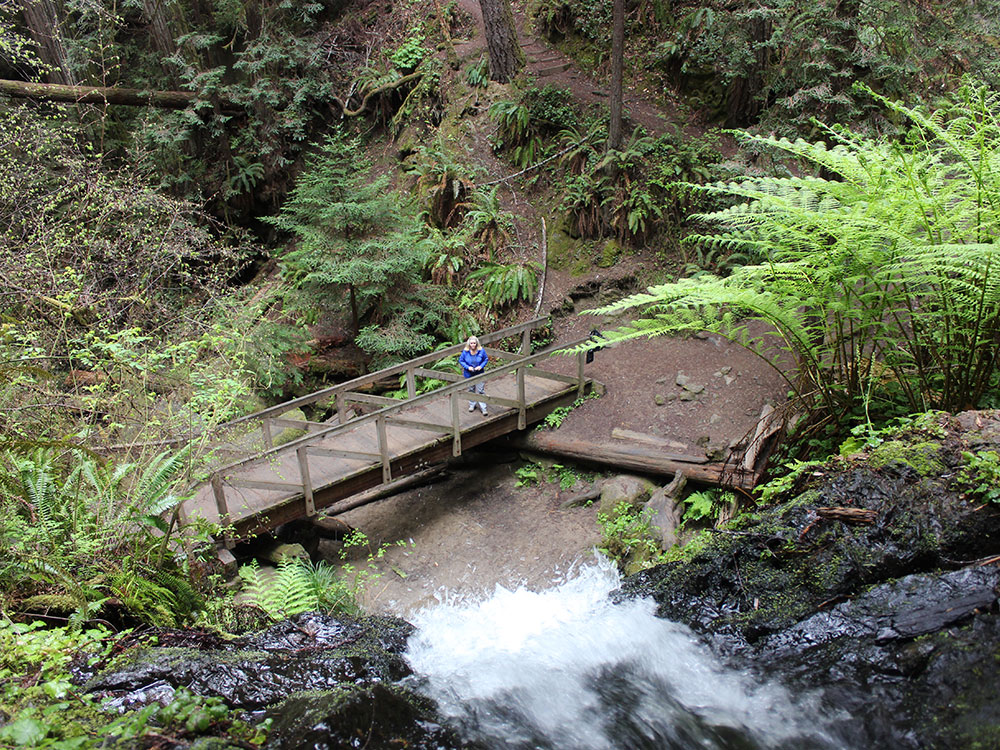
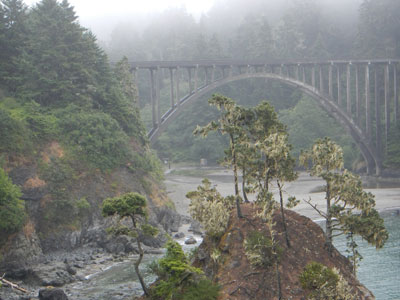
Russian Gulch State Park is a State Park in coastal Mendocino County, California, 2 mi (3.2 km) north of Mendocino and 7 mi (11 km) south of Fort Bragg. The park features 7,630 ft (2,330 m) of rocky ocean shores; it is approximately .75 mi (1.21 km) wide from north to south at its widest point, and extends for approximately three miles from east to west. Russian Gulch is crossed by California State Highway 1, which passes over the gulch on the Frederick W. Panhorst Bridge, a large concrete arch bridge constructed in 1940. The park entrance is on the west side of Highway 1, north of the bridge, and connects by a one-lane road under the bridge to the eastern part of the park. The smaller, western portion of the park consists largely of headlands with a blowhole and picnic areas, while the larger eastern portion of the park includes a campground, the park headquarters, and several trails for bicycles, hikers, and horses. A 2.5 mi (4.0 km) hike from the trailhead at the east end of the campground to a 36 ft (11 m) waterfall largely follows an abandoned logging road along the creek. A small beach, physically in the western part of the park but accessed by a road from the eastern side, is equipped with a restroom and an outdoor shower; swimming, skin diving, fishing, and tide pool exploration are all possible.
Things to Do
Explore a Dramatic Stretch of the Mendocino Coast
Russian Gulch State Park is one of Northern California's most scenic coastal parks, located near the town of Mendocino. The park encompasses rugged ocean bluffs, a sheltered cove, redwood forests, fern-lined canyons, and diverse wildlife habitats. Its combination of coastal and inland environments makes it one of the premier outdoor destinations along California's North Coast.
Visit the Famous Russian Gulch Bridge Overlook
One of the park's most recognizable landmarks is the historic Russian Gulch Bridge, an iconic arch bridge spanning the mouth of Russian Gulch along Highway 1. Visitors can enjoy spectacular views of the bridge, rocky coastline, and Pacific Ocean from nearby overlooks and trails.
See Russian Gulch Waterfall
Deep within the park's forested canyon lies Russian Gulch Waterfall, a beautiful 36-foot waterfall surrounded by lush vegetation, ferns, and redwood trees. The waterfall is one of the park's most popular attractions and provides a rewarding destination for hikers.
Enjoy Coastal Recreation and Beach Access
The park features a protected cove with access to rocky beaches, tide pools, sea caves, and coastal bluffs. Visitors can enjoy beachcombing, wildlife viewing, photography, picnicking, and exploring the rugged shoreline along the Pacific Ocean.
Explore Redwood Forests and Scenic Canyons
Inland portions of the park contain redwood groves, shaded canyons, and riparian habitats that support numerous plant and animal species. Trails through these areas provide a peaceful contrast to the dramatic coastal scenery found elsewhere in the park.
Observe Wildlife and Marine Life
Russian Gulch State Park offers opportunities to observe deer, raptors, seabirds, harbor seals, sea lions, migrating whales, and other wildlife. The park's varied ecosystems make it a popular destination for birdwatching and nature photography.
Top Trails
Russian Gulch Waterfall Loop Trail
Length: Approximately 6 miles loop
Elevation Gain: About 700 feet
Difficulty: Moderate
This signature hike travels through redwood forests and scenic canyon terrain before reaching the park's picturesque waterfall. The loop combines lush forest environments with beautiful views of the surrounding landscape.
Headlands Trail
Length: Approximately 1.5 miles round trip
Elevation Gain: Minimal to Moderate
Difficulty: Easy
Following coastal bluffs above the Pacific Ocean, this trail offers outstanding views of sea stacks, rocky coves, marine wildlife, and the dramatic Mendocino coastline.
North Trail
Length: Approximately 3 miles round trip
Elevation Gain: Moderate
Difficulty: Moderate
This scenic route follows portions of Russian Gulch through forested canyon habitats and provides access to redwood groves, wildlife viewing opportunities, and connections to longer trail systems within the park.
Ocean View Trail
Length: Approximately 2 miles round trip
Elevation Gain: Minimal
Difficulty: Easy
A scenic coastal route featuring panoramic ocean views, bluff-top scenery, and excellent opportunities for photography, whale watching, and observing seabirds along the shoreline.
Sources: California State Parks official Russian Gulch State Park information, including details on the waterfall, coastal trails, campground facilities, redwood forests, beach access, and recreational opportunities.
https://www.parks.ca.gov/?page_id=436https://www.parks.ca.gov/?page_id=436
Additional information verified through Mendocino Coast visitor resources covering Russian Gulch Bridge, waterfall hikes, coastal bluff trails, wildlife viewing opportunities, tide pools, and outdoor recreation within Russian Gulch State Park.
https://www.visitmendocino.comhttps://www.visitmendocino.com
History
The name "Russian Gulch" was given to the area by U.S. government surveyors, in honor of the Russian fur trappers who founded Fort Ross 50 mi (80 km) to the south; according to a more specific local tradition, a deserter from Fort Ross lived at Russian Gulch. In the second half of the 19th century, schooners would frequently make dangerous stops in the cove to take on coast redwood lumber and passengers; the headlands still contain iron rings used to hold ropes and move lumber when these ships docked, and a mill made redwood shingles on what is now the site of a park recreation hall. Some of the land within what is now the park was farmed in the late 19th century, and in the mid-1920s a property developer from Los Angeles, F. O. Warner, bought land in the area with the intention of building a resort there. The Native Sons of the Golden West began a drive to turn the area into a park in 1928, and after funds were provided by A. Johnston, the county, and the state, the park was founded in 1933.
This article uses material from the Wikipedia article "Russian Gulch State Park", which is released under the Creative Commons Attribution-Share-Alike License 3.0