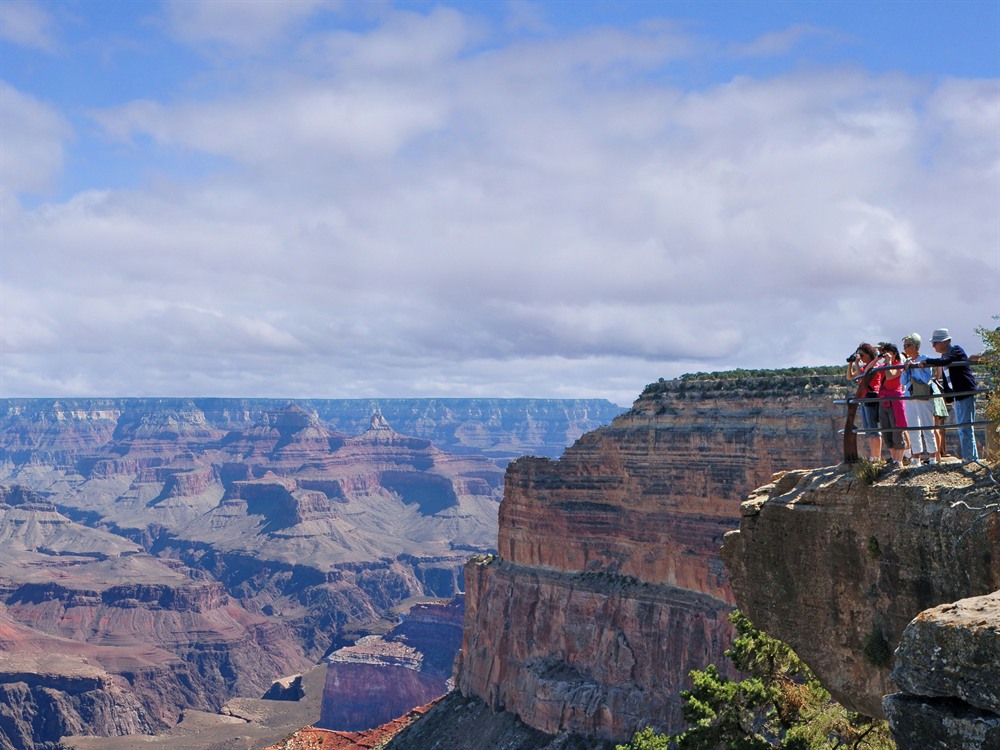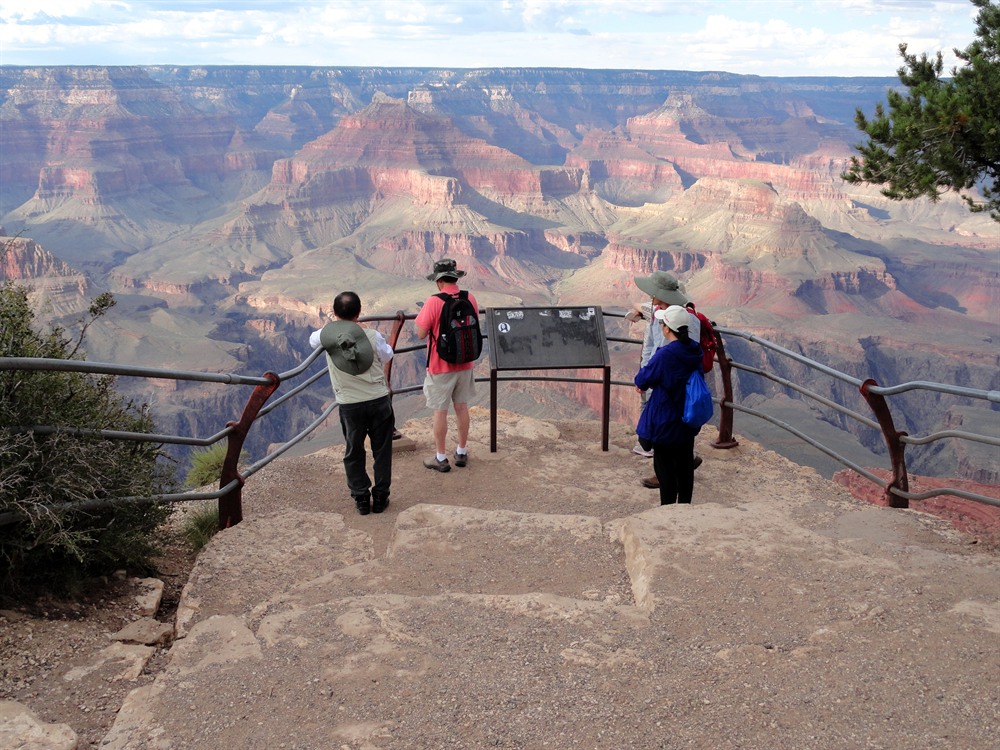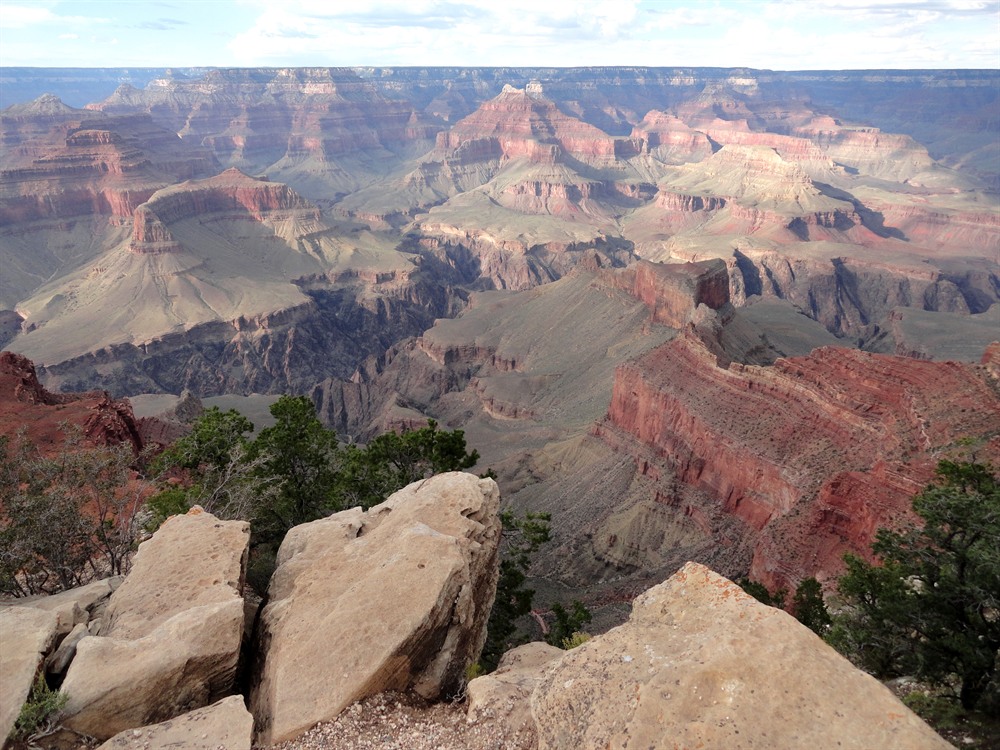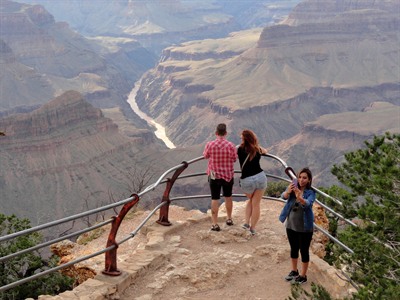

Hermit Road viewpoint with views of the Colorado River and its rapids in two directions, and a favorite for sunset photography.
General Information
- Hours:
- Open 24 hours year-round
- Fees:
-
Free access to overlook
$35 per vehicle (7-day national park pass) - Pet Policy:
- Leashed pets allowed on rim trails and overlook areas but not below the rim or on shuttle buses
- Closest cities with hotels:
- Tusayan, AZ
- Seasons:
- Open year-round; best at sunrise and sunset. Hermit Road is shuttle-only in most months (private vehicles allowed in winter)
- Location:
- Mohave Point, Grand Canyon Village, AZ 86023
- Website:
- nps.gov
How to Get There
From Tusayan, take AZ-64 N to the South Entrance and park in Grand Canyon Village. Take the free Hermits Rest Route shuttle west along Hermit Road to the Mohave Point stop, then walk a short paved path to the overlook. Hermit Road is shuttle-only from March through November; private vehicles are allowed in winter.
Overview
Mohave Point is one of the most rewarding stops on Hermit Road, with expansive views of the river corridor, the Tonto Platform, and the canyon’s side canyons. Visitors can often see the Colorado River and glimpse the whitewater of rapids such as Hermit Rapid far below.
It offers a more intimate setting than the larger viewpoints, and many visitors choose it for sunset because it is a little less crowded than neighboring Hopi Point. The Rim Trail passes through the area, making it easy to combine with a walk along the canyon edge.
History
The point is named for the Mohave people of the lower Colorado River. It was one of the stops on the Hermit Rim Road, built in 1912, and it remains one of the best places on the west rim to see the river.
Things to Do
Watch the Sunset
Mohave Point is a slightly less crowded alternative to Hopi Point at sunset.
Spot Hermit Rapid
Look for the whitewater of Hermit Rapid and Granite Rapid far below.
Ride the Shuttle
The Hermits Rest shuttle stops here.
Walk the Rim Trail
The Rim Trail connects with Hopi Point and The Abyss.
This article uses material from the official National Park Service pages for Grand Canyon National Park.