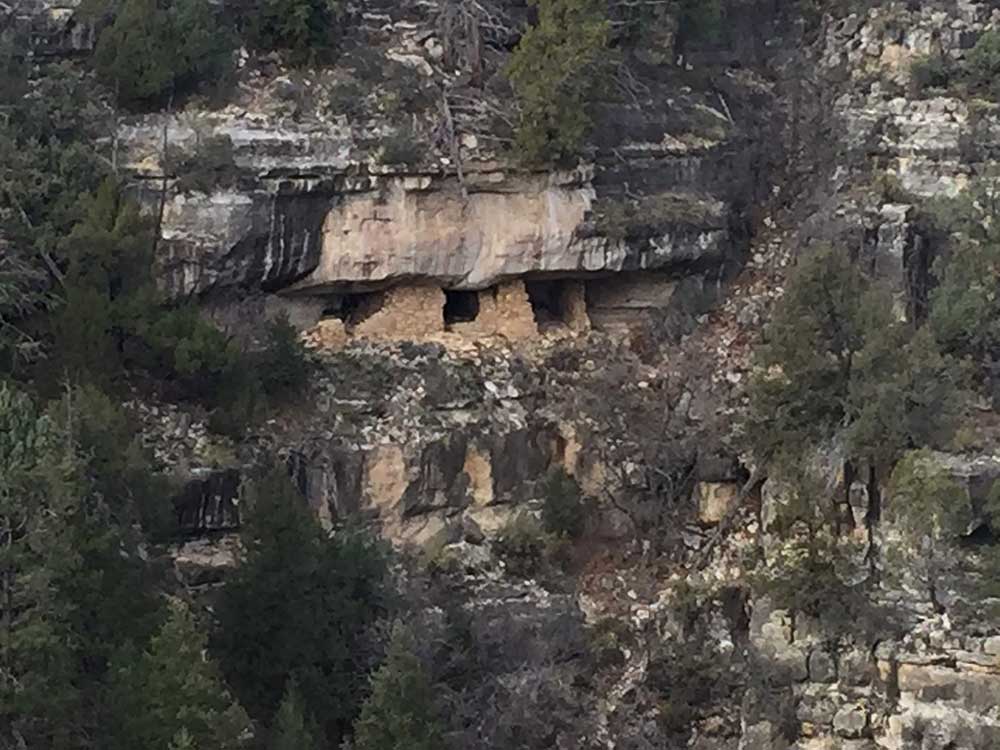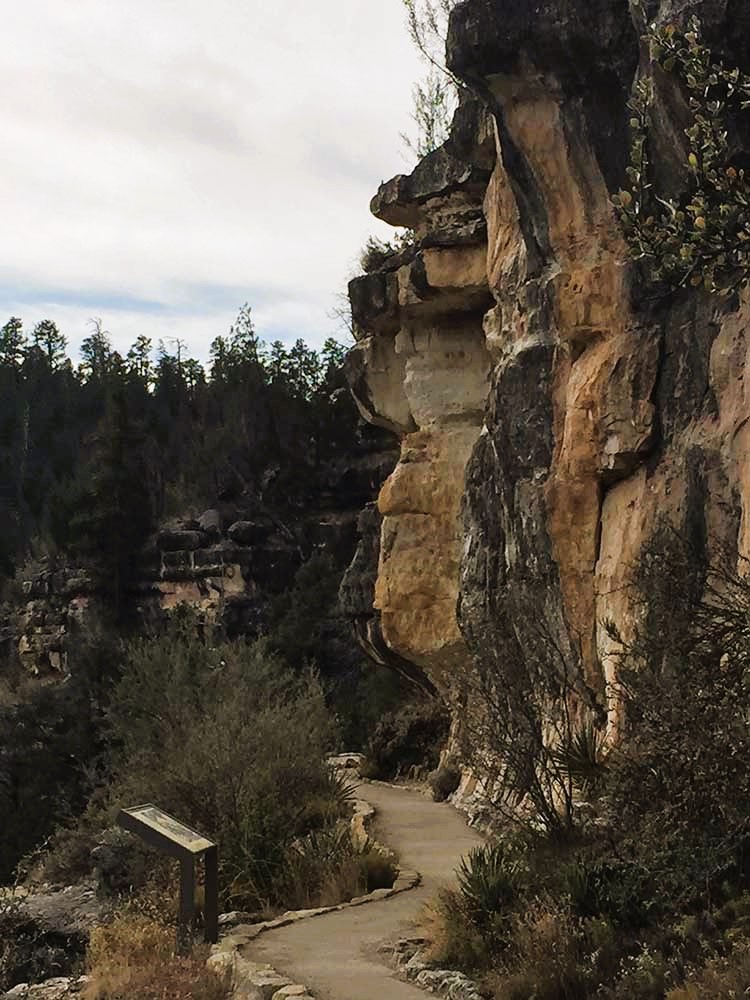
Canyon landscape featuring ancient cliff dwellings accessible via scenic hiking trails and interpretive exhibits.
General Information
- Hours:
-
Daily: 9:00 AM – 5:00 PM
Island Trail closes at 4:00 PM
Rim Trail closes at 4:30 PM
Closed: December 24, December 25, and January 1 - Fees:
-
Adults (16+): $15 per person (valid for 7 days)
Children under 16: Free
America the Beautiful and other federal passes accepted - Pet Policy:
-
Pets are not allowed on trails or in the visitor center
Permitted in parking areas only and must be leashed (max 6 ft) - Closest cities with hotels:
- Flagstaff, AZ (10 mi)
- Seasons:
- All year; spring and fall offer the most comfortable hiking conditions
- Location:
- Walnut Canyon
- Website:
- nps.gov/waca/index.htm
How to Get There
From Flagstaff, AZ (10 mi): Take I-40 E to Exit 204, then follow Walnut Canyon Rd south for 3 miles to the monument entrance.
Overview
Walnut Canyon National Monument protects a forested limestone canyon just east of Flagstaff where the Sinagua people built about 80 small cliff dwellings under rock ledges between roughly 1100 and 1250 AD. The Sinagua farmed the canyon rim and bottomland, and their well-preserved rooms tucked into alcoves can be reached by the popular Island Trail, which circles a rock "island" in the middle of the canyon. Canyon walls shelter a surprising range of plant life, with ponderosa pine and Douglas fir on the cool north-facing slopes and cactus and agave on sunny south slopes, and the canyon takes its name from the Arizona walnut trees along the creek. President Woodrow Wilson established the monument in 1915. Visitors come for the ruins, a quick hike and a cool escape from the desert heat so near Flagstaff.
Access
The monument is about 10 miles southeast of downtown Flagstaff. Take I-40 to exit 204 and follow Walnut Canyon Road south for about 3 miles to the visitor center and parking area. Almost all visitors arrive by car on paved roads, and the visitor center perches on the rim above the canyon. The Island Trail starts at the visitor center and drops into the canyon on stairs, while the Rim Trail follows the canyon edge and is largely level. The monument is a short detour for travelers on I-40 or Route 66.
Seasons
The monument is open year-round, and late spring through early fall is the most comfortable time to hike, with summer afternoon thunderstorms. At about 6,700 feet, the canyon stays cooler than the desert, and fall brings golden leaves along the creek. Winters are cold and snowy, and the Island Trail may be closed in icy conditions or when snow makes the stairs unsafe; the Rim Trail often stays open. The monument is closed December 24, December 25 and January 1, and hours vary by season.
Things to Do
Walk Among the Sinagua Cliff Dwellings
Walnut Canyon National Monument offers the rare chance to walk right up to ancient rooms built into canyon walls. The Island Trail passes about 25 rooms close enough to see construction details.
Hike the Island Trail
The signature trail descends 185 feet by stairs to the island and loops around it, with views across the canyon and into dwellings. The climb back up is the main challenge.
Stroll the Rim Trail
The easier Rim Trail follows the canyon edge to overlooks and to a pit house and a small pueblo ruin, with views of dwellings across the canyon.
Visit the Museum and Join a Ranger Talk
The visitor center museum displays Sinagua artifacts and explains the culture, and rangers lead talks and walks in season.
Watch for Wildlife and Wildflowers
The canyon supports elk, mule deer, squirrels and birds, and wildflowers bloom along the rim in late spring and summer.
Top Trails
Island Trail
Length: Approximately 1 mile loop
Elevation Gain: Approximately 185 feet (about 240 steps)
Difficulty: Moderate
This stair-heavy loop descends into the canyon and circles a rock island with about 25 cliff rooms along the way. At nearly 7,000 feet, the climb back up can be tiring.
Rim Trail
Length: Approximately 0.7 miles round trip
Elevation Gain: Minimal
Difficulty: Easy
This mostly flat trail follows the canyon rim to overlooks and a small pueblo. It is a good option for visitors who prefer to avoid stairs.
Visitor Centers
The Walnut Canyon Visitor Center, perched on the canyon rim, has a museum of Sinagua artifacts, exhibits about the canyon's ecology and history, a bookstore, restrooms and a viewing deck. Rangers provide trail information and conditions, including whether the Island Trail is open. The center is open daily with seasonal hours and is closed on December 24, December 25 and January 1, so check the National Park Service website for current times. Federal passes are accepted.
Camping and Lodging
There is no camping or lodging at the monument. Hotels, motels, resorts and restaurants are plentiful in Flagstaff, only 10 to 15 minutes away, including historic Route 66 properties in the downtown area. Camping is available in the surrounding Coconino National Forest, such as the Bonito Campground near Sunset Crater and dispersed sites along forest roads, as well as at RV parks in Flagstaff. Williams and Sedona offer more lodging within an hour. Check each location's website for current availability.
This article uses material from the Wikipedia article "Walnut Canyon National Monument", which is released under the Creative Commons Attribution-Share-Alike License 3.0 Additional information from the National Park Service.