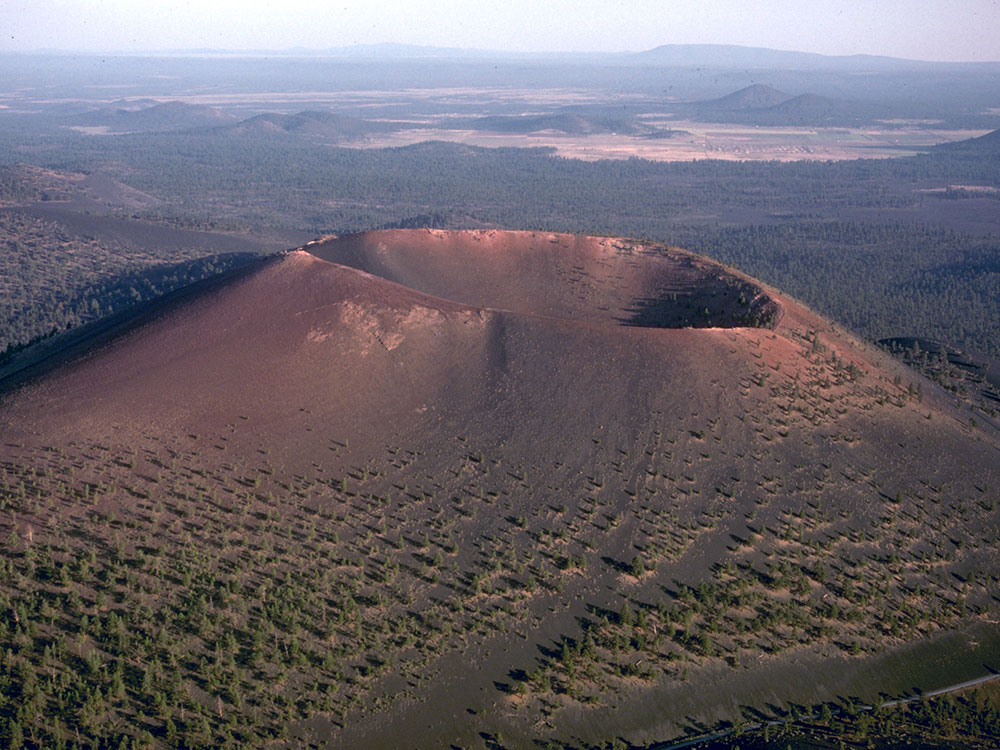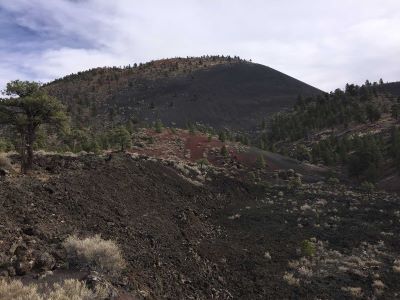
Volcanic landscape of cinder cones and lava flows offering scenic drives, hiking trails, and geological exploration.
General Information
- Hours:
-
Trails and Scenic Drive: Open year-round, day and night unless closed due to weather
Visitor Center: May–October: 8:00 AM – 5:00 PM; November–May: 9:00 AM – 5:00 PM
Closed: December 25 - Fees:
-
Private Vehicle: $20
Motorcycle: $15
Individual (on foot or bicycle): $10
Annual Pass: $40
Covers entrance to both Sunset Crater and Wupatki National Monuments for 7 days - Pet Policy:
-
Pets are not allowed on trails or in buildings
Permitted only in parking lots and must be leashed (max 6 ft) - Closest cities with hotels:
- Flagstaff, AZ (18 mi)
- Seasons:
- All year; spring and fall offer the most comfortable weather
- Location:
- Sunset Crater
- Website:
- nps.gov/sucr
How to Get There
From Flagstaff, AZ (18 mi): Take US-89 N for 12 miles, then turn right onto Sunset Crater–Wupatki Loop Road and continue 2 miles to the visitor center.
Overview
Sunset Crater Volcano National Monument protects a 1,000-foot cinder cone and a landscape of black lava flows, spatter cones and ash fields north of Flagstaff, created by the youngest volcano in the San Francisco Volcanic Field. The volcano erupted around 1085 AD, and its blazing lava flows and glowing cinders may have inspired the name, as well as the colors of the cone at sunset. The eruption deposited a blanket of ash over a large area, changing farming patterns for the nearby Sinagua people, and it is a rare place to see a relatively recent volcanic landscape up close. President Herbert Hoover proclaimed the monument in 1930, and today it is one of the most accessible volcanic landscapes in the Southwest, with trails across lava and scenic overlooks.
Access
The monument is about 15 miles north of Flagstaff, reached from US-89 by the paved Sunset Crater-Wupatki Loop Road, which continues about 34 miles to Wupatki National Monument and back to US-89. Visitors drive their own cars, and the same entrance fee is valid for both Sunset Crater and Wupatki for seven days. The monument is open year-round, but winter snow can close sections of the loop road temporarily. The cinder cone's summit has been closed since 1973 to prevent erosion, but visitors can walk across lava flows and around the base.
Seasons
The monument is open year-round, with late spring to early fall the best time for hiking. Summers are warm and pleasant at the 7,000-foot elevation, with afternoon thunderstorms. Fall brings golden aspens in the nearby San Francisco Peaks. Winters are cold and snowy, and the black lava contrasts beautifully with fresh snow, though some trails and the loop road may close. Hours at the visitor center vary by season.
Things to Do
Walk Across a Recent Lava Flow
Sunset Crater Volcano National Monument offers a walk through the Bonito Lava Flow, with its twisted black rock and sparse vegetation, an easy introduction to volcanic landscapes.
Hike Around the Base of the Volcano
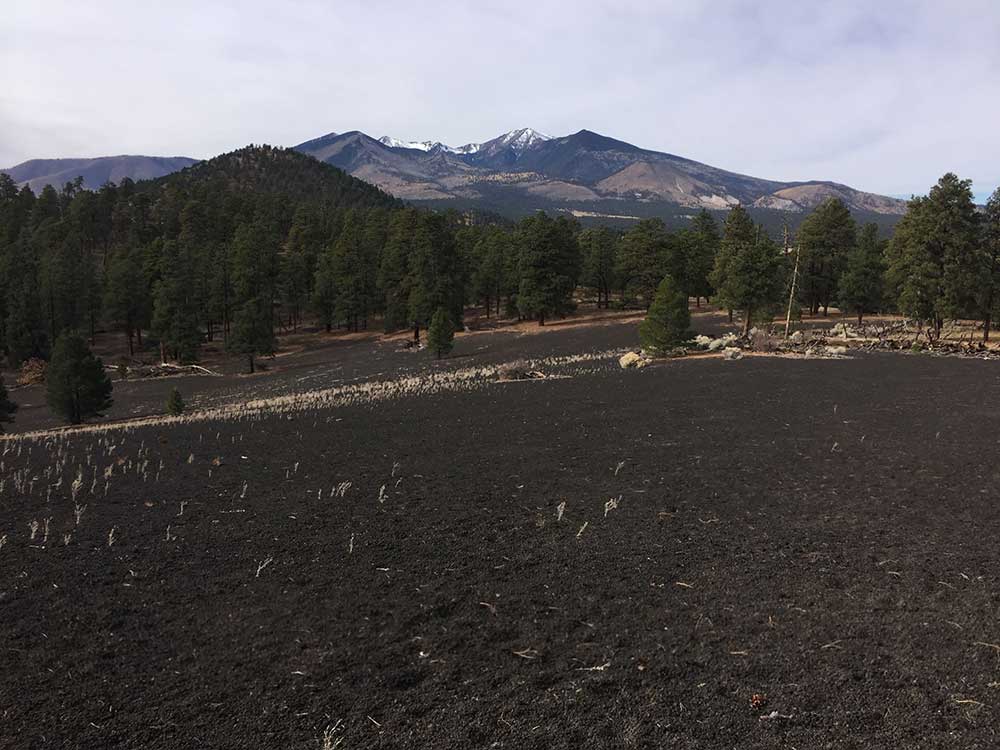
Paved and dirt trails circle the cinder cone and pass lava formations, cinder fields and scattered pines. The colors of the cinders shift from black to orange and red.
Climb Lenox Crater
Lenox Crater, a smaller cinder cone, can be climbed on a short trail with views of the San Francisco Peaks and the Painted Desert.
Drive the Sunset Crater-Wupatki Loop Road
The 34-mile scenic loop links Sunset Crater with Wupatki National Monument, passing overlooks, lava fields and ancient ruins in a single trip.
Visit the Visitor Center and Stargaze
Exhibits describe the eruption and its effects on the Sinagua, and the monument is an International Dark Sky site where night programs are offered in summer.
Top Trails
Lava Flow Trail
Length: Approximately 1 mile loop
Elevation Gain: Minimal
Difficulty: Easy
This self-guided loop winds through the Bonito Lava Flow at the base of the volcano, with signs describing volcanic features and the area's plant life. It is the signature walk at the monument.
Lenox Crater Trail
Length: Approximately 1 mile round trip
Elevation Gain: Approximately 280 feet
Difficulty: Moderate
This short, steep trail climbs to the rim of a small cinder cone, with wide views of the volcanic field and distant peaks.
Cinder Hills Overlook
Length: Less than 0.5 miles round trip
Elevation Gain: Minimal
Difficulty: Easy
A short walk reaches an overlook with views of Sunset Crater and the surrounding cinder hills, a favorite spot for photographs.
Visitor Centers
The Sunset Crater Volcano Visitor Center sits off the loop road near the start of the Lava Flow Trail and has exhibits on the eruption, volcanic geology and the Sinagua people, a bookstore, restrooms and rangers who can recommend trails. A separate Wupatki Visitor Center is about 18 miles farther along the loop road. Hours vary by season, and the monument is closed on December 25, so check the National Park Service website before you go. The entrance fee covers both monuments for seven days.
Camping and Lodging
There is no camping or lodging within the monument. The Forest Service's Bonito Campground across the road from the visitor center offers seasonal tent and RV camping, and dispersed camping is allowed in parts of the surrounding Coconino National Forest. Hotels, resorts and restaurants are in Flagstaff, about 25 minutes away, and Williams and Sedona offer more lodging within an hour. Check each location's website for current availability.
This article uses material from the Wikipedia article "Sunset Crater", which is released under the Creative Commons Attribution-Share-Alike License 3.0. Additional information was drawn from the National Park Service and its visitor resources.
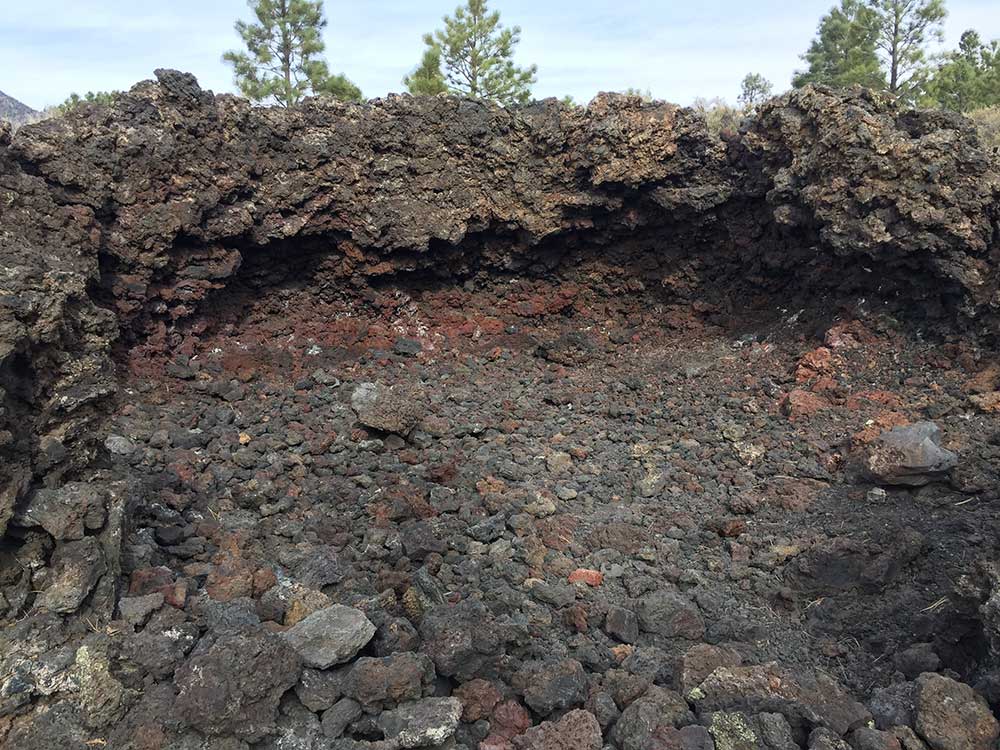
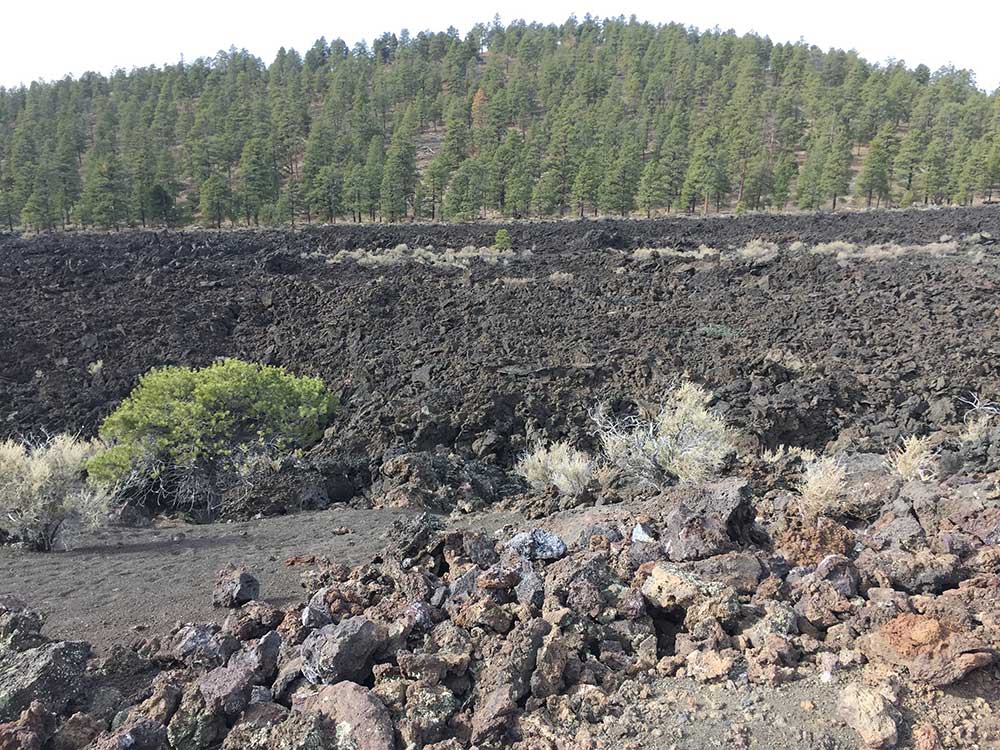
Volcanic Rock Field
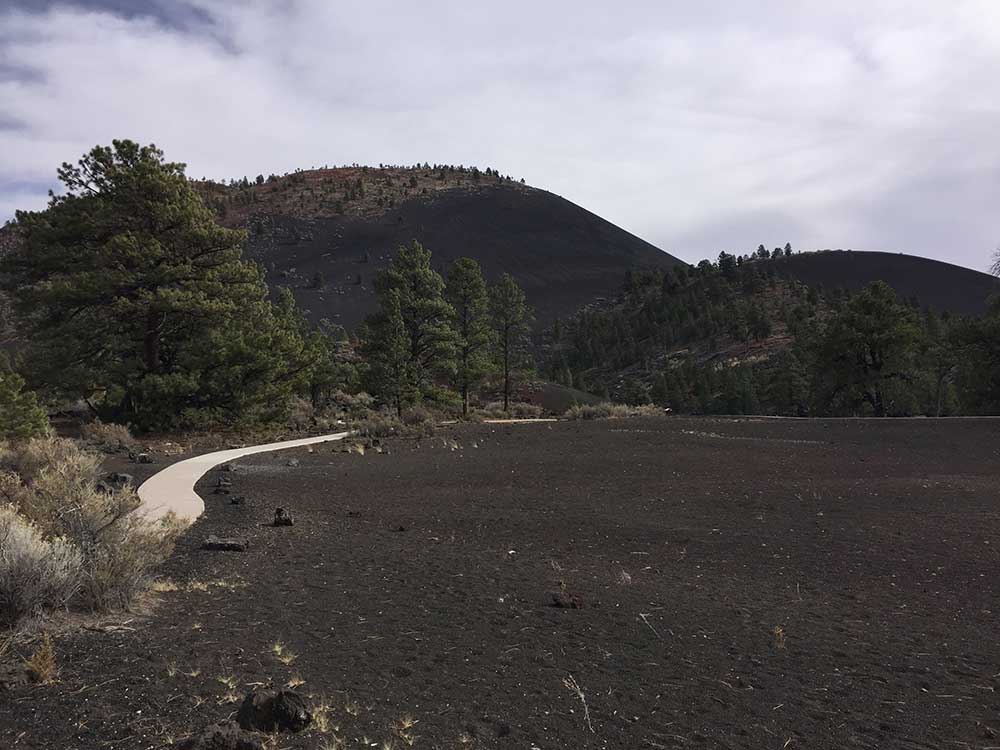
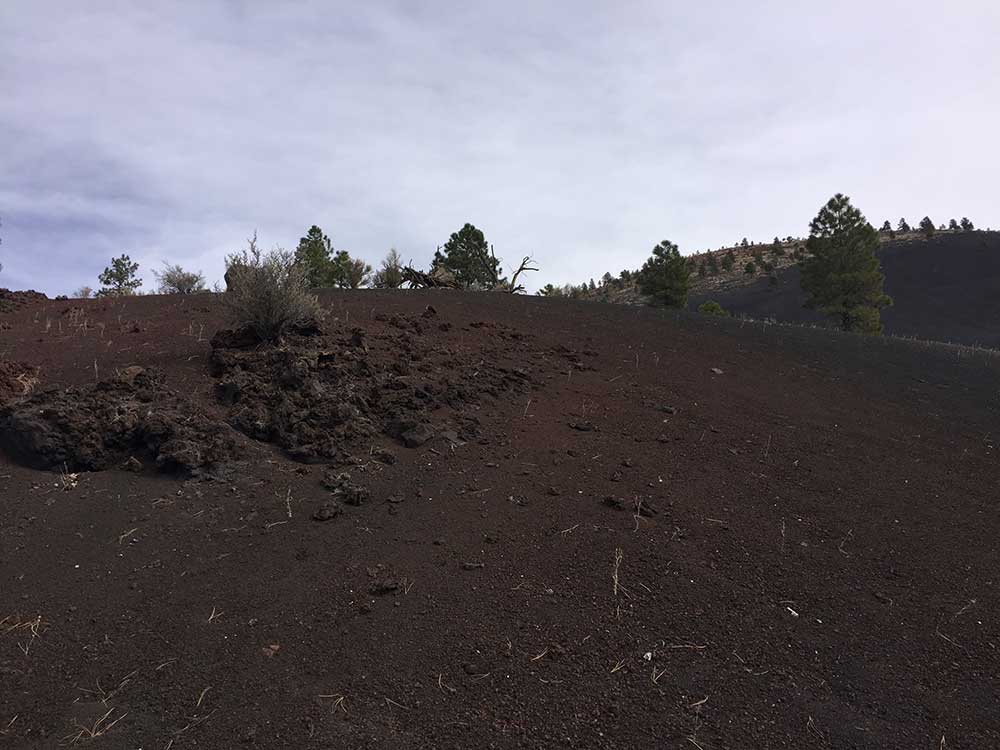
Volcanic Ash Hills