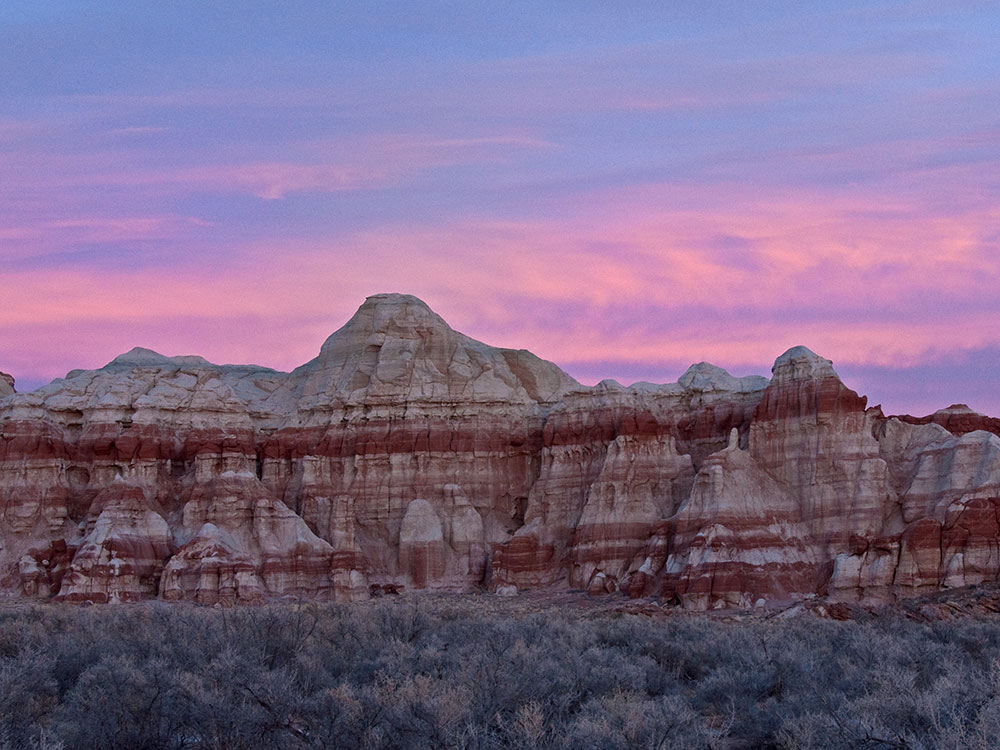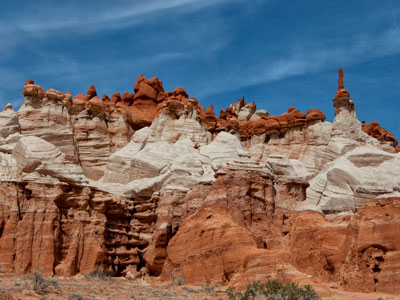

A remote badlands landscape featuring colorful eroded clay formations, hoodoos, and layered rock spires sculpted by wind and water over millions of years.
General Information
- Length:
- 1–3 miles (informal routes)
- Elevation Gain:
- Minimal
- Difficulty:
- Moderate
- Hours:
-
On the Hopi Reservation; visits should be arranged with a Hopi guide or with permission from the Hopi Tribe
Roads may be impassable after rain - Fees:
-
No park entrance fee
Hopi guide or permit fees apply - Pet Policy:
- Ask your guide or the Hopi Tribe about pets; rules on tribal lands vary
- Closest cities with hotels:
- Tuba City (about 30 mi)
- Seasons:
- Spring and fall are best; summer is very hot, winter is cooler but less crowded
- Location:
- Blue Canyon / Painted Desert Area, AZ
- Website:
- hopi-nsn.gov
How to Get There
From Tuba City (about 30 mi): Blue Canyon is east of Tuba City on the Hopi Reservation and is reached by unpaved roads off AZ-264. The route is unmarked and crosses tribal land, so arrange your visit with a Hopi guide, who can provide directions or transportation; a high-clearance vehicle is recommended.
Overview
The Blue Canyon formations present one of the most visually striking and lesser-known landscapes of the Painted Desert region, on Hopi land east of Tuba City, where layers of clay-rich sediment have eroded into a labyrinth of ridges, spires, and narrow gullies. Bands of soft blue, lavender, gray, and red hues stretch across the terrain, creating a palette that shifts with the angle of the sun. These formations are shaped by gradual weathering of ancient sedimentary deposits, leaving behind intricate landforms that resemble frozen waves or sculpted dunes. Walking among the ridges reveals a constantly changing perspective, where every turn exposes new textures carved by wind and seasonal runoff.
Reached only by unpaved roads, the area feels isolated and timeless, offering a quiet alternative to more crowded viewpoints in the region. The absence of dense vegetation enhances the sense of exposure, allowing the geology itself to dominate the experience. As light moves across the canyon walls throughout the day, the subtle color variations intensify, making early morning and late afternoon particularly dramatic. Whether viewed from above or explored on foot, the landscape captures the vast geological history of the desert in a setting that feels both delicate and immense.
History
Blue Canyon lies on Hopi and Navajo land east of Tuba City, where the Hopi and Navajo have lived for centuries. The colorful clay formations are part of the same rock layers seen across the Painted Desert.
Things to Do
Photograph the Formations
The blue, white and red layers are best in soft morning or evening light.
Explore the Hoodoos
Wander among the hoodoos and spires.
Visit with a Hopi Guide
Arrange your visit with a Hopi guide, who can share the area's cultural significance and make sure you visit with permission.
Prepare for Dirt Roads
A high-clearance vehicle is recommended for the unpaved roads.
This article uses material from the official pages of the Hopi Tribe and regional geology resources.
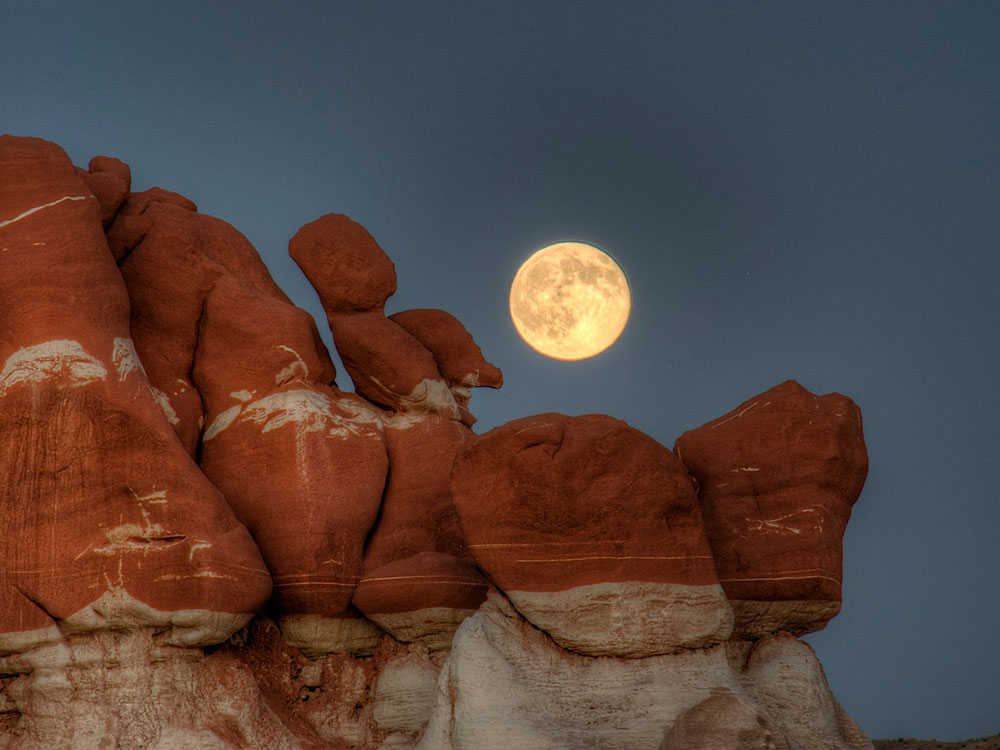 John Fowler from Placitas, NM, USA, CC BY 2.0, via Wikimedia Commons ; Image Size Adjusted