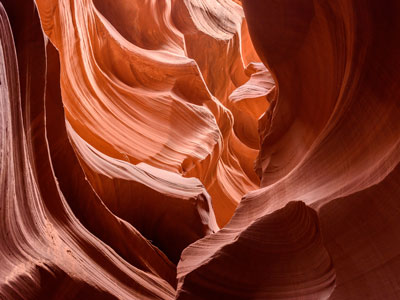

Scenic slot canyon sections with characteristic "flowing" shapes is a popular location for photographers and sightseers.
General Information
- Hours:
-
Tours typically run daily from 7:30am to 5:00pm, with peak lighting conditions between 10:30am and 1:30pm depending on the season
Advance reservations are required for all tours
Closed during flash flood warnings or extreme weather - Fees:
-
Lower Antelope Canyon: $40–$80 depending on tour type
Upper Antelope Canyon: $50–$90 depending on tour type
Most tours include the $8 Navajo permit fee
Children’s pricing may vary by operator - Pet Policy:
- Pets are not allowed
- Closest cities with hotels:
- Page, AZ (less than 10 minutes)
- Seasons:
- March to October for best light beams; open year-round
- Location:
- Antelope Canyon, Page, AZ
- Website:
- navajonationparks.org
How to Get There
From Page, AZ (7 mi): Head east on AZ-98 for approximately 7 miles, then follow signs to the designated tour operator parking areas for Upper or Lower Antelope Canyon.
Overview
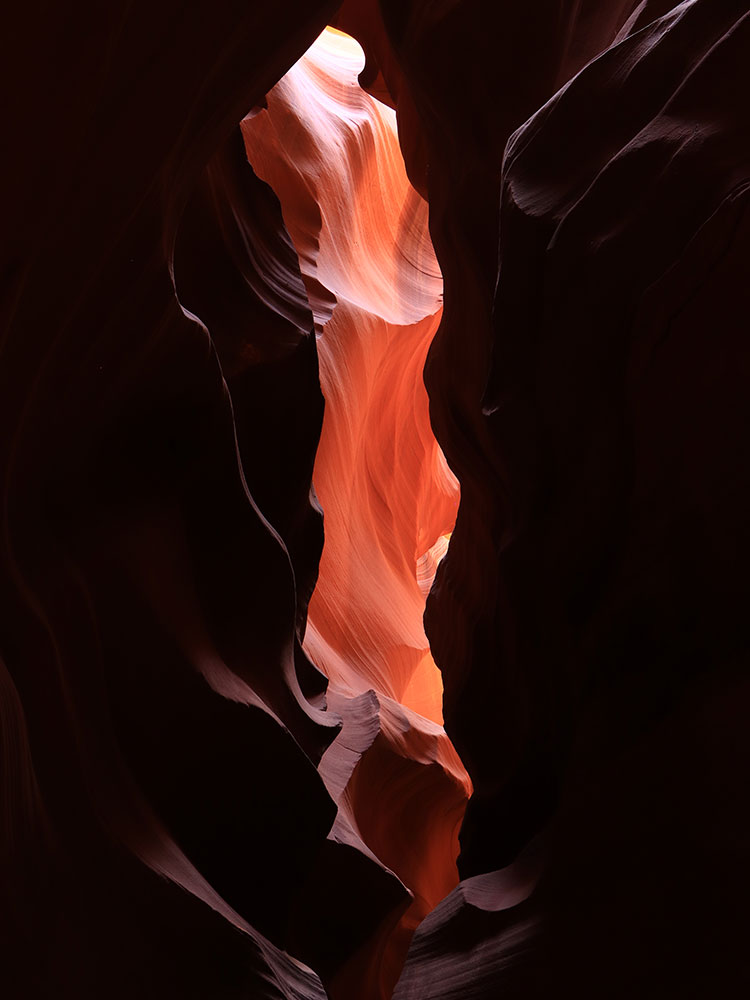
Antelope Canyon is the American Southwest’s most famous slot canyon, on Navajo land east of Page, Arizona, prized for its smooth, flowing sandstone walls and glowing light. It has two sections, Upper Antelope Canyon (Tsé bighánílíní, “the place where water runs through rocks,” also called The Crack) and Lower Antelope Canyon (Hazdistazí, “spiral rock arches,” or The Corkscrew). Both can be visited only on guided tours with licensed Navajo tour operators, since it became a Navajo Tribal Park in 1997.
Flash floods, especially during the monsoon season, carved the canyon from Navajo Sandstone, rushing through the narrow passages and smoothing them into flowing shapes.
Upper vs. Lower
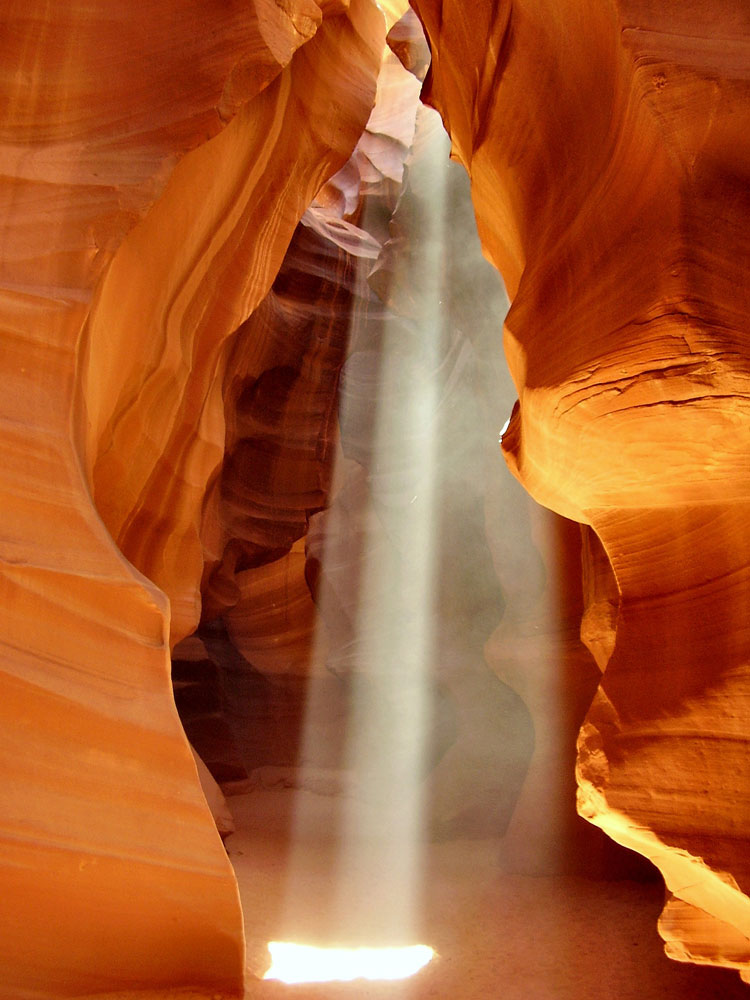
- Upper Antelope: the most visited. Its entrance and entire length are at ground level, and light beams shine down from openings at the top, appearing from about March 20 to October 7 and most often in summer, when the sun is high.
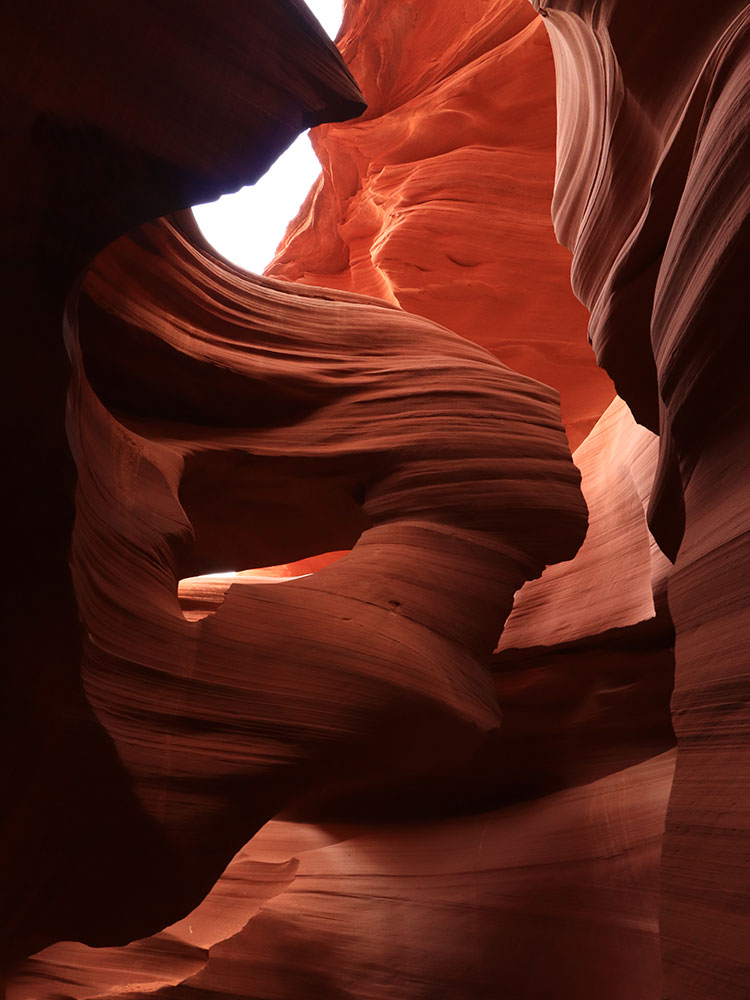
- Lower Antelope: several miles away and more challenging, longer and narrower, with five flights of metal stairs and sand that can make steps slippery.
Other slots, such as Canyon X, can also be visited by tour.
History
Antelope Canyon has been known to the Navajo people for generations and holds spiritual meaning as a place to be quiet and respectful in the presence of nature. The slots were carved over thousands of years by flash floods rushing through Navajo Sandstone, and photographers began drawing wide attention to the canyon in the late 20th century. In August 1997 a flash flood swept through Lower Antelope Canyon and killed 11 visitors, and that same year the Navajo Nation established the Lake Powell Navajo Tribal Park, requiring all visitors to enter with authorized Navajo guides.
Tour Overview
All visits to Antelope Canyon must be booked with an authorized Navajo tour operator, and advance reservations are required, especially from spring through fall. Upper Antelope Canyon tours usually depart from Page and travel to the canyon by four-wheel-drive vehicle, while Lower Antelope Canyon tours meet near the canyon entrance and descend into the slot on steep metal stairways. Most tours last about 1 to 2 hours, and visitors should arrive at least 30 minutes before their scheduled time. Note that the Navajo Nation observes daylight saving time while the rest of Arizona does not, so confirm which time zone your tour is listed in. Most operators prohibit bags and backpacks in the canyon, tripods are restricted to special photography tours, and tours can be canceled at short notice when there is a risk of flash flooding.
This article uses material from the Wikipedia article "Antelope Canyon", which is released under the Creative Commons Attribution-Share-Alike License 3.0
 Lucas Löffler, Public domain, via Wikimedia Commons ; Image Size Adjusted


 Diane E. Youngstrom, CC BY 4.0, via Wikimedia Commons ; Image Size Adjusted

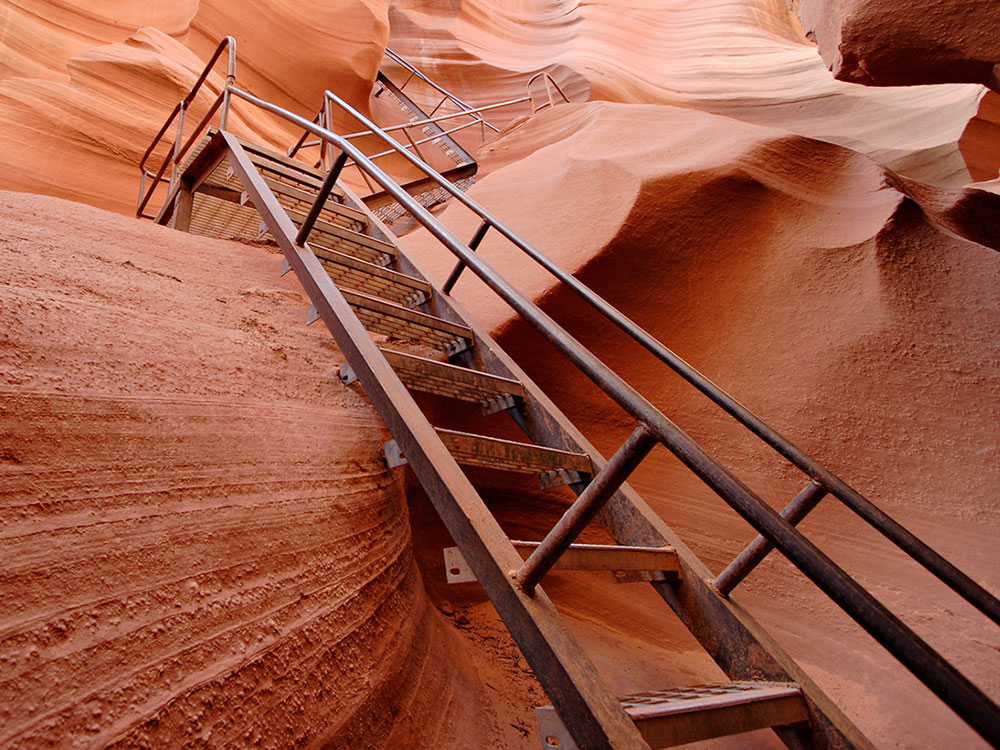 Moondigger, CC BY 2.5, via Wikimedia Commons ; Image Size Adjusted
