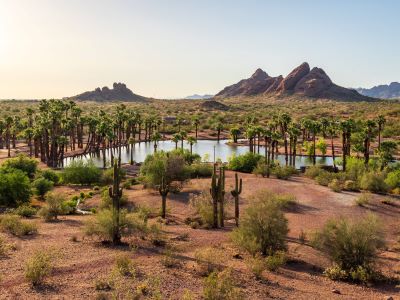

Hilly desert park in Phoenix and Tempe notable for its many distinctive geological formations and wide variety of typical desert plants
General Information
West of Galvin Pkwy: Sunrise to Sunset
Trails open daily: 5:00am – 11:00pm
No parking or entry fees
Must be leashed and cleaned up after
Tempe, AZ (3 mi)
Scottsdale, AZ (5 mi)
Best visited fall through spring for cooler temperatures and scenic views
How to Get There
From Phoenix (9.3mi) Get on I-10 E. Continue on I-10 E. Take AZ-202Loop E to N 52nd St. Take exit 4 from AZ-202Loop E. Take E Van Buren St to N Galvin Pkwy.
Overview
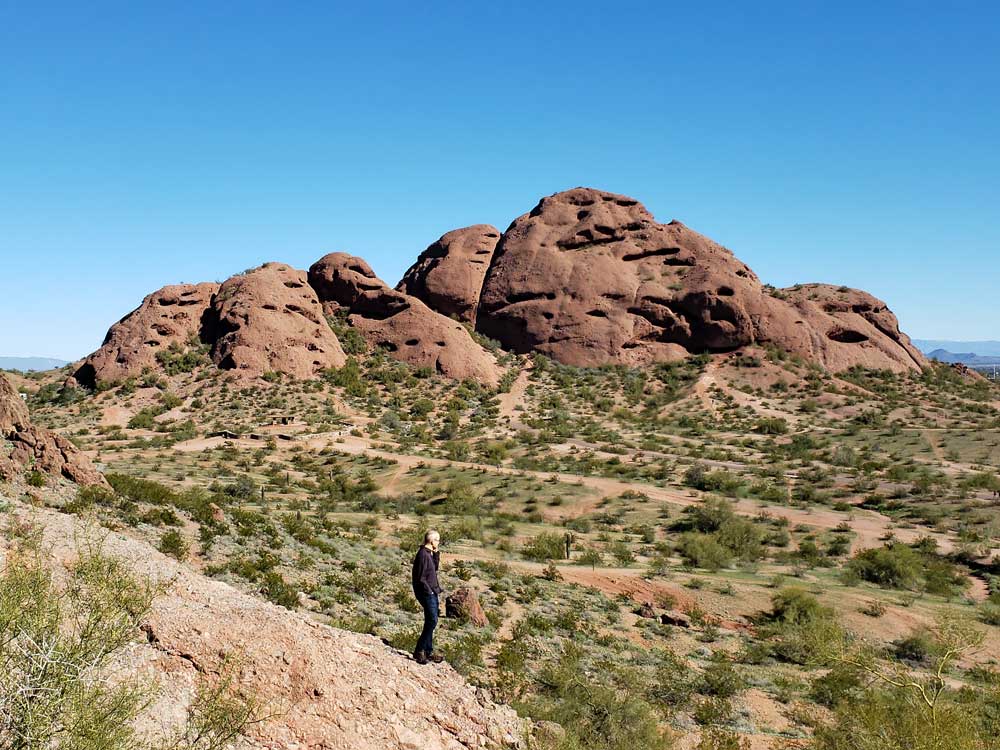
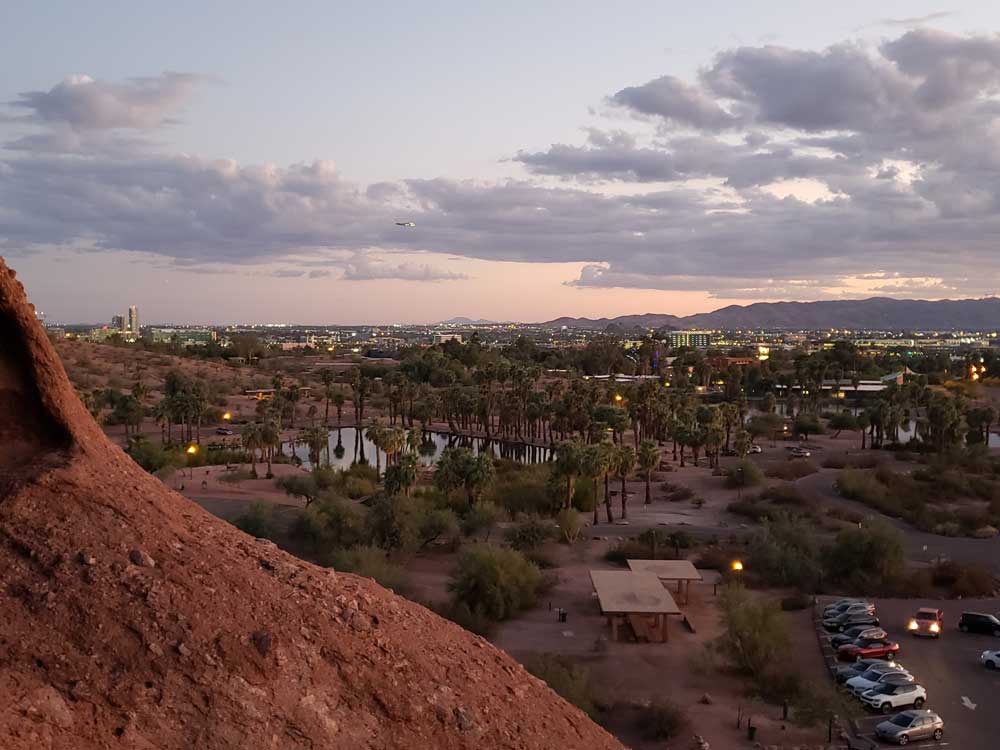
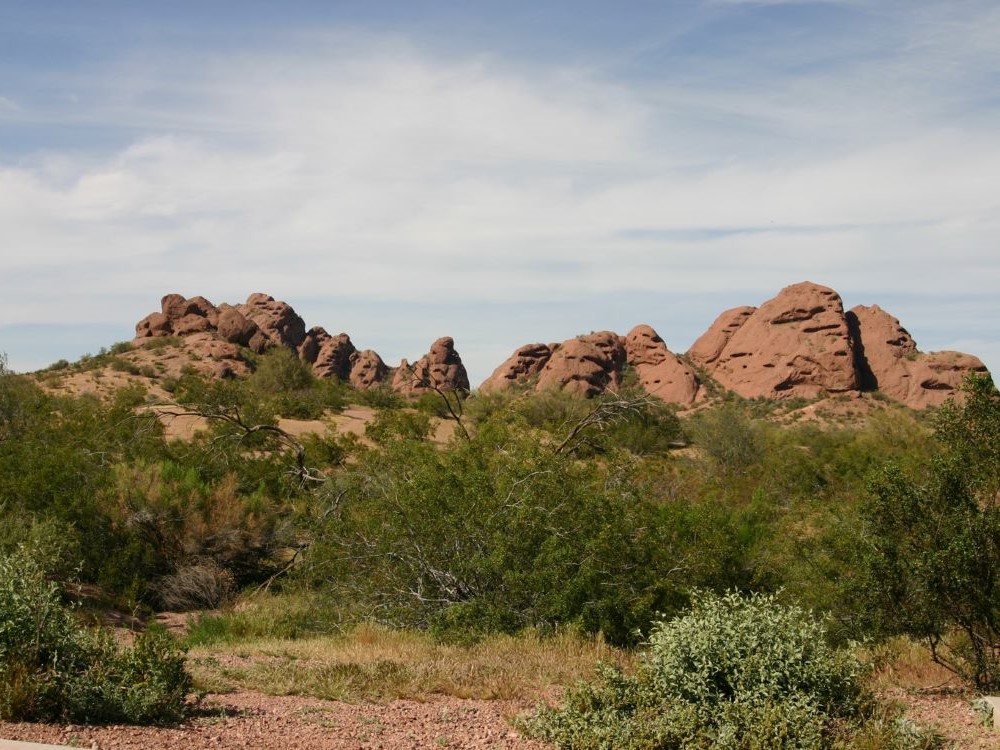
Papago Park is a hilly desert park of about 1,500 acres between Phoenix and Tempe, known for its distinctive red sandstone buttes, giant saguaros and a cluster of top attractions in one place: the Desert Botanical Garden, the Phoenix Zoo, the Hall of Flame Fire Museum, hiking and biking trails, small lakes, picnic areas and the Rolling Hills Golf Course. The Papago Ponds hold rainbow trout, bass, catfish and tilapia.
Landmarks
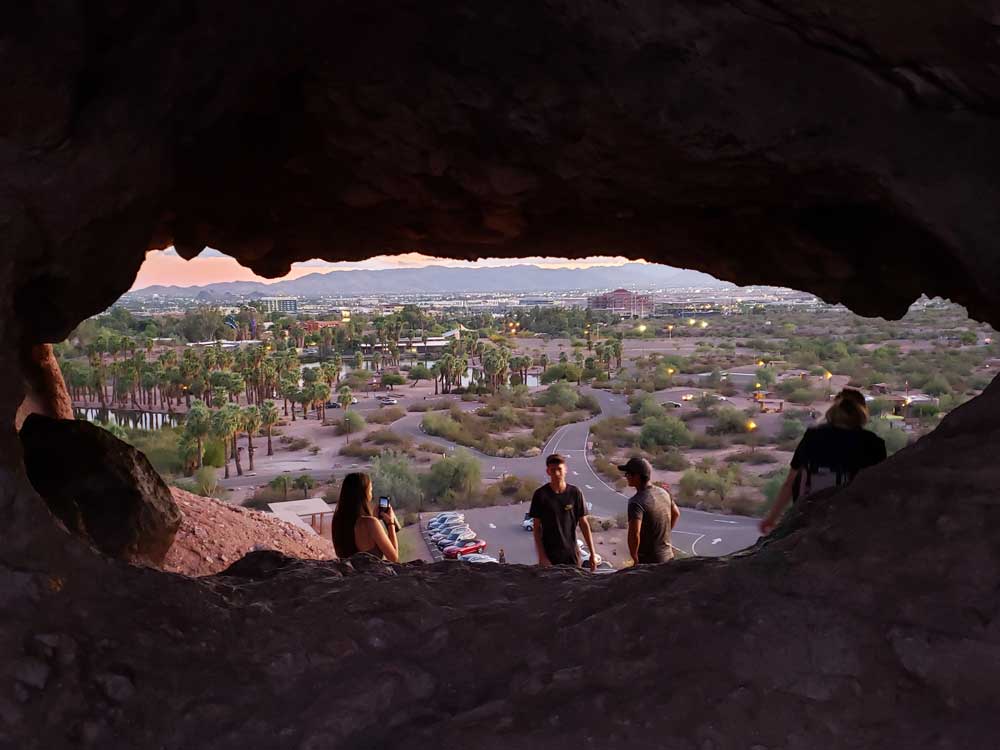
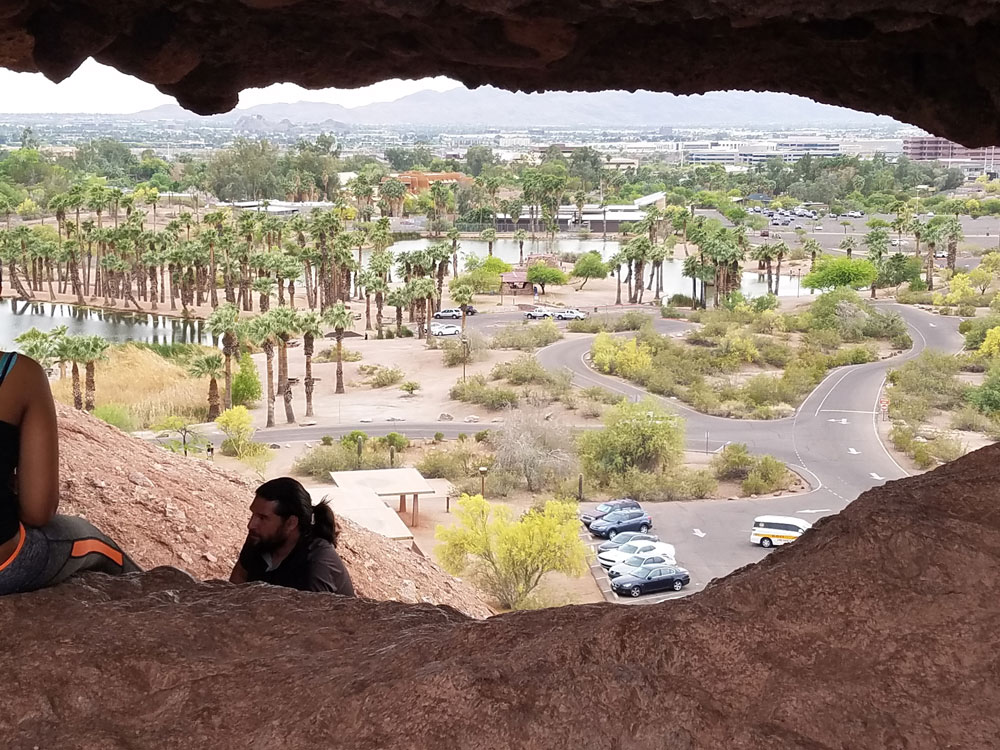
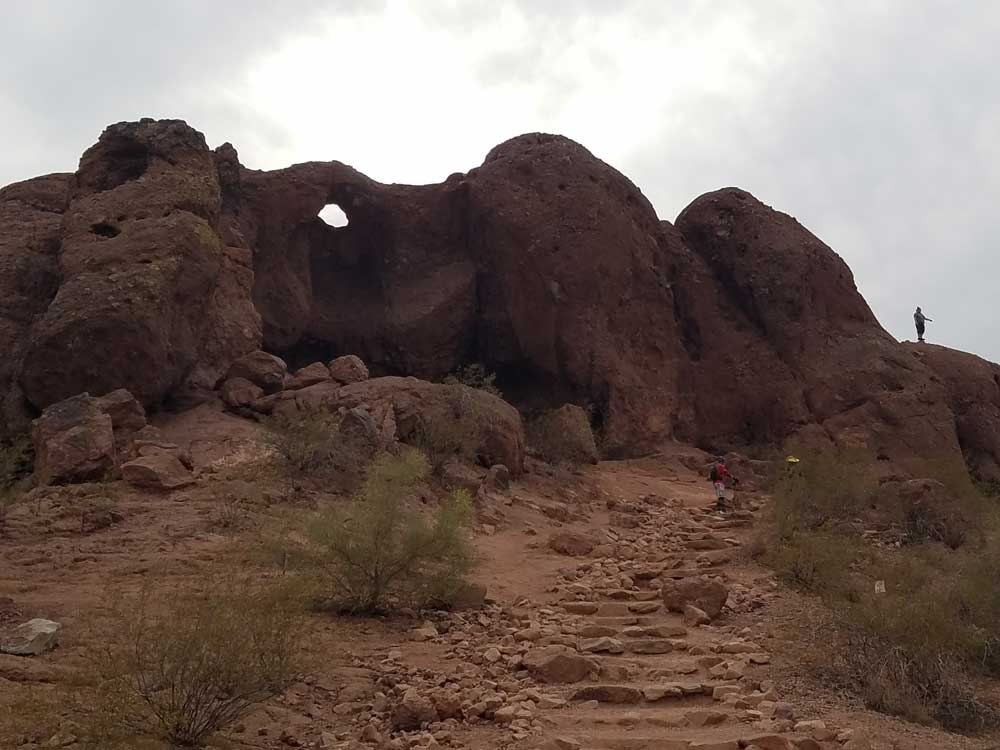
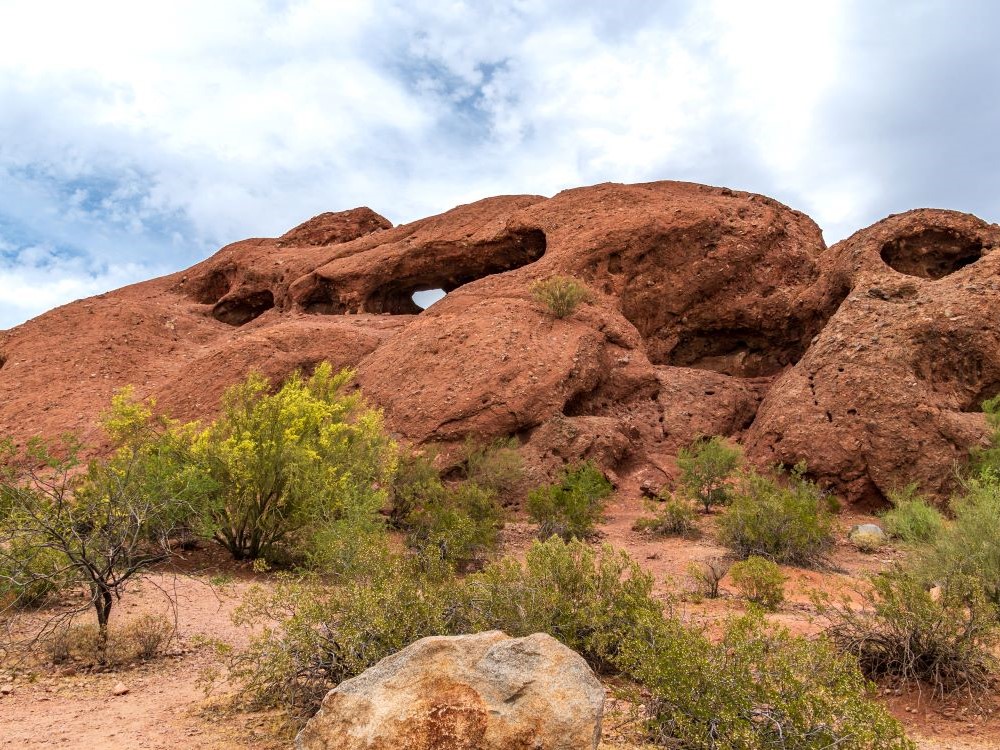
- Hole-in-the-Rock: a red sandstone formation, some 6–15 million years old, with openings eroded by water. The Hohokam likely used sunlight through the ceiling opening to mark the solstices and equinoxes. An easy path leads to the chamber near the summit, with views of Phoenix and a nearly constant breeze.
- Hunt’s Tomb: a small white pyramid on a hilltop, built in 1931 for Arizona’s first governor, George W. P. Hunt, who was buried there in 1934.
The area was a reservation for the Maricopa and Pima in 1879 and briefly Papago-Saguaro National Monument (1914–1930), before being divided among the state, Tempe and the Salt River Project. Phoenix purchased the state’s part in 1959, and the Phoenix Zoo opened here in 1962.
This article uses material from the Wikipedia article "Papago Park", and "Hole-in-the-Rock (Papago Park)", which is released under the Creative Commons Attribution-Share-Alike License 3.0