Tourist destination and a major center for minimalist art including Building 98, the Chinati Foundation, artisan shops, historical architecture, a classic Texas town square, modern art installments, art galleries, and the Marfa lights.
General Information
- Hours:
- n/a
- Fees:
- n/a
- Pet Policy:
- n/a
- Closest cities with hotels:
- Alpine, 26 miles
- Seasons:
- All year; the summits are pleasant even in midsummer
From El Paso (194 miles): Head southwest on E Mills Ave toward N Campbell St. Turn right at the 1st cross street onto N Campbell St. Use the right 2 lanes to turn right to merge onto I-10 E. Take exit 140A toward US-90/TX-54/Van Horn Dr. Merge onto Frontage Rd. Turn right onto US-90 E/Van Horn St.
Overview
Marfa is a small town in the high desert of far West Texas, in the Chihuahuan Desert at an elevation of about 4,700 feet, and it has become a famous destination for contemporary art, minimalist design, and wide-open desert scenery. It is known for the Chinati Foundation, an art museum founded by the artist Donald Judd, for the Prada Marfa art installation, and for the mysterious Marfa Lights that appear on the horizon at night. With a population of about 1,700, it has a dramatic landscape and a creative, offbeat community.
Visitors come to Marfa for art, for the historic downtown with its galleries and shops, and for its restaurants and unique lodging such as the Hotel Paisano and El Cosmico. They also come for the stargazing under the dark skies, for the nearby McDonald Observatory, and as a base for exploring Big Bend National Park, Fort Davis, and the Davis Mountains, and the town is about three hours from El Paso and Midland.
History
Marfa was founded in 1883 as a railroad water stop, and legend says that its name came from a character in Dostoevsky's novel The Brothers Karamazov, which a railroad official's wife was reading. It grew as a ranching and cattle-shipping town, and in the 1930s it was a military post, and it was the filming location for the 1956 movie Giant, which starred James Dean, Elizabeth Taylor, and Rock Hudson. In the 1970s, the artist Donald Judd moved to Marfa from New York and bought buildings and land to install large-scale works of art, and the Chinati Foundation opened in 1986. Since then, artists, designers, and visitors from around the world have been drawn to the town.
Sightseeing and Popular Landmarks
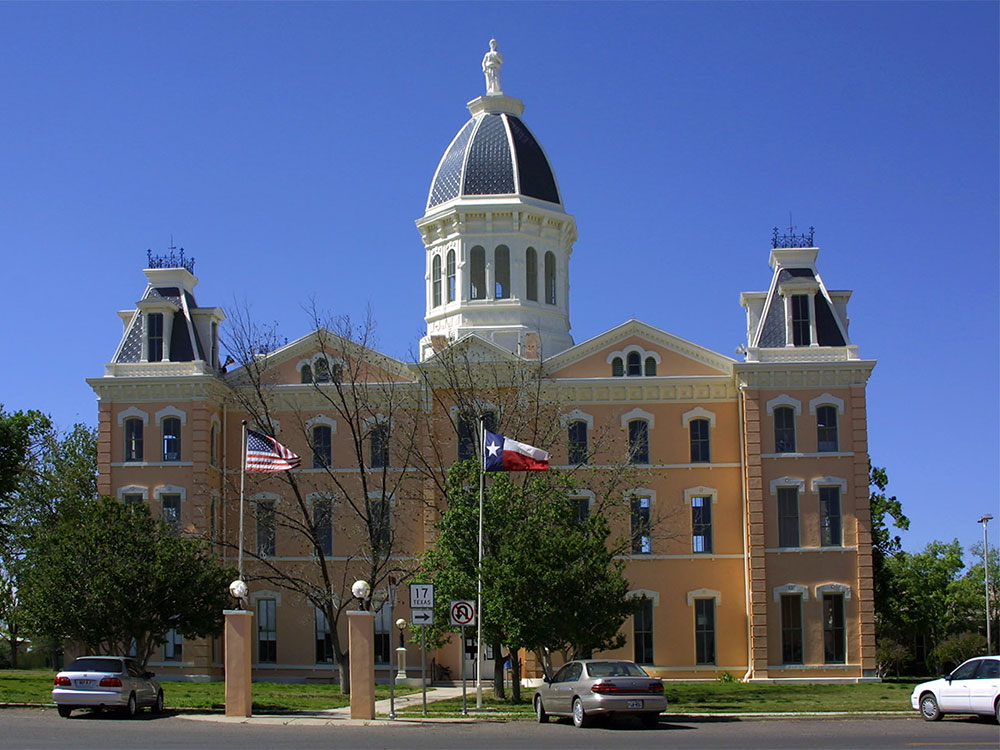
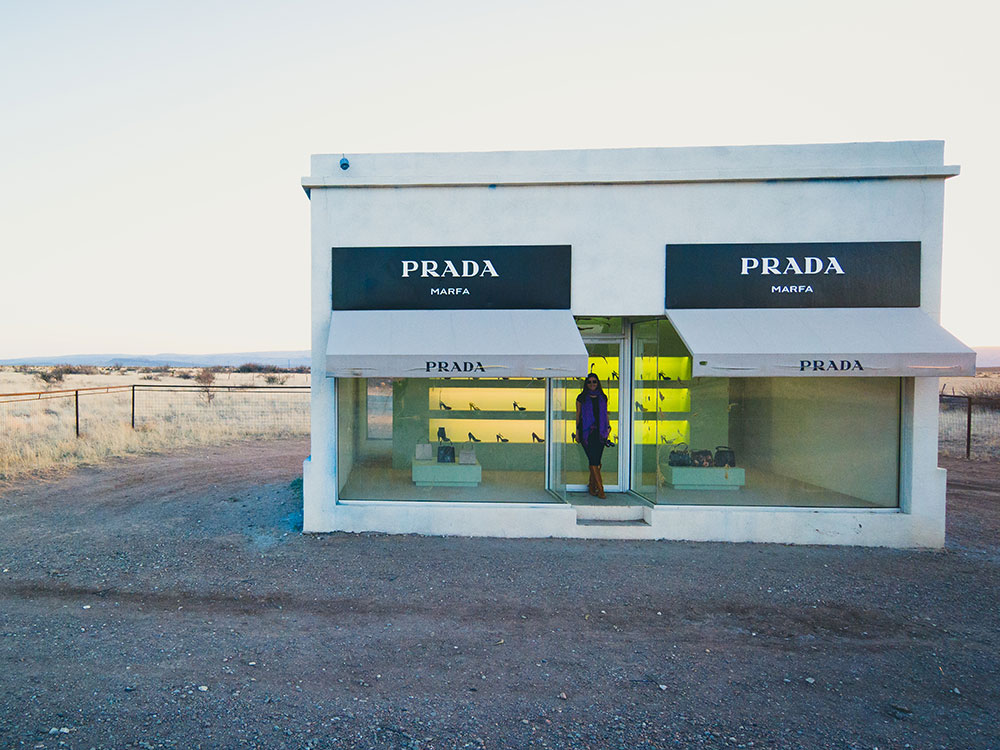
The Chinati Foundation is a museum of contemporary art on the grounds of a former Army fort, with Judd's concrete boxes in the fields and his aluminum boxes in artillery sheds, and tours are offered. Prada Marfa, a sculpture of a luxury boutique in the desert about 35 miles northwest of town, is a popular photo stop, and the Presidio County Courthouse is a Second Empire building from 1886 that dominates the town. The Hotel Paisano, where the cast of Giant stayed, is a historic hotel in the downtown, and the Marfa Lights Viewing Area, east of town on Highway 90, is a roadside spot for seeing the mysterious lights.
Culture and Museums
The Chinati Foundation and the Judd Foundation are the main cultural attractions, and the town is full of art galleries, bookstores, and studios. The Ballroom Marfa is a nonprofit art space, and the Marfa Public Radio and the Marfa Film Festival add to the scene. The Marfa Myths music festival and the Trans-Pecos Festival of Music and Love draw visitors each year, and the Marfa Book Company and the Hotel Paisano are local institutions.
Parks
The surrounding landscape is the main attraction: the Davis Mountains State Park and the Fort Davis National Historic Site are about 25 miles away, and Big Bend National Park is about 100 miles to the south. The McDonald Observatory, on Mount Locke, offers star parties under some of the darkest skies in the country, and the Marfa Lights are visible from the viewing area. The high desert grasslands, the Chinati Mountains, and the Rio Grande are great for hiking, birding, and scenic drives.
Seasons and Weather
Marfa has a semi-arid, high desert climate. Summers are warm, with highs in the 90s°F and cool nights, and winters are cool, with highs in the 50s°F and cold nights that can drop below freezing. Rainfall is limited, about 12 inches a year, with most falling in the summer monsoon. Spring and fall are the most pleasant seasons, and the town is busiest on weekends and during art events.
Things to Do
Visit the Chinati Foundation
Tour Donald Judd's museum of large-scale permanent installations, spread across more than 30 former military buildings on the grounds of old Fort D. A. Russell and showing work by 13 artists.
Tour the Judd Foundation
Visit Donald Judd's preserved homes and studios for a closer look at the artist's vision and influence on modern art.
Watch for the Marfa Lights
Head to the viewing station 9 miles east of town on US 67 after dark to look for the unexplained glowing orbs first recorded in 1883 and reported ever since; the town celebrates them each year with the Marfa Lights Festival.
See Prada Marfa
Drive 26 miles northwest to the famous faux-storefront art installation standing alone in the desert near Valentine — one of the most photographed landmarks in West Texas.
Explore Downtown Galleries and Ballroom Marfa
Browse the contemporary galleries and creative studios that have made the town an internationally recognized arts destination, and catch rotating exhibitions and cultural programs at Ballroom Marfa.
Visit the Marfa and Presidio County Museum
Learn about local ranching history, early settlement, and military heritage predating the art scene.
See the Presidio County Courthouse
Take in the historic courthouse, one of downtown Marfa's most recognizable architectural landmarks.
Shop Local Boutiques and Bookstores
Browse shops around the town square selling art, western goods, books, and locally made crafts.
This article uses material from Wikipedia as well as information from official tourism and institutional sources. Key references include Visit Marfa, Chinati Foundation, Judd Foundation, McDonald Observatory, Texas Tourism, and National Weather Service Midland/Odessa. Wikipedia material is from the article "Marfa, Texas", and is available under the Creative Commons Attribution-Share-Alike License 3.0.