
West Texas regional hub known for its musical heritage, thriving university community, expansive plains landscape, and growing arts, culture, and wine industries.
Places to See in Lubbock
Jeff P from Berkeley, CA, USA, CC BY 2.0, via Wikimedia Commons; Image Size Adjusted

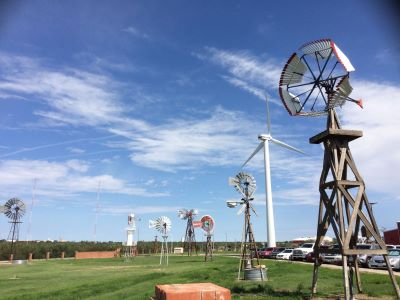
American Windmill Museum
Expansive indoor and outdoor museum featuring over 150 historic windmills, large-scale murals, and model train exhibits that explore the evolution of wind power in America.
Jeff P from Berkeley, CA, USA, CC BY 2.0, via Wikimedia Commons; Image Size Adjusted
Buddy Holly Center
Interactive museum and gallery space dedicated to preserving the legacy of a pioneering rock and roll musician through exhibits, artifacts, and educational programs.
Jeff P from Berkeley, CA, USA, CC BY 2.0, via Wikimedia Commons; Image Size Adjusted
Lubbock Lake National Historic Landmark
Archaeological and natural history preserve featuring ancient cultural artifacts, interpretive trails, and active excavation sites spanning nearly 12,000 years of human history.
Jeff P from Berkeley, CA, USA, CC BY 2.0, via Wikimedia Commons; Image Size Adjusted
Museum of Texas Tech University
Multidisciplinary museum offering exhibitions in natural sciences, fine arts, anthropology, and history, along with a planetarium and educational programming.
Jeff P from Berkeley, CA, USA, CC BY 2.0, via Wikimedia Commons; Image Size Adjusted
National Ranching Heritage Center
Expansive indoor and outdoor museum preserving the legacy of ranching through historic structures, western art, and immersive educational exhibits.
Jeff P from Berkeley, CA, USA, CC BY 2.0, via Wikimedia Commons; Image Size Adjusted
Prairie Dog Town
Open-air wildlife viewing area where visitors can observe a thriving colony of black-tailed prairie dogs in their natural habitat.

Jeff P from Berkeley, CA, USA, CC BY 2.0, via Wikimedia Commons; Image Size Adjusted
Silent Wings Museum
World War II aviation museum dedicated to the history of the U.S. military glider program, featuring restored aircraft, immersive exhibits, and personal artifacts from glider pilots.
Overview
Lubbock is a city on the flat plains of West Texas, in the Llano Estacado, and it is best known as the home of Texas Tech University and the birthplace of rock and roll pioneer Buddy Holly. It is the "Hub City" of the South Plains, a center for agriculture, particularly cotton, and for healthcare and education, and it is the largest city in the region. The city is also at the heart of the Texas High Plains wine region, which produces most of the state's grapes.
Visitors come to Lubbock for the Buddy Holly Center and his grave, for the National Ranching Heritage Center, and for the American Windmill Museum. They also come for Texas Tech football and basketball games, for wine tasting, and for nearby Lubbock Lake Landmark and the Silent Wings Museum, and it is a stop on the way to the Palo Duro Canyon and the Caprock Canyons.
History
The area was home to the Comanche, and then buffalo hunters and ranchers moved in during the 1870s. The city was founded in 1890 and named for Thomas Lubbock, a Texas Ranger and Confederate officer, and it grew after the arrival of the railroad and the development of irrigation made cotton farming possible. Texas Technological College was established in 1923, and it has grown into one of the largest universities in the state. Buddy Holly was born in Lubbock in 1936 and recorded hits such as "That'll Be the Day" and "Peggy Sue" before dying in a plane crash in 1959 at age 22. A major tornado in 1970 destroyed parts of downtown, and the city rebuilt.
Sightseeing and Popular Landmarks
The Buddy Holly Center has exhibits on his life and music, including his glasses and his guitar, and his grave is in the City of Lubbock Cemetery. The National Ranching Heritage Center is an outdoor museum of more than 50 historic ranch structures, and the American Windmill Museum has one of the largest collections of windmills in the world. Prairie Dog Town, a park with a colony of prairie dogs, and the Museum of Texas Tech University has art and natural history exhibits.
Culture and Museums
The Museum of Texas Tech University has a large collection of art, natural science, and anthropology, and the Silent Wings Museum has the story of WWII glider pilots. Lubbock Lake Landmark is an archaeological site with evidence of human occupation for more than 12,000 years, and the Buddy Holly Center hosts concerts and events. The Lubbock Symphony Orchestra, the Cactus Theater, and the Panhandle-South Plains Fair provide entertainment.
Parks
Lubbock has a number of parks, including Mackenzie Park, which has the Prairie Dog Town, a golf course, and a disc golf course, and the Lubbock Memorial Arboretum. The Canyon Lakes system is a series of lakes and trails in the Yellow House Canyon, and the Lubbock Lake Landmark has trails. Palo Duro Canyon State Park and Caprock Canyons State Park are within a two-hour drive.
Seasons and Weather
Lubbock has a semi-arid climate. Summers are hot, with highs in the mid 90s°F, and winters are cool, with highs in the 50s°F and about 9 inches of snow. The city is known for wind and dust, especially in spring, and thunderstorms and tornadoes are possible from April through June. Fall and spring are the best seasons to visit.
This article uses material from Wikipedia as well as information from official tourism and institutional sources. Key references include Visit Lubbock, Buddy Holly Center, National Ranching Heritage Center, American Windmill Museum, Texas Tourism, and National Weather Service Lubbock. Wikipedia material is from the articles "Lubbock, Texas" and "Buddy Holly", and is available under the Creative Commons Attribution-Share-Alike License 3.0.