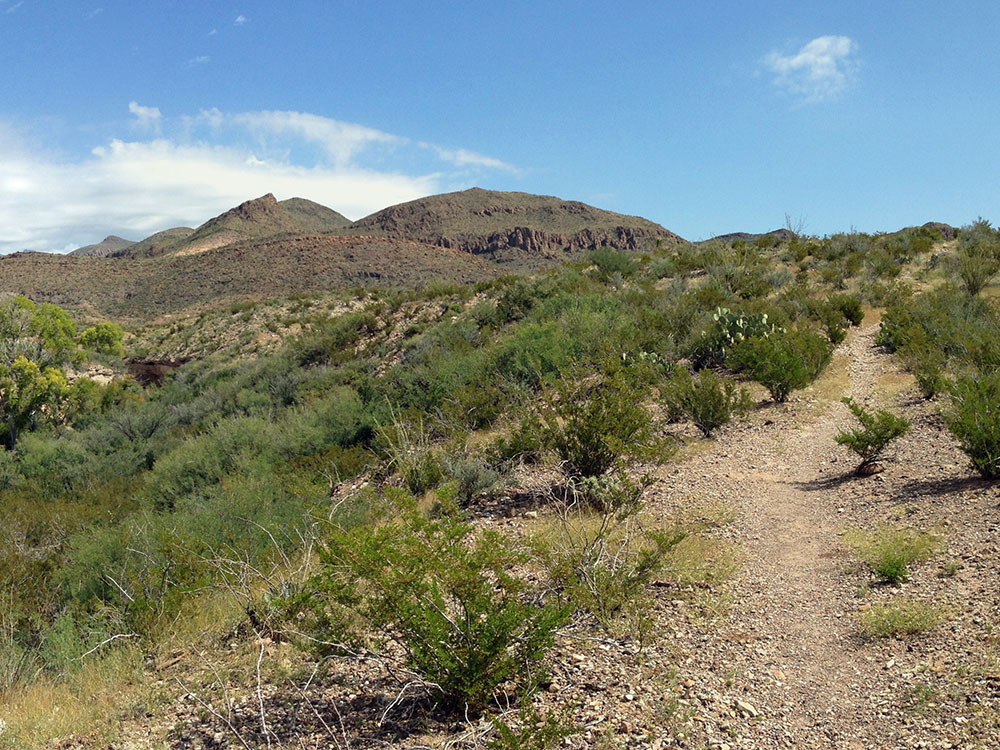
Desert trail leading across open grasslands and volcanic terrain to a secluded spring surrounded by lush vegetation beneath striking twin mountain peaks.
Daylight hiking is recommended
Trail conditions may vary due to weather and water availability
Motorcycle Entrance Pass (7 days): $25
Individual Entrance Pass (7 days): $15
America the Beautiful Pass accepted
How to Get There
From Study Butte / Terlingua (15 mi): Take TX-118 east into Big Bend National Park, continue to Maverick Junction, follow Ross Maxwell Scenic Drive south for approximately 20 miles, and park at the signed Mule Ears Spring Trailhead along the roadway.
Overview
The Mule Ears Spring Trail offers hikers a journey through some of the most distinctive desert scenery in Big Bend National Park. Named for the nearby Mule Ears Peaks, two prominent volcanic formations that rise dramatically above the surrounding landscape, the trail traverses broad desert grasslands dotted with creosote, sotol, ocotillo, and prickly pear cactus. As visitors cross the arid terrain, the iconic peaks remain a constant landmark, providing one of the park's most recognizable and photographed vistas. The gradual route allows hikers to appreciate the vast scale of the Chihuahuan Desert while experiencing its remarkable plant diversity.
The destination is a rare and valuable desert spring that supports an oasis-like environment amid an otherwise dry landscape. Cottonwoods, reeds, and dense vegetation flourish around the water source, attracting a variety of birds and wildlife. Evidence of historic human use can also be found near the spring, reflecting the importance of dependable water sources in this remote region. The combination of volcanic geology, desert ecology, and the peaceful setting of the spring makes this hike one of the most rewarding short trails along the Ross Maxwell Scenic Drive and a favorite among photographers, naturalists, and adventurous travelers.
This article uses material from the Wikipedia articles and official tourism pages for the https://www.nps.gov/thingstodo/mule-ears-spring-trail.htm which are released under the Creative Commons Attribution-Share-Alike License 3.0.