Historic thermal springs flowing beside a river through a scenic canyon, offering visitors a relaxing soak in naturally warmed mineral water.
General Information
- Hours:
- Open daily, 24 hours a day
Access may be affected by flooding, weather, or river conditions
Daylight visits are recommended for safety and sightseeing - Fees:
-
Private Vehicle Entrance Pass (7 days): $30
Motorcycle Entrance Pass (7 days): $25
Individual Entrance Pass (7 days): $15
America the Beautiful Pass accepted - Pet Policy:
- Pets are not permitted in the hot springs area or on nearby trails
- Closest cities with hotels:
- Study Butte / Terlingua (approximately 35 mi)
- Seasons:
- Fall, Winter, and Spring provide the most comfortable conditions; open year-round
- Location:
- Hotnal Park, Texas
- Website:
- nps.gov
How to Get There
From Study Butte / Terlingua (35 mi): Take TX-118 east into Big Bend National Park, follow the main park road toward Panther Junction, continue east on the Rio Grande Village Road, turn onto Hot Springs Road, and follow the road to the Hot Springs Historic District parking area near the river.
Overview
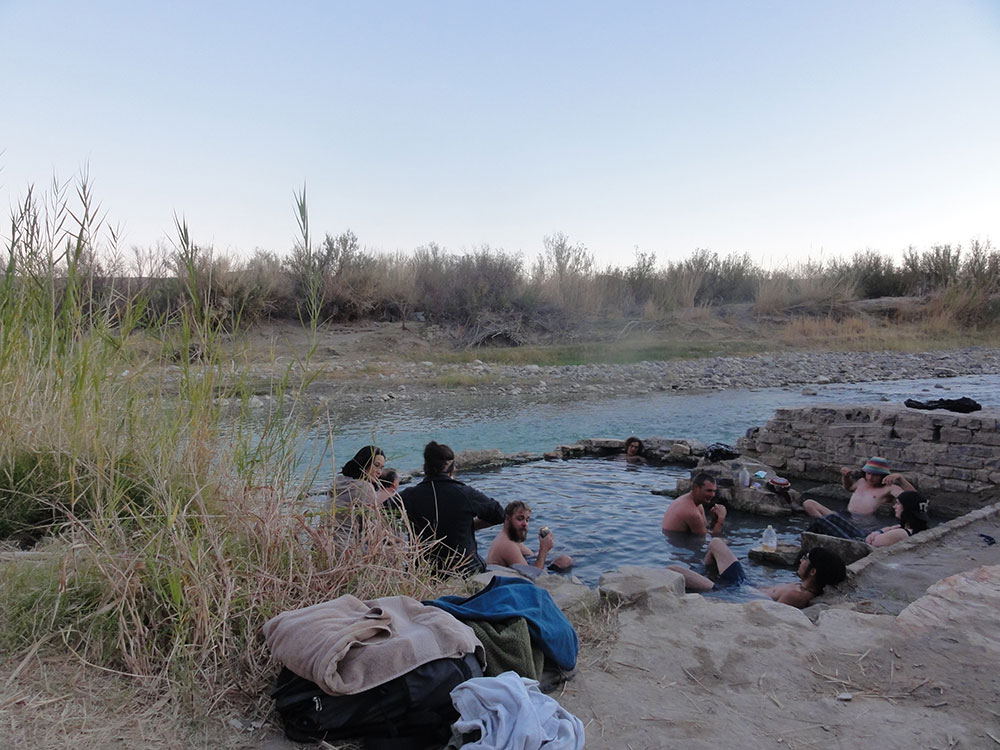
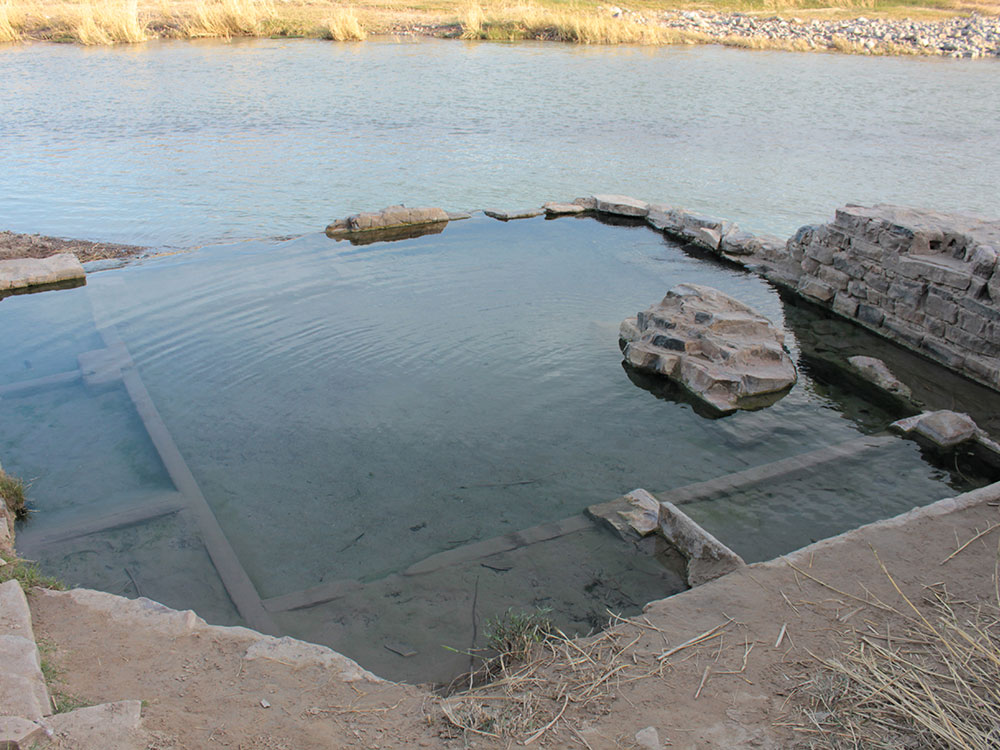
The Big Bend Hot Springs offer one of the most unique experiences in Big Bend National Park, where visitors can soak in warm mineral-rich waters while looking out across the Rio Grande into Mexico. The springs emerge from the ground at temperatures exceeding 100 degrees Fahrenheit and collect in a stone-lined soaking area along the riverbank. Surrounded by towering canyon walls, desert vegetation, and expansive river views, the site combines natural beauty with a sense of tranquility rarely found in such a remote setting.
Beyond its scenic appeal, the area is rich in history. Indigenous peoples used the springs for centuries before settlers established a small resort community here in the early twentieth century. Remnants of the Hot Springs Historic District, including foundations and interpretive exhibits, remain visible today and tell the story of the region's past. Visitors can explore the short trail to the springs, admire ancient pictographs and historic structures nearby, and enjoy one of the most memorable cultural and natural attractions within Big Bend National Park.
History
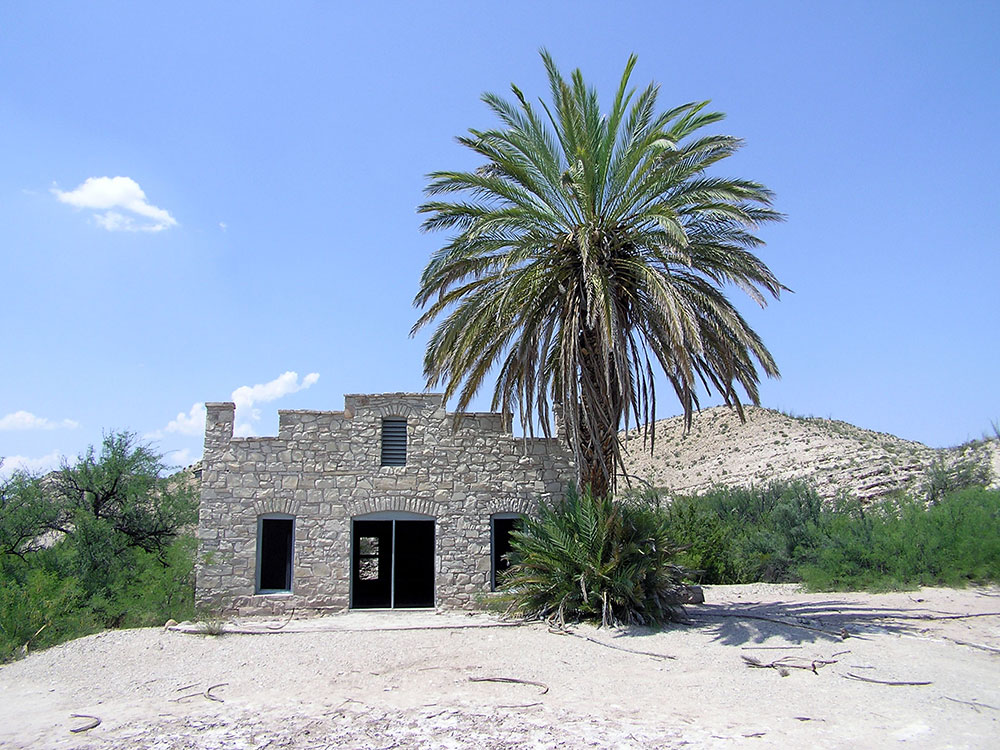
J.O. Langford homesteaded here in 1909, hoping the springs would restore his health, and he built a bathhouse and a resort that operated until the 1940s. The ruins of the bathhouse, store and post office still stand, along with pictographs on the cliffs left by earlier peoples.
Things to Do
Soak in the Spring
Relax in the 105°F water in the foundation of the old bathhouse beside the Rio Grande.
See the Historic Buildings
Walk past the old store, post office and motel ruins.
Look for Pictographs
Pictographs and petroglyphs can be seen on the cliffs along the trail.
Check the River Level
The spring can be flooded when the Rio Grande runs high.
This article uses material from the Wikipedia articles and official tourism pages for the Big Bend Hot Springs, which are released under the Creative Commons Attribution-Share-Alike License 3.0.