
Interactive exhibits and fossil displays that explore the natural history of Texas from prehistoric times to the present.
General Information
- Hours:
- Tuesday to Saturday: 10am to 5pm
Sunday: 1pm to 5pm
Closed Mondays, major holidays, and during UT Austin home football games
Last admission at 4:30pm - Fees:
-
General Admission: $10
Children 12 and under: $5
UT Austin students, faculty, and staff (with ID): Free
Discounted Admission: $3–$6 for eligible groups - Pet Policy:
- Pets are not allowed
- Seasons:
- All year
- Location:
- 2400 Trinity St, Austin, TX 78712
- Website:
- sciencemuseum.utexas.edu
How to Get There
Take I-35 North, exit at Dean Keeton Street, turn left, then right onto Trinity Street to reach the museum entrance.
Overview
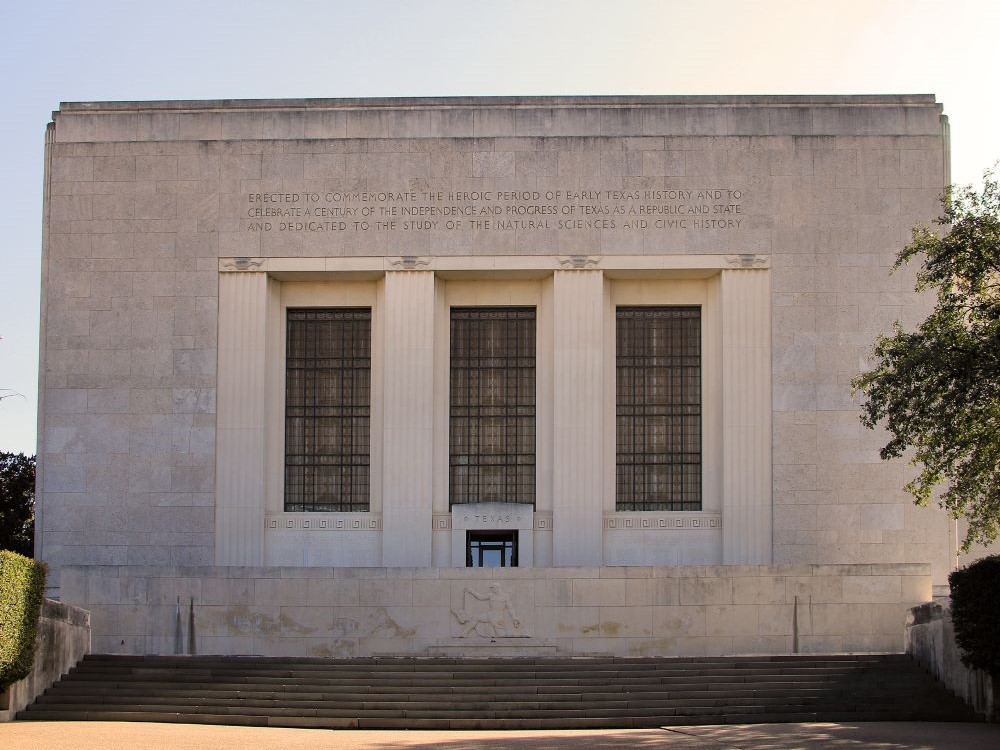
The Texas Science & Natural History Museum, on the University of Texas at Austin campus, traces the state's natural history through fossils, dinosaurs, and hands-on exhibits. Formerly the Texas Memorial Museum, it reopened in 2023 after a major renovation built around an overhauled Great Hall.
Great Hall
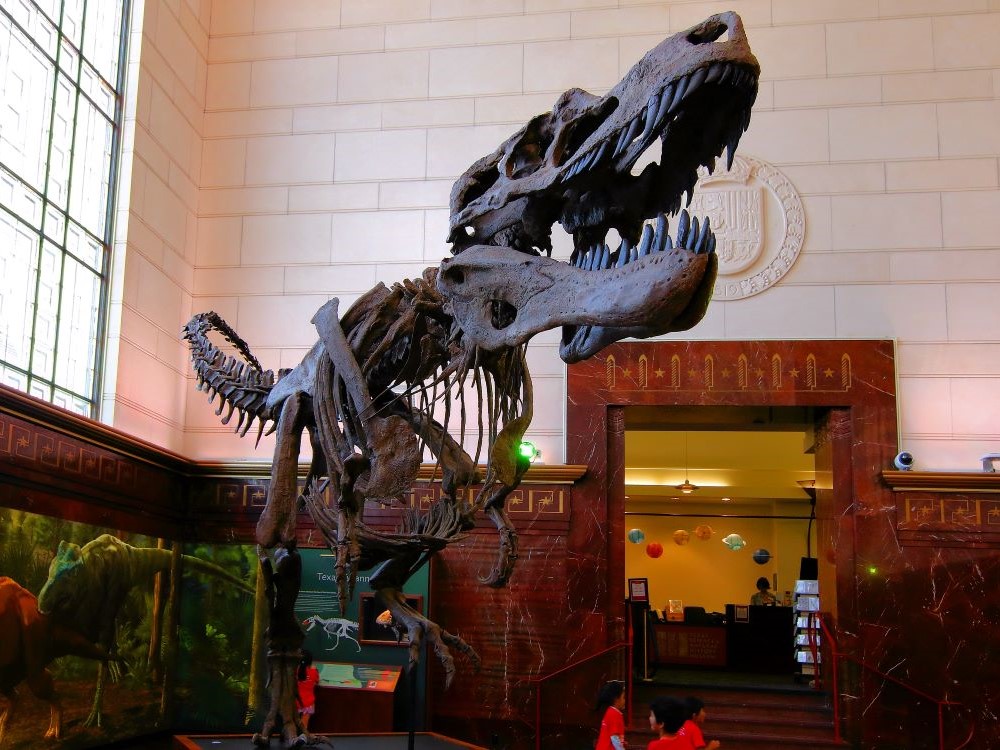
The Great Hall holds the museum's largest specimens, a large-scale timeline exhibit called Texas Transformation tracing turning points in the state's natural history, and new murals depicting Big Bend as it looked 67 million years ago.
Family Exhibits
Interactive and family-friendly displays throughout the museum make it engaging for visitors of all ages.
World-Renowned Specimens
Great Hall highlights include:
- Quetzalcoatlus northropi: a pterosaur with a 33-foot wingspan, the largest flying animal known to have existed
- Tyrannosaur skeleton: a 33-foot reconstruction modeled on bones found by University of Texas researchers
History
The museum opened in 1939 as the Texas Memorial Museum, built with federal and state funds to mark the centennial of Texas independence, in a limestone Art Deco building on the University of Texas campus. For decades it displayed the university's natural history collections, including fossils found by UT paleontologists across Texas, and it was later renamed the Texas Science & Natural History Museum.
Things to Do
See the Pterosaur
A model of Quetzalcoatlus, a giant pterosaur discovered in Big Bend, hangs in the great hall.
See the Onion Creek Mosasaur
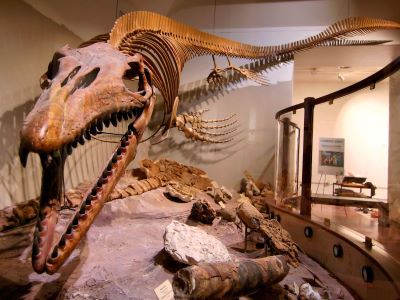
The skeleton of a marine reptile found near Austin swims above the fossil hall.
Explore the Exhibits
Exhibits cover dinosaurs, fossils, gems, minerals and Texas wildlife.
Visit the Blanton Museum
The Blanton Museum of Art is a short walk across campus.
This article uses material from the Wikipedia articles and official tourism pages for the Texas Science & Natural History Museum, which are released under the Creative Commons Attribution-Share-Alike License 3.0.