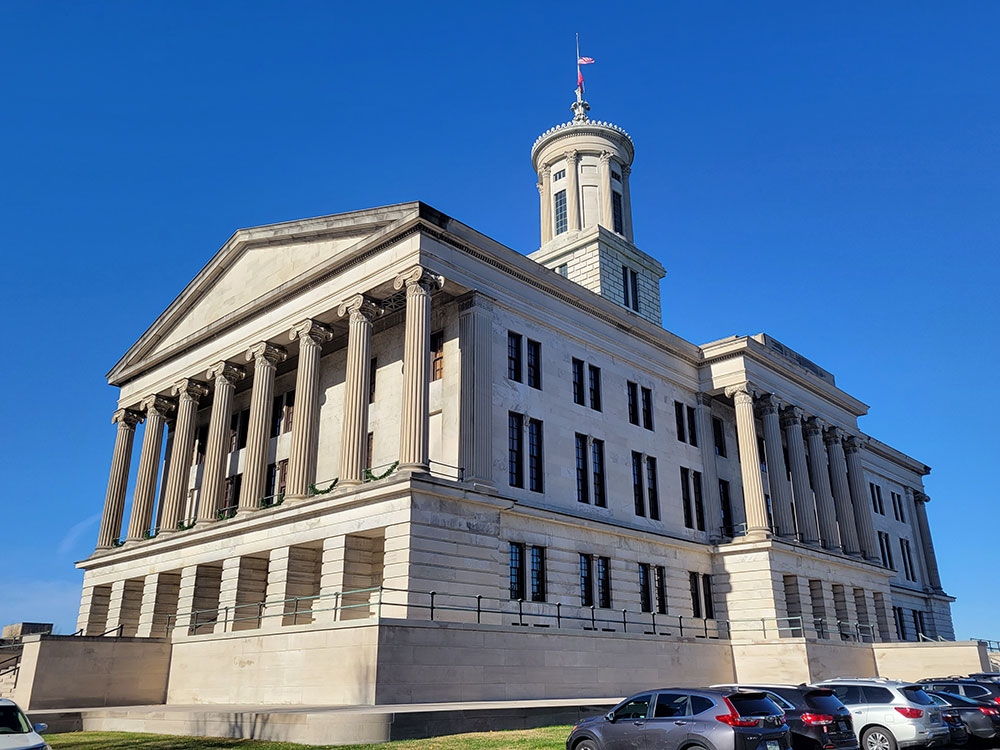
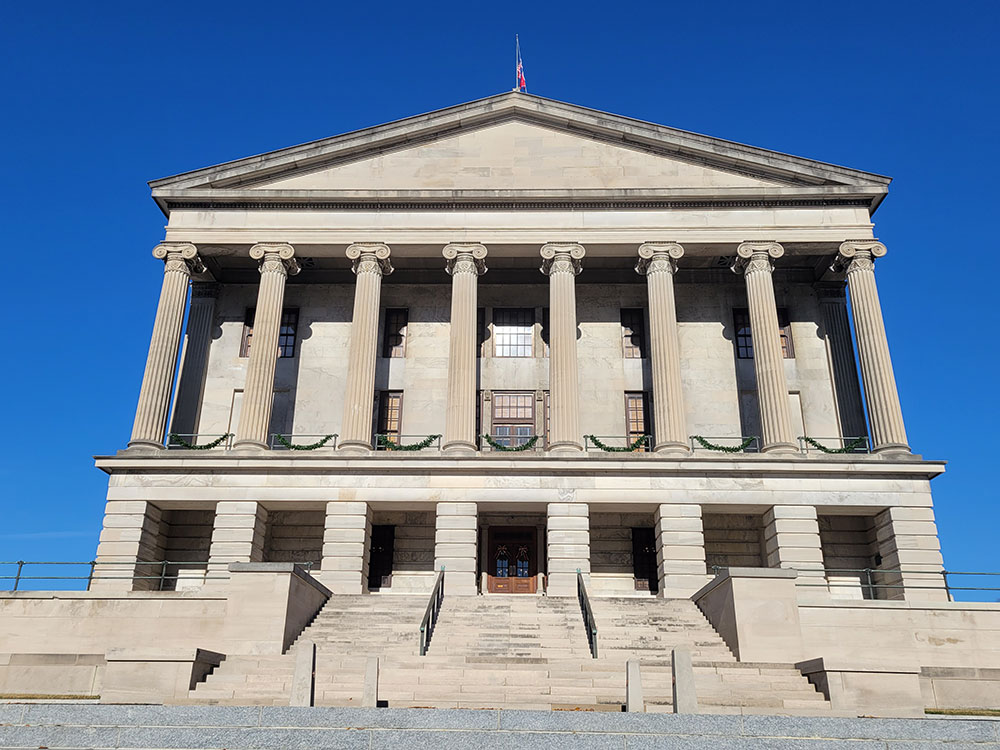
Capitol serving as home of the Tennessee General Assembly and the location of the governor's office is one of Nashville's most prominent examples of Greek Revival architecture
General Information
Closed weekends and state holidays.
How to Get There
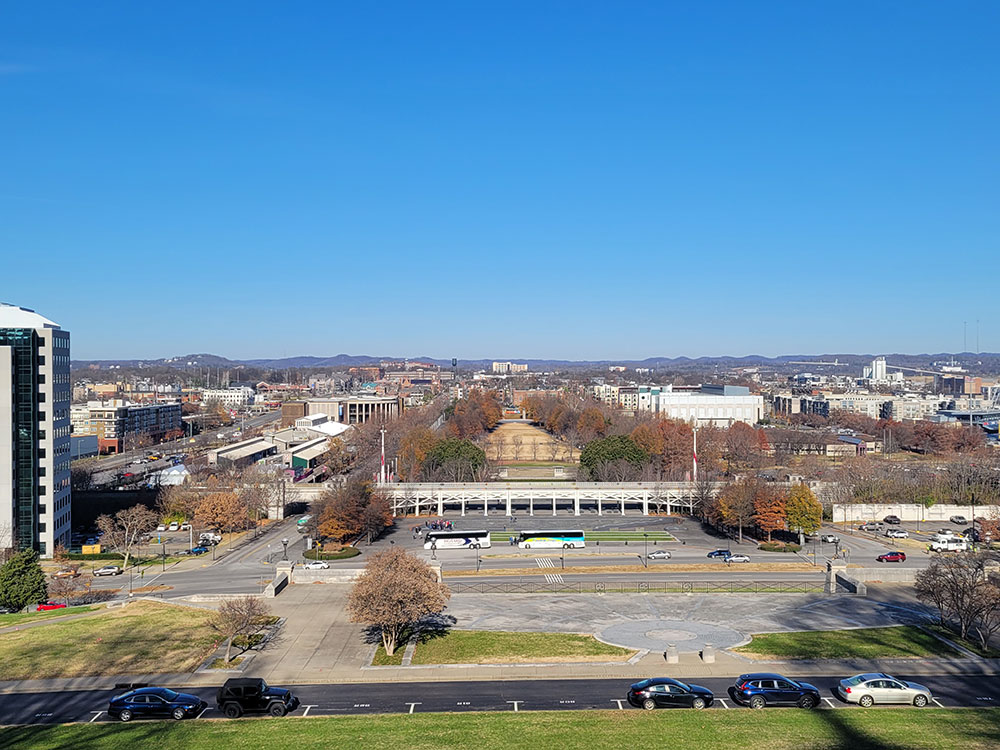
From Downtown Nashville (0.5 mi): Head north toward Capitol Hill via Charlotte Avenue, Union Street, or Dr. M.L.K. Jr. Boulevard and follow signs to the Tennessee State Capitol overlooking downtown Nashville.
Tours
Self-guided tours are available Monday–Friday from 9:00am to 4:00pm. Guided tours (approximately 45 minutes) typically begin at 9:00am, 10:00am, 11:00am, 1:00pm, 2:00pm, and 3:00pm from the first-floor information desk. tps://tnmuseum.org/state-capitol)
Overview
The Tennessee State Capitol, is the seat of government for Tennessee, serving as home of the Tennessee General Assembly and the location of the governor's office. Designed by architect William Strickland (1788-1854) of Philadelphia and Nashville, it was built between 1845 and 1859 and is one of Nashville's most prominent examples of Greek Revival architecture. The building, one of 12 state capitols that does not have a dome, was added to the National Register of Historic Places in 1970 and named a National Historic Landmark in 1971.
The State Capitol was designed by renowned Philadelphia architect William Strickland, who modeled it after a Greek Ionic temple. The prominent lantern structure located above the roof line of the Tennessee state capitol is a design based upon the Choragic Monument of Lysicrates in Athens that honors the Greek god Dionysus doing battle with Tyrrhenian pirates. The cornerstone of the Tennessee state capitol was itself laid on July 4, 1845 and the building was completed fourteen years later in 1859.
The American Society of Civil Engineers has listed the building as a civil engineering landmark in recognition of its innovative construction, which made unusually extensive use of stone and was an early example of the use of structural iron. Both the interior and exterior are built with limestone from a quarry about 1-mile (1.6 km) from the site. Some interior columns were built from single pieces of stone, requiring massive wooden derricks to hoist them into place. Wrought iron, instead of wood, was used for the roof trusses to reduce the building's vulnerability to fire.
Strickland died five years before the building's completion and was entombed in its northeast wall. His son, F. W. Strickland, supervised completion of the structure. William Strickland also designed the St. Mary's Cathedral (located along the base of the capitol hill), as well as Downtown Presbyterian church located just a few blocks away from the state capitol.
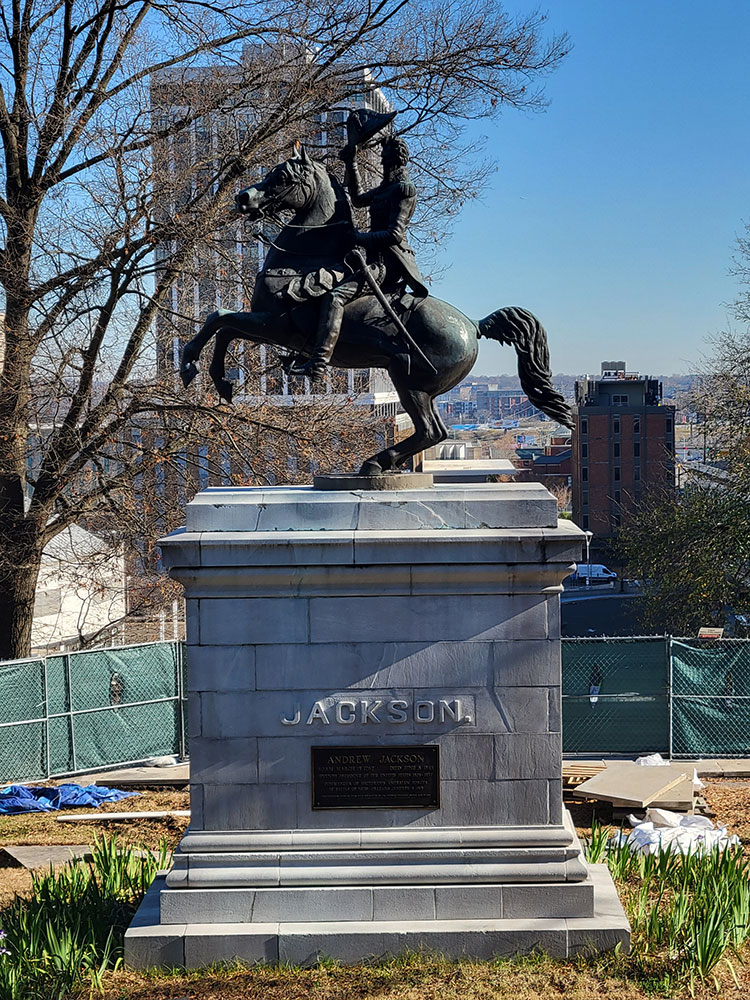
Monuments on the Capitol grounds include statues of two of the three Tennessee residents who served as President of the United States: Andrew Jackson by Clark Mills and Andrew Johnson by Jim Gray. The second President from Tennessee, James K. Polk, is buried in a tomb on the grounds, together with his wife, Sarah Childress Polk. Other monuments on the grounds include the Sgt. Alvin C. York Memorial by Felix de Weldon, the Tennessee Holocaust Commission Memorial, the Sam Davis Memorial at the southwest corner of the Capitol grounds, and the Memorial to Africans during the Middle Passage at the southwest corner of Capitol grounds. The Charles Warterfield Reliquary is a group of broken limestone columns and fragments removed and saved from the State Capitol during the mid-1950s restoration, located near the northern belvedere on Capitol Drive.
This article uses material from the Wikipedia article "Tennessee State Capitol" which is released under the Creative Commons Attribution-Share-Alike License 3.0