.jpg)
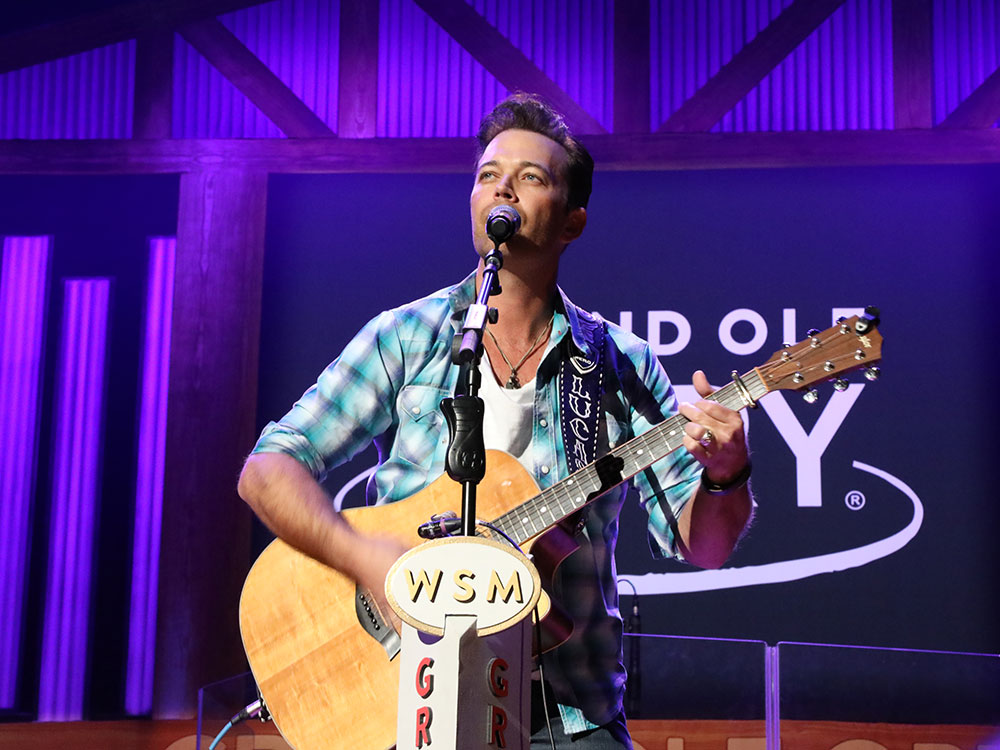
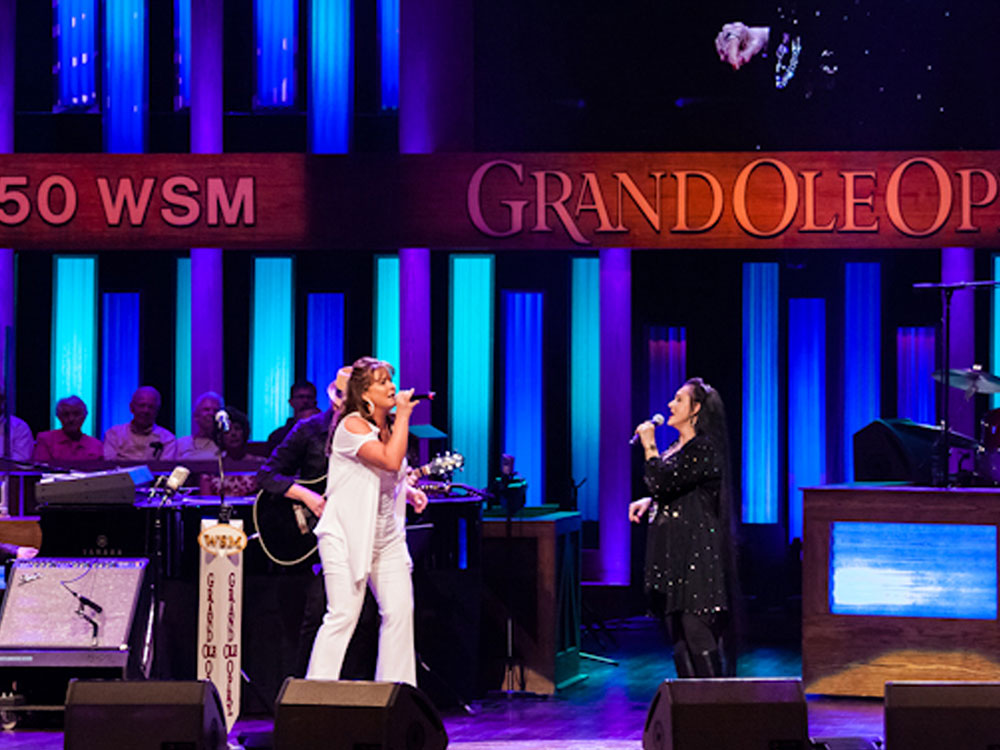
Weekly American country music stage concert showcasing a mix of famous singers and contemporary chart-toppers performing country, bluegrass, Americana, folk, and gospel music as well as comedic performances and skits
General Information
Grand Ole Opry shows are held multiple times weekly throughout the year.
Box office hours vary by event and generally open about 1 hour before showtime.
Grand Ole Opry House tours are available for an additional fee.
Check the official website for current pricing and schedules.
How to Get There
From Nashville (10 mi): Take I-40 E from downtown Nashville, follow signs for Briley Parkway (TN-155), take the Opry Mills/Grand Ole Opry exit, and continue to the Grand Ole Opry House at 600 Opry Mills Dr.
Overview
The Grand Ole Opry is a weekly American country music stage concert in Nashville, Tennessee, founded on November 28, 1925, by George D. Hay as a one-hour radio "barn dance" on WSM. Currently owned and operated by Opry Entertainment (a division of Ryman Hospitality Properties, Inc.), it is the longest-running radio broadcast in US history. Dedicated to honoring country music and its history, the Opry showcases a mix of famous singers and contemporary chart-toppers performing country, bluegrass, Americana, folk, and gospel music as well as comedic performances and skits. It attracts hundreds of thousands of visitors from around the world and millions of radio and internet listeners.
In the 1930s, the show began hiring professionals and expanded to four hours. Broadcasting by then at 50,000 watts, WSM made the program a Saturday night musical tradition in nearly 30 states. In 1939, it debuted nationally on NBC Radio. The Opry moved to a permanent home, the Ryman Auditorium, in 1943. As it developed in importance, so did the city of Nashville, which became America's "country music capital." The Grand Ole Opry holds such significance in Nashville that it is included as a "home of" mention on the welcome signs seen by motorists at the Metro Nashville/Davidson County line.
Membership in the Opry remains one of country music's crowning achievements. Since 1974, the show has been broadcast from the Grand Ole Opry House east of downtown Nashville, with an annual three-month winter foray back to the Ryman from 1999-2020. In addition to the radio programs, performances have been sporadically televised over the years.
Ryman Auditorium was home to the Opry until 1974. By the late 1960s, National Life & Accident desired a new, larger, more modern home for the long-running radio show. Already 51 years old at the time the Opry moved there, the Ryman was beginning to suffer from disrepair as the downtown neighborhood around it fell victim to increasing urban decay. Despite these shortcomings, the show's popularity continued to increase, and its weekly crowds were outgrowing the 3,000-seat venue. The Opry's operators wanted to build a new air-conditioned theater, with greater seating capacity, ample parking, and the ability to serve as a television production facility. The ideal location would be in a less urbanized part of town to provide visitors with a safer, more controlled, and more enjoyable experience.
National Life & Accident purchased farmland owned by a local sausage manufacturer (Rudy's Farm) in the Pennington Bend area of Nashville, nine miles east of downtown and adjacent to the newly constructed Briley Parkway. The new Opry venue was the centerpiece of a grand entertainment complex at that location, which later included Opryland USA Theme Park and Opryland Hotel. The theme park opened to the public on June 30, 1972, well ahead of the 4,000-seat Opry House, which debuted nearly two years later, on Saturday, March 16, 1974. The last show of the Grand Ole Opry at the Ryman Auditorium was held on March 15, 1974.
Opening night was attended by sitting U.S. President Richard Nixon, who played a few songs on the piano. To carry on the tradition of the show's run at the Ryman, a six-foot circle of oak was cut from the corner of the Ryman's stage and inlaid into center stage at the new venue. Artists on stage usually stood on the circle as they performed, and most modern performers still follow this tradition.
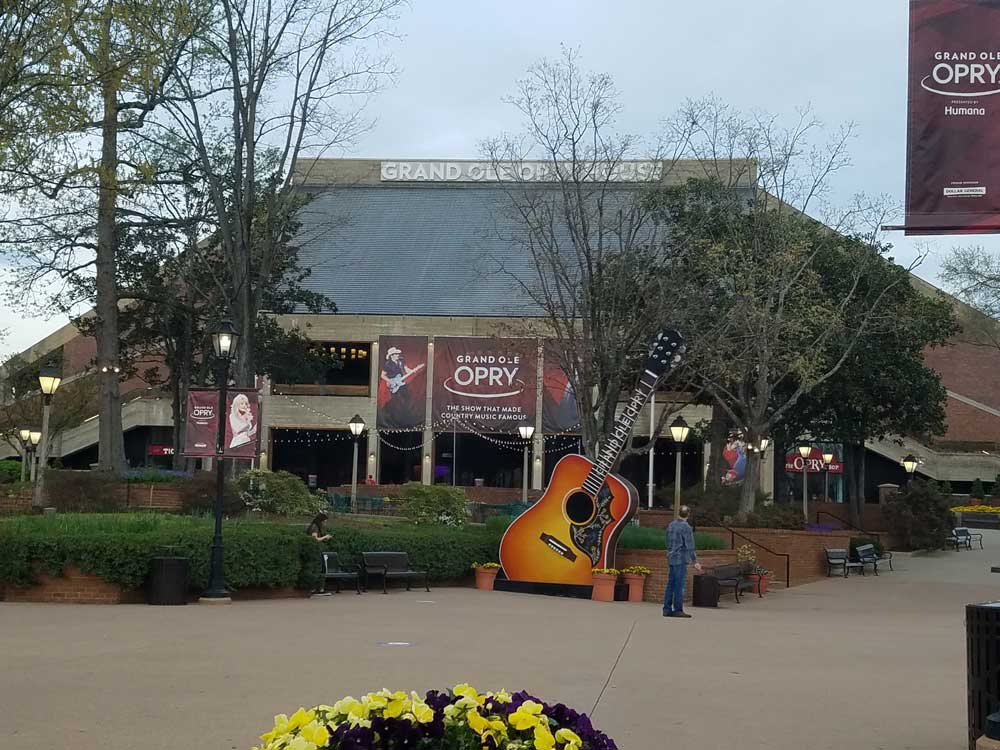
The theme park was closed and demolished following the 1997 season, but the Grand Ole Opry House remains in use. The immediate area around it was left intact, even throughout the construction of Opry Mills, which opened in May 2000. The outside is decorated with the commemorative plaques of country music Grammy winners, formerly of Opryland's StarWalk.
The Grand Ole Opry continues to be performed every Tuesday, Friday, Saturday, and occasionally Wednesday at the Grand Ole Opry House from February through October each year, and the site was added to the National Register of Historic Places on January 27, 2015.
On December 21, 2018, the backstage band room was officially named the Jimmy Capps Music Room in honor of Capps's 60th anniversary on the Opry.
Following the departure of the Opry, Ryman Auditorium sat mostly vacant and decaying for 20 years. An initial effort by National Life & Accident to tear down the Ryman and use its bricks to build a chapel at Opryland USA was met with resounding resistance from the public, including many influential musicians of the time. The plans were abandoned, and the building remained standing with an uncertain future. Despite the absence of performances, the building remained a tourist attraction throughout the remainder of the 1970s and 1980s.
In 1991 and 1992, Emmylou Harris performed a series of concerts there and released some of the recordings as an album entitled At the Ryman. The concert and album's high acclaim renewed interest in reviving Ryman Auditorium as an active venue. Beginning in September 1993, Gaylord Entertainment initiated a full renovation of the Ryman, restoring it to a world-class concert hall that reopened with a broadcast of A Prairie Home Companion on June 4, 1994.
On Sunday, October 18, 1998, the Opry held a benefit show at Ryman Auditorium, marking its return to the venue for the first time since its final show on March 15, 1974.
Beginning in November 1999, the Opry was held at Ryman Auditorium for three months, partly due to the ongoing construction of Opry Mills. The Opry returned to the Ryman for the three winter months every year until 2019-20, allowing the show to acknowledge its roots while also taking advantage of a smaller venue during an off-peak season for tourism. While still officially the Grand Ole Opry, the shows there are billed as Opry at the Ryman. From 2002 to 2014, a traveling version of the Radio City Christmas Spectacular took up residence at the Grand Ole Opry House each holiday season while the Opry was away. It was replaced by Dr. Seuss' How the Grinch Stole Christmas! The Musical from 2015 in 2017 and by Cirque Dreams Holidaze in 2018.
This article uses material from the Wikipedia article "Grand Ole Opry" which is released under the Creative Commons Attribution-Share-Alike License 3.0
-1000.jpg)
.jpg)