Recording studio opened by rock-and-roll pioneer Sam Phillips where rock and roll, country music, and rockabilly artists, including Johnny Cash, Elvis Presley, Carl Perkins, Roy Orbison, and Jerry Lee Lewis, recorded throughout the mid-to-late 1950s
General Information
Guided tours begin hourly at 10:30am, 11:30am, 12:30pm, 1:30pm, 2:30pm, 3:30pm, and 4:30pm.
Closed Thanksgiving Day and Christmas Day.
Youth (ages 12–18): $18
Children (ages 5–11): $15
Children under 5 are not permitted on standard guided tours.
How to Get There
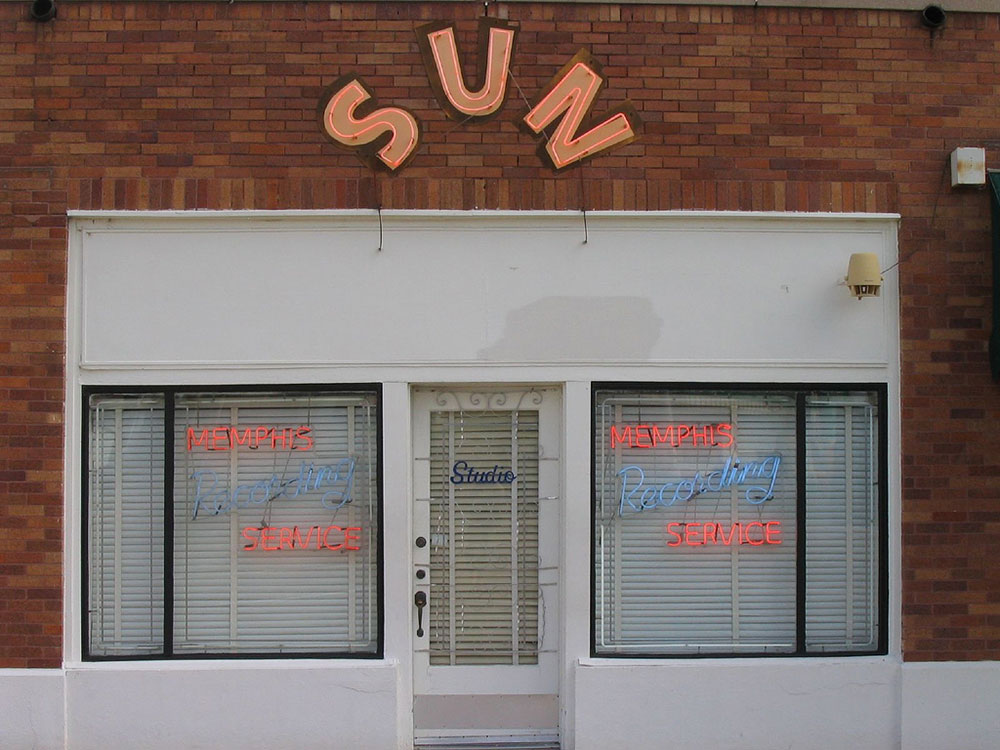
From Downtown Memphis (2 mi): Take Union Avenue east from downtown Memphis and continue to the corner of Union Avenue and Marshall Avenue, where Sun Studio is located at 706 Union Ave.
Overview
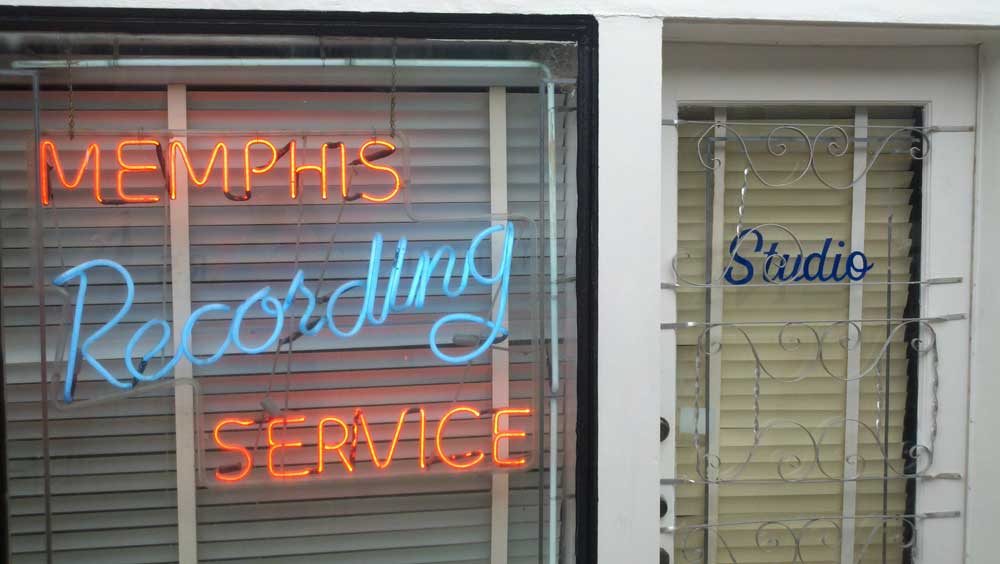
Sun Studio is a recording studio opened by rock-and-roll pioneer Sam Phillips at 706 Union Avenue in Memphis. It was originally called Memphis Recording Service, sharing the same building with the Sun Records label business. Reputedly the first rock and roll single, Jackie Brenton and his Delta Cats' "Rocket 88" was recorded there in 1951 with song composer Ike Turner on keyboards, leading the studio to claim status as the birthplace of rock & roll. Blues and R&B artists like Howlin' Wolf, Junior Parker, Little Milton, B.B. King, James Cotton, Rufus Thomas, and Rosco Gordon recorded there in the early 1950s.
Rock and roll, country music, and rockabilly artists, including Johnny Cash, Elvis Presley, Carl Perkins, Roy Orbison, Charlie Feathers, Ray Harris, Warren Smith, Charlie Rich, and Jerry Lee Lewis, recorded there throughout the mid-to-late 1950s until the studio outgrew its Union Avenue location. Sam Phillips opened the larger Sam C. Phillips Recording Studio, better known as Phillips Recording, in 1959 to replace the older facility. Since Phillips had invested in the Holiday Inn Hotel chain earlier, he also recorded artists starting in 1963 on the label Holiday Inn Records for Kemmons Wilson. In 1957, Bill Justis recorded his Grammy Hall of Fame song "Raunchy" for Sam Phillips and worked as a musical director at Sun Records.
For several years after Presley left Sun, Phillips had success with other acts. Sun Studio became known as a place that nurtured talent and then encouraged it to expand with bigger labels. In 1959, Phillips moved Sun Studio to larger premises at 639 Madison Avenue. By the mid 1960s, Phillips had lost interest in recording and had instead branched out into radio. He opened several radio stations, beginning in the late 1950s, and Sun lost its reputation as an innovative recording studio. In 1968, Sun released its last record. In 1969, Mercury Records label producer Shelby Singleton - noted for producing the Ray Stevens' hit "Ahab the Arab" in 1962, and later Jeannie C. Riley's 1968 hit single "Harper Valley PTA" on his Nashville-based Plantation Records label - purchased the Sun label from Phillips. Singleton merged his operations into Sun International Corporation, which re-released and re-packaged compilations of Sun's early artists in the early 1970s. Singleton moved the firm to Nashville, and sold the building to a plumbing company, who eventually sold it to an auto parts store.
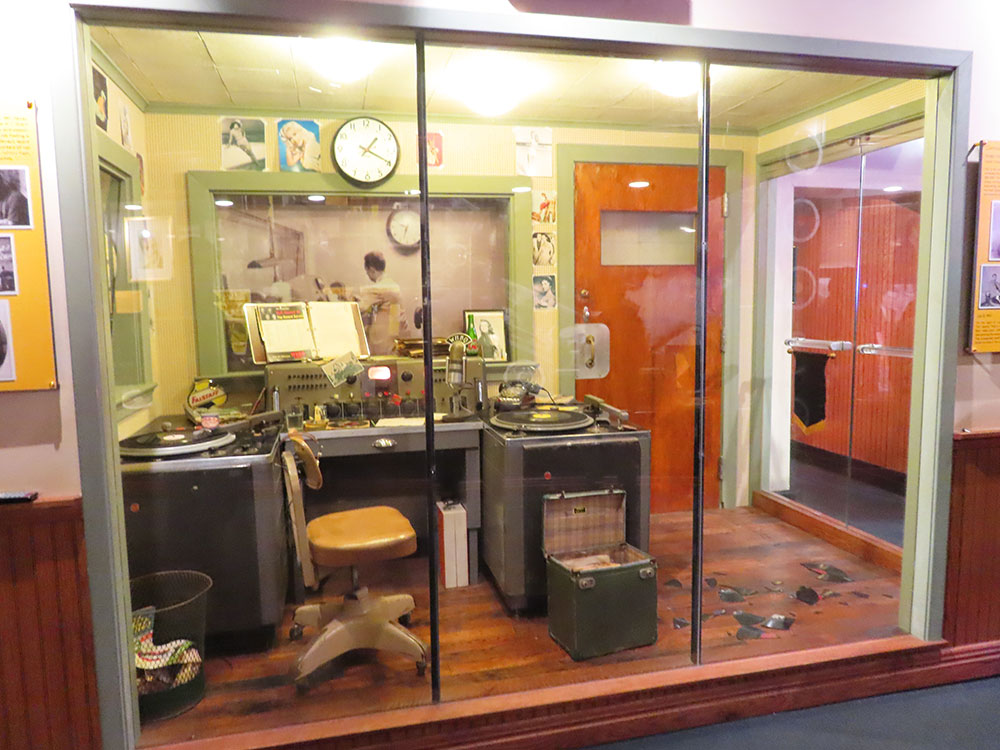
In 1987, ten years after Presley died, Sun Studio was converted back into a recording studio, and soon became a tourist attraction for Presley fans and music lovers in general. The studio was also used by several well known acts to record, including U2, Def Leppard, John Mellencamp, and Chris Isaak & Silvertone to name a few. In 2003 it was officially recognized as a National Historic Landmark tourist attraction. Sun Studio regularly releases studio session podcasts on YouTube and on Public Television. Sun Records Studios has been used as a setting for the film biopics Walk the Line, Great Balls of Fire, Mystery Train and Elvis.
This article uses material from the Wikipedia article "Sun Studio" which is released under the Creative Commons Attribution-Share-Alike License 3.0
,_Sun_Studio-750.jpg)
,_Sun_Studio.jpg)