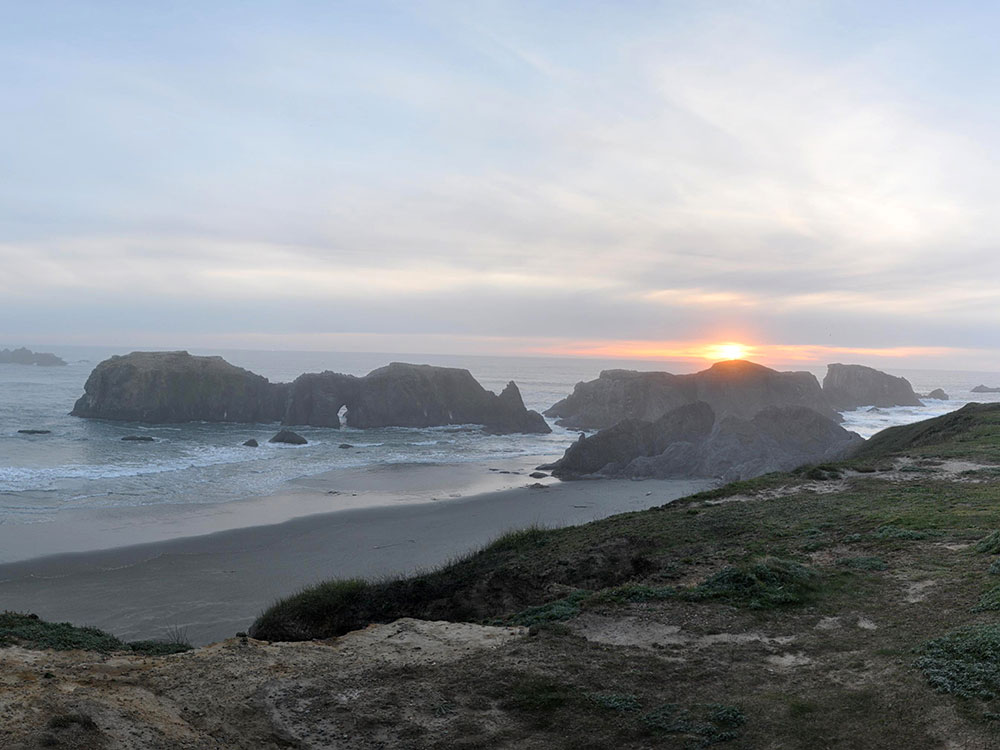
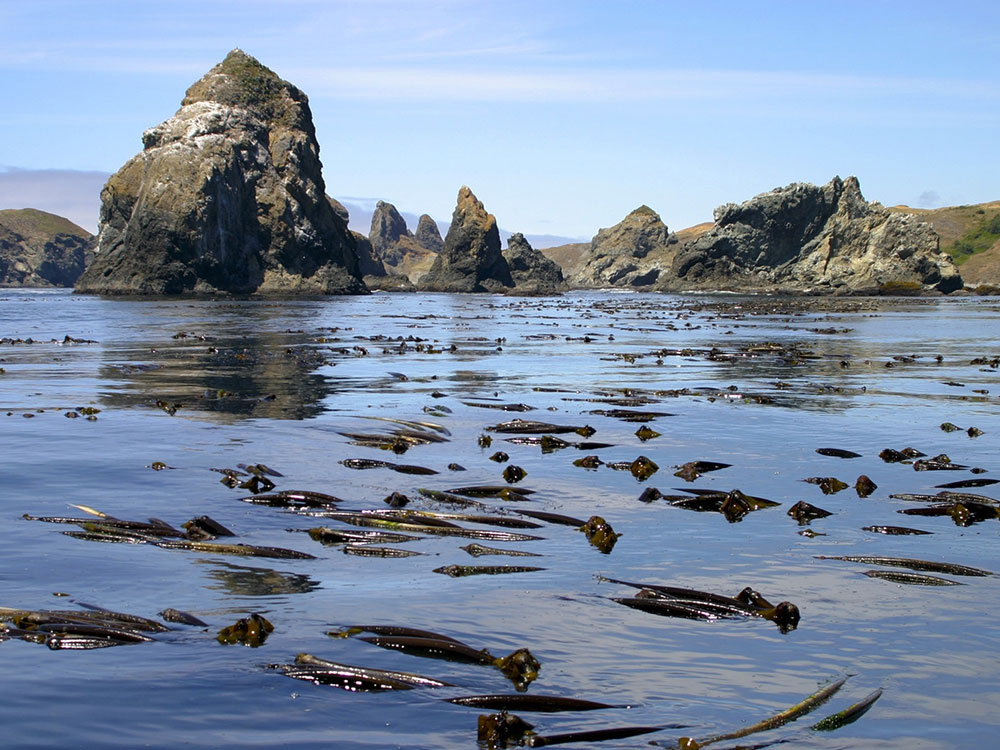
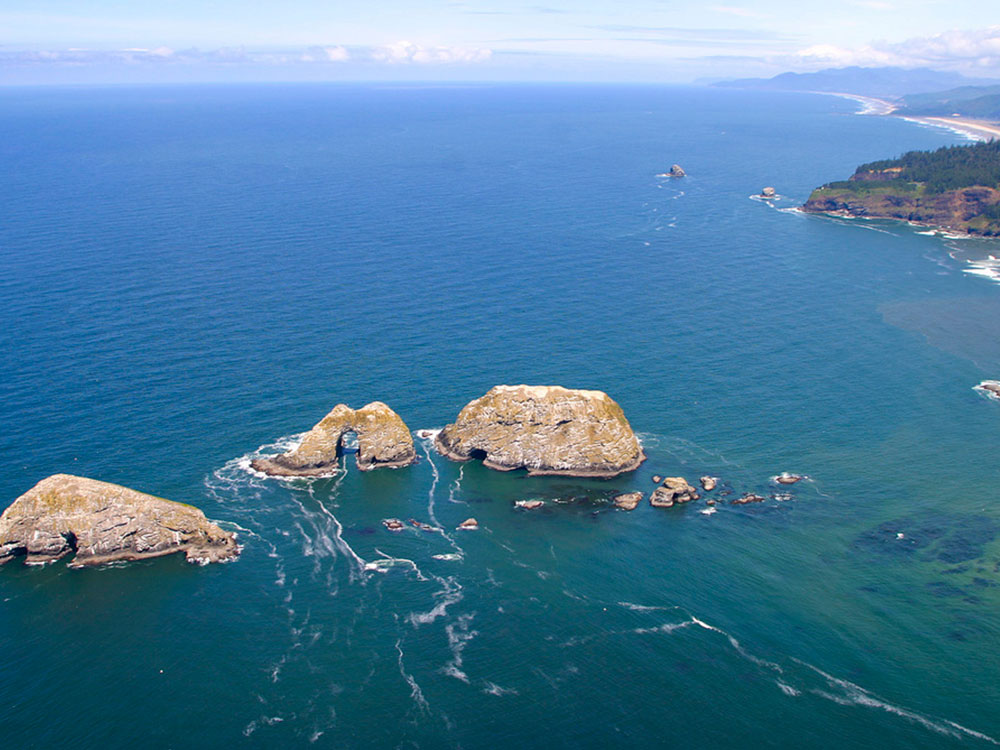
Wildlife Refuges providing wilderness protection to 1,853 small islands, rocks, and reefs plus two headlands, spanning 1,083 acres of Oregon's coastline from the Oregon-California border to Tillamook Head.
General Information
- Hours:
- Fees:
- Pet Policy:
- Closest cities with hotels:
- Seasons:
- Open all year though fully accessible for only four months during summer, owing to the very heavy winter snowfall
Overview
Oregon Islands National Wildlife Refuge protects more than 1,800 rocks, reefs and islands strung along nearly all of the Oregon coast, from Brookings to the Columbia River. These offshore sea stacks and islets are vital nesting and resting places for seabirds, including common murres, tufted puffins, cormorants and pigeon guillemots, as well as for seals and sea lions. Established in 1935 and expanded over time, the refuge is closed to the public, and visitors see it from shore at many famous viewpoints. People come to see Haystack Rock, Bandon's sea stacks and Bird Island, and to watch wildlife from the coast.
Access
The refuge is spread along the entire coastline, and visitors see it from beaches, headlands and state parks along US-101. Popular viewing spots include Haystack Rock in Cannon Beach, Cape Meares, Yaquina Head, Face Rock and Coquille Point near Bandon, Cape Arago and Harris Beach in Brookings. The islands themselves are off limits, to protect wildlife. Most people reach the viewing sites by car along the coast highway, with parking at overlooks.
Seasons
The refuge can be seen year-round. Spring and summer bring seabird nesting, with puffins appearing from April to August. Winter offers storm watching and migrating whales, and seals and sea lions are present most months. Fog is common in summer, so mornings and evenings may offer clearer views. Visitors must stay off the islands and follow beach closures during nesting and pupping seasons.
Things to Do
See Seabird Colonies From Shore
Oregon Islands National Wildlife Refuge holds some of the largest seabird colonies on the West Coast. Binoculars or a spotting scope give the best views.
Look for Tufted Puffins
Puffins nest on islands such as Haystack Rock and Bird Island in spring and summer. Their colorful beaks make them a favorite sight.
Watch Seals and Sea Lions
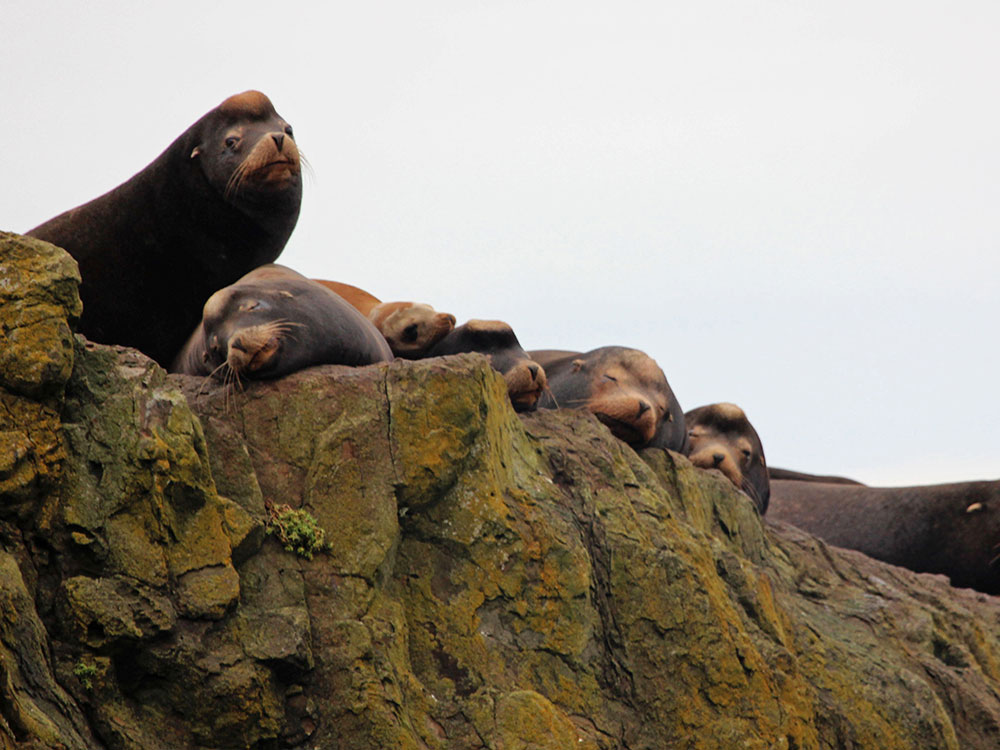
Rocks along the coast serve as haul-outs for harbor seals, Steller sea lions and California sea lions. Observers should keep a safe distance.
Visit Coquille Point
Coquille Point near Bandon is part of the refuge and has an accessible trail with views of sea stacks. Interpretive signs describe the wildlife.
Spot Gray Whales
Gray whales pass the coast in winter and spring. Headlands along the refuge are good lookouts.
Top Trails
Coquille Point Trail
Length: Approximately 0.5 miles round trip
Elevation Gain: Minimal
Difficulty: Easy
A short path leads along the bluff to views of offshore rocks and wildlife. A staircase leads to the beach.
Haystack Rock Viewing Walk
Length: Approximately 1 mile round trip
Elevation Gain: Minimal
Difficulty: Easy
A walk along Cannon Beach brings visitors to the tide pools at the base of Haystack Rock. Respect the rock's wildlife by not climbing.
Visitor Centers
The refuge has no visitor center on the islands, but the Oregon Coast National Wildlife Refuge Complex headquarters in Newport provides information, and the Hatfield Marine Science Center there has exhibits on coastal wildlife. Interpretive signs at overlooks explain the rocks and birds, and volunteers staff the Haystack Rock Awareness Program in Cannon Beach in summer.
Camping and Lodging
There is no camping or lodging within the refuge. Visitors stay in coastal towns such as Cannon Beach, Newport, Bandon and Brookings, which have everything from oceanfront inns to chain hotels. State parks along the coast, including Harris Beach, Bullards Beach and Fort Stevens, offer campgrounds and yurts. The Oregon coast is busy in summer, so book ahead, and check each property's website for current availability.
This article uses material from the Wikipedia article and official pages for Oregon Islands National Wildlife Refuge, U.S. Fish and Wildlife Service: Oregon Islands National Wildlife Refuge, released under the Creative Commons Attribution-Share-Alike License 3.0.