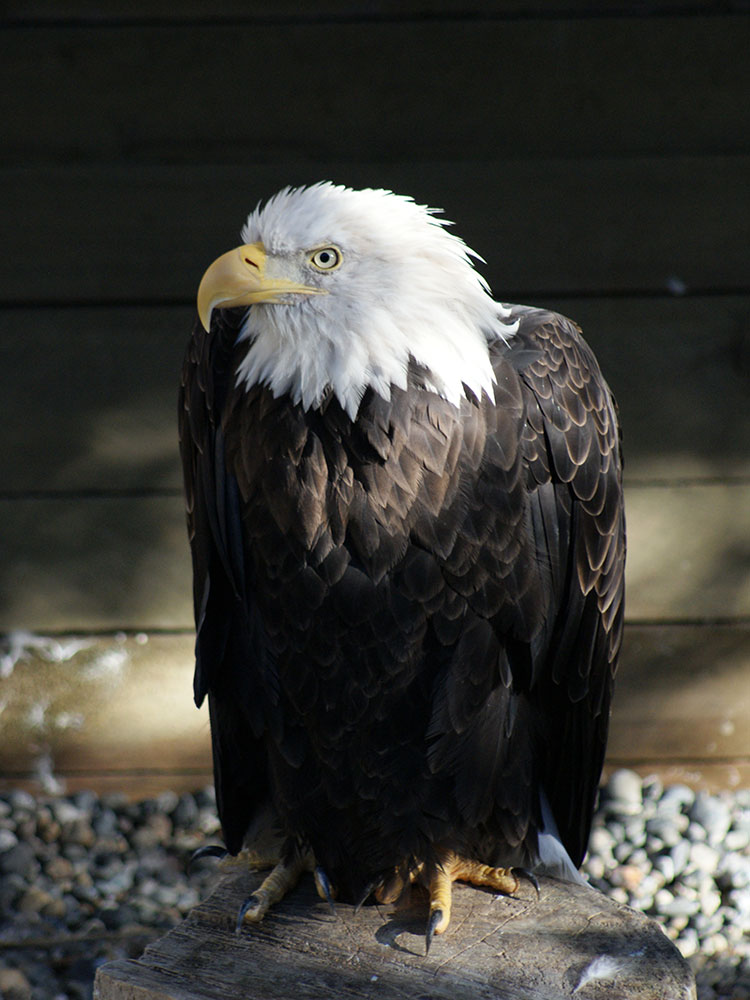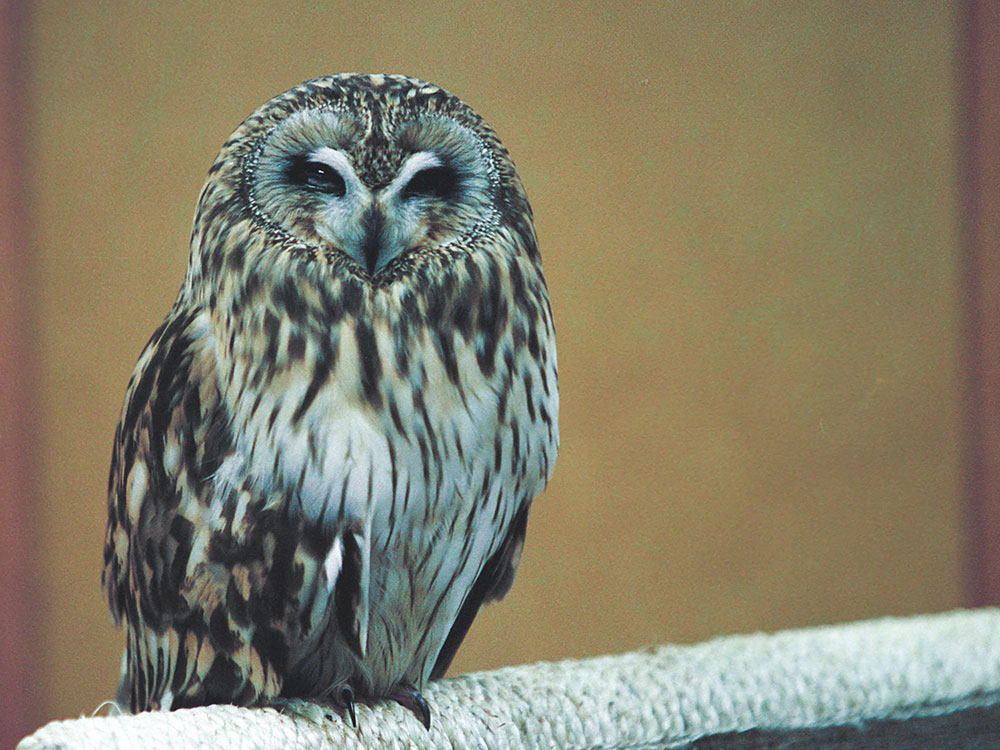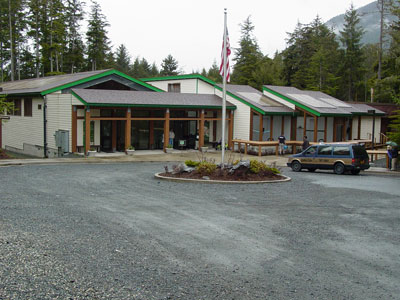

Wildlife rehabilitation facility featuring habitats and educational exhibits where visitors can observe eagles, owls, and other birds of prey up close.
General Information
- Hours:
- April to September: Daily 8am to 4pm (last admission around 3:30pm)
October to March: Tuesday to Friday 10am to 3pm - Fees:
-
Adults: $16–$17
Children (6–12): $8
Children 5 and under: Free
Veterans: $11 - Pet Policy:
- Pets are not allowed on-site
- Closest cities with hotels:
- Sitka
- Seasons:
- Best visited April through September for full hours and programming; limited access in winter
- Location:
- 1000 Raptor Way, Sitka, AK 99835
- Website:
- alaskaraptor.org
How to Get There
From Sitka (1.5 mi): Head east from downtown toward Sawmill Creek Rd, continue along the road through Sitka National Historical Park, and follow signs leading to the facility.
Overview
The Alaska Raptor Center is a raptor rehabilitation center in Sitka, Alaska. Located on a 17-acre campus bordering the Tongass National Forest and the Indian River. The Mission of the Alaska Raptor Center is to promote and enhance wild populations of raptors and other avian species through rehabilitation, education and research. Although the main patients are raptors, specifically bald eagles, the center will take any bird in need of care. The Alaska Raptor Center receives between 100-200 birds a year, with many suffering from some sort of trauma. They have treated birds with injuries from electrocution, collisions, gunshot wounds, leg hold traps, starvation, disease and lead poisoning.
Many of their patients come from outside of Sitka and are flown in via Alaska Airlines or smaller regional airlines. When an eagle is healthy enough, they will be moved into the Walter and Suzanne Scott Foundation Bald Eagle Flight Training Center. This is a large indoor area where they are able to fly, bathe and interact with other eagles until it is time for them to be released. Birds that are no longer able to live outside of human care are sent to zoos or wildlife centers throughout the United States to serve as ambassadors for their species.
Some of the birds that sustained injuries that did not allow them to be released have found a permanent home at the Alaska Raptor Center. More than 40,000 visitors annually come to see the two dozen resident eagles, hawks, owls, falcons and ravens, who assist in the Center's secondary function, that of public education.
The Center in Sitka is open to the public and offers daily tours.
This article uses material from the Wikipedia article "Alaska Raptor Center", which is released under the Creative Commons Attribution-Share-Alike License 3.0