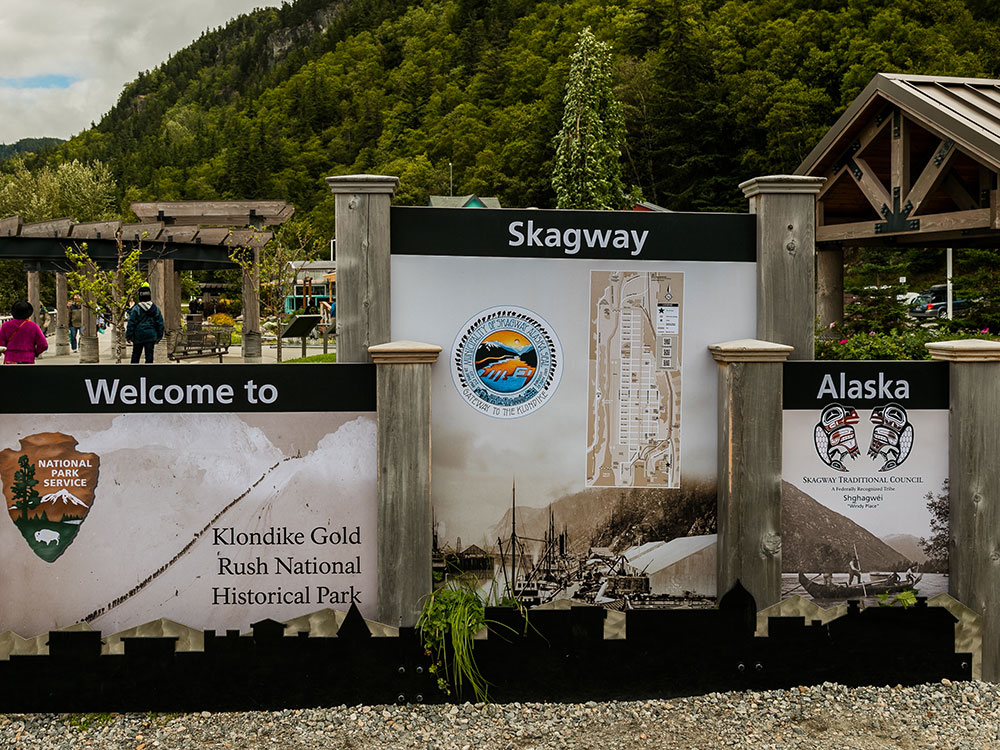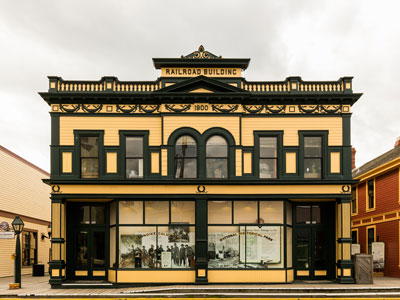

Historic park preserving restored gold rush-era buildings, rugged mountain trails, and stories of thousands who journeyed north in search of fortune during the late 1890s.
General Information
Limited hours and services October–April; some facilities by appointment only
Camping at Dyea Campground: $10 per site per night
How to Get There
From Juneau (90 mi): Take a ferry or short regional flight to Skagway, then walk or drive a short distance to the historic district along Broadway where the park visitor center and museums are located.
Overview
Klondike Gold Rush National Historical Park tells the story of the 1898 Klondike Gold Rush, with units in Skagway (the historic downtown), Dyea, and the White Pass and Chilkoot trails, and sister sites in Seattle. Parks Canada preserves the other side of the border.
Highlights
- Skagway visitor center: the old White Pass and Yukon Route depot (1898), with a museum and a film, and free ranger walking tours of downtown
- Historic buildings: the Moore Homestead, Mascot Saloon, Pantheon Saloon, and Jeff Smith's Parlor (Soapy Smith's saloon)
- Chilkoot Trail: a 33-mile hike from Dyea to Bennett Lake, the trail of the gold rush stampeders
- White Pass: the "Dead Horse Trail" gold rush route
Things to Do
Discover the Story of the Klondike Gold Rush
Klondike Gold Rush National Historical Park commemorates the dramatic events of the 1897-1898 Klondike Gold Rush, when thousands of stampeders traveled through Southeast Alaska seeking fortune in Canada's Yukon Territory. The park preserves historic buildings, trails, museums, and cultural landscapes that tell the stories of the people whose lives were forever changed by the gold rush.
Visit the Historic Visitor Center
Located in the restored 1898 White Pass & Yukon Route railroad depot in downtown Skagway, the visitor center serves as the ideal starting point for exploring the park. Visitors can watch the park film, view exhibits about the gold rush, attend ranger programs, obtain maps, and learn about the challenges faced by prospectors heading north.
Walk Through Skagway's Historic District
More than twenty preserved gold rush-era buildings remain in Skagway's historic district. Visitors can explore restored storefronts, hotels, museums, and business districts that recreate the atmosphere of the boomtown during the height of the Klondike Gold Rush.
Tour the Mascot Saloon
The restored Mascot Saloon offers a glimpse into daily life during Skagway's gold rush years. Once one of the town's many saloons, the building now serves as a museum where visitors can learn about frontier entertainment, business, and community life in the late nineteenth century.
Explore the Historic Moore Homestead
The Moore Homestead preserves the home of Captain William Moore and his family, who settled in the Skagway area before the gold rush began. The site provides insight into frontier life and the development of the community before it became one of Alaska's most famous boomtowns.
Visit Dyea and Learn About a Lost Boomtown
Just outside Skagway, the former town of Dyea was once a bustling gateway to the Chilkoot Trail. Today, visitors can explore interpretive sites, trails, and remnants of the community while learning how one of Alaska's largest temporary settlements disappeared after the gold rush ended.
Attend Ranger Programs and Talks
Throughout the visitor season, National Park Service rangers present educational programs covering gold rush history, local culture, trail stories, and the experiences of stampeders. These presentations provide valuable context for understanding the significance of the park and its preserved resources.
Ride the White Pass & Yukon Route Railroad
Adjacent to the park's visitor center, the historic White Pass & Yukon Route Railroad offers one of Alaska's most scenic rail excursions. The route follows the path used by gold seekers while climbing into the surrounding mountains through spectacular landscapes.
Top Trails
Chilkoot Trail
Length: Approximately 33 miles one way
Elevation Gain: Significant mountain ascent
Difficulty: Strenuous
The park's most famous trail follows the historic route used by prospectors traveling from Dyea toward the Yukon. Today it is one of North America's premier backpacking routes, combining gold rush history, alpine scenery, waterfalls, and wilderness experiences.
Dyea Townsite Trail Network
Length: Various short routes
Elevation Gain: Minimal
Difficulty: Easy
A network of trails explores the former boomtown of Dyea, passing historic sites, interpretive displays, forested landscapes, and remnants of one of the most important staging areas of the Klondike Gold Rush.
Lower Dewey Lake Trail
Length: Approximately 2.4 miles round trip
Elevation Gain: Approximately 500 feet
Difficulty: Moderate
Located near Skagway, this popular hike leads through forested terrain to scenic Lower Dewey Lake. The trail provides beautiful views of the surrounding mountains and serves as an excellent addition to a day spent exploring the park's historic attractions.
This article uses material from the Wikipedia article and official pages for National Park Service - Plan Your Visit, Travel Alaska - Klondike Gold Rush National Historical Park, Klondike Gold Rush National Historical Park, released under the Creative Commons Attribution-Share-Alike License 3.0.