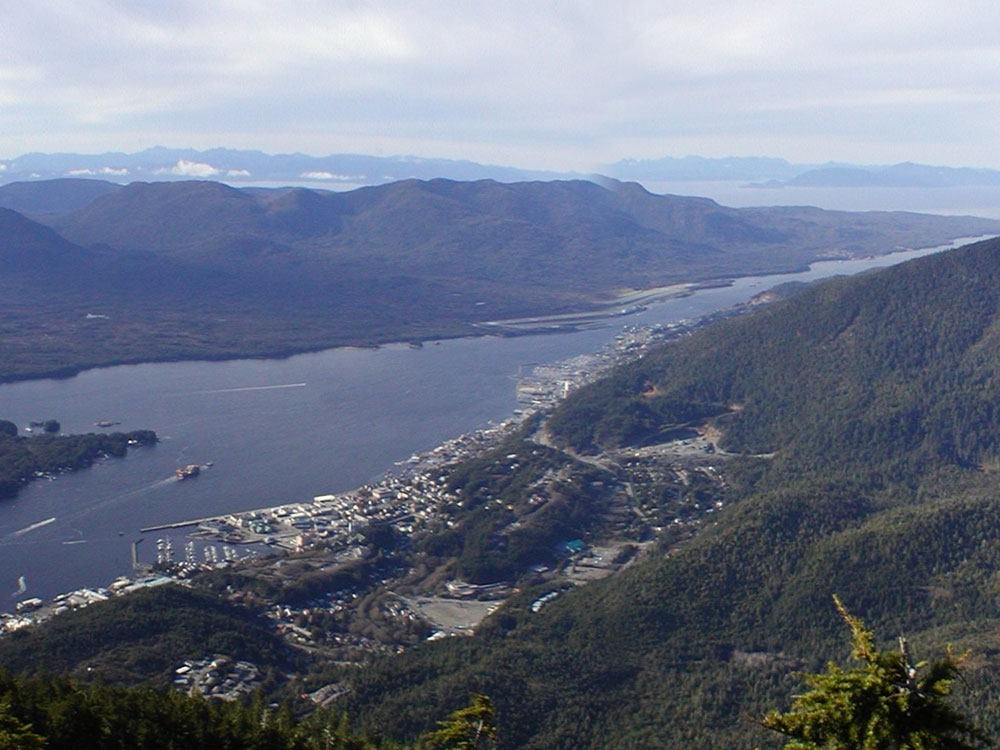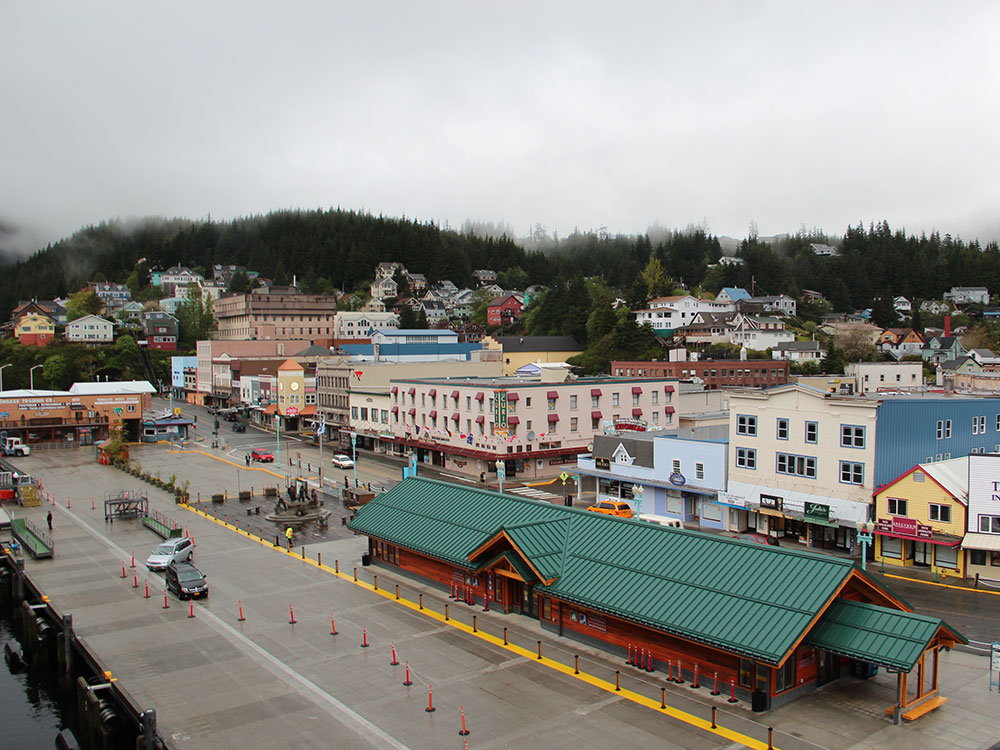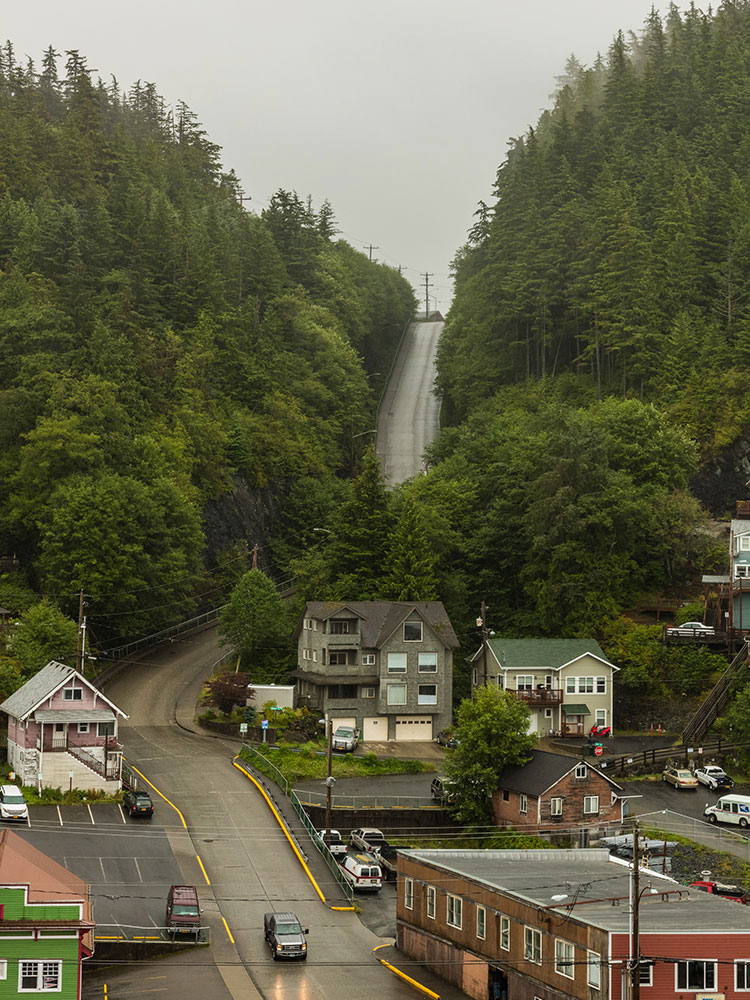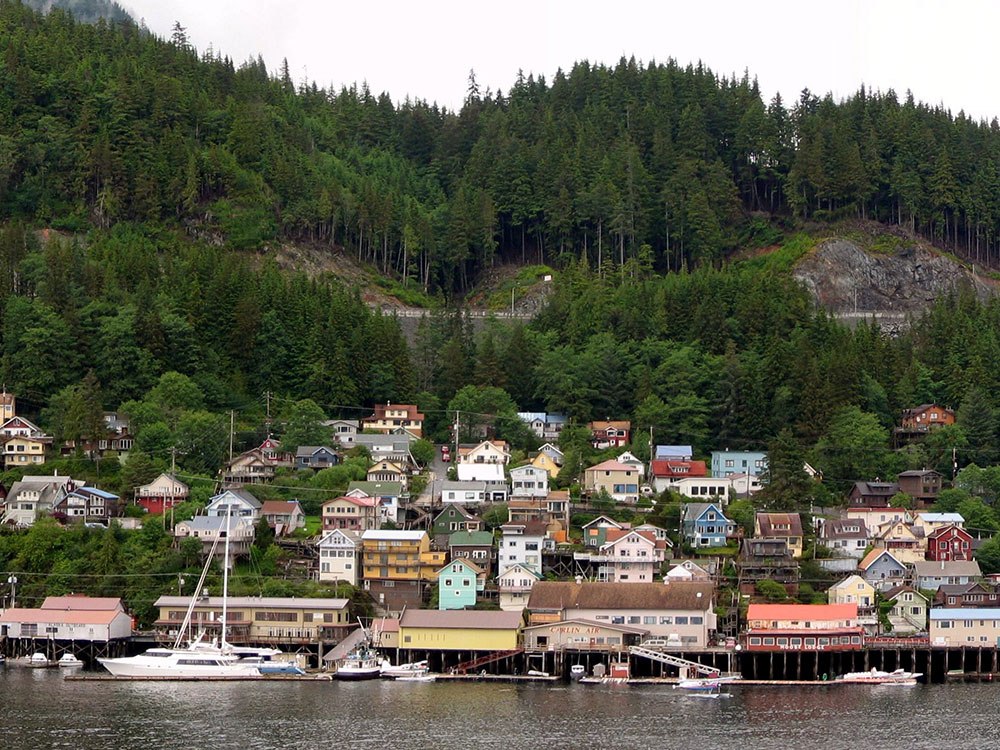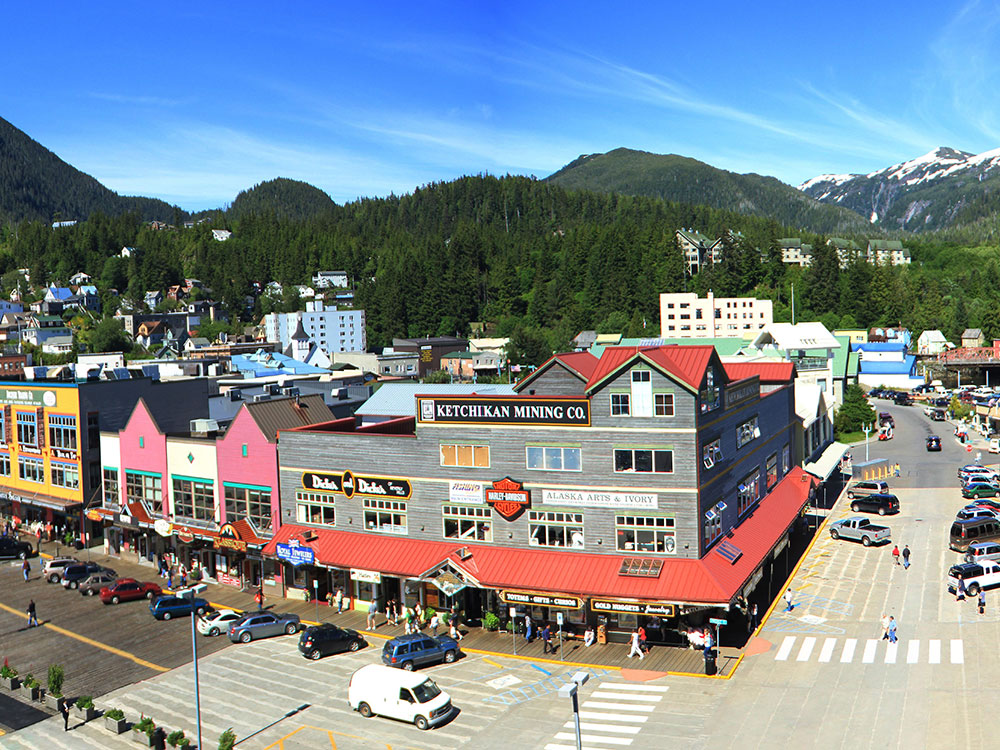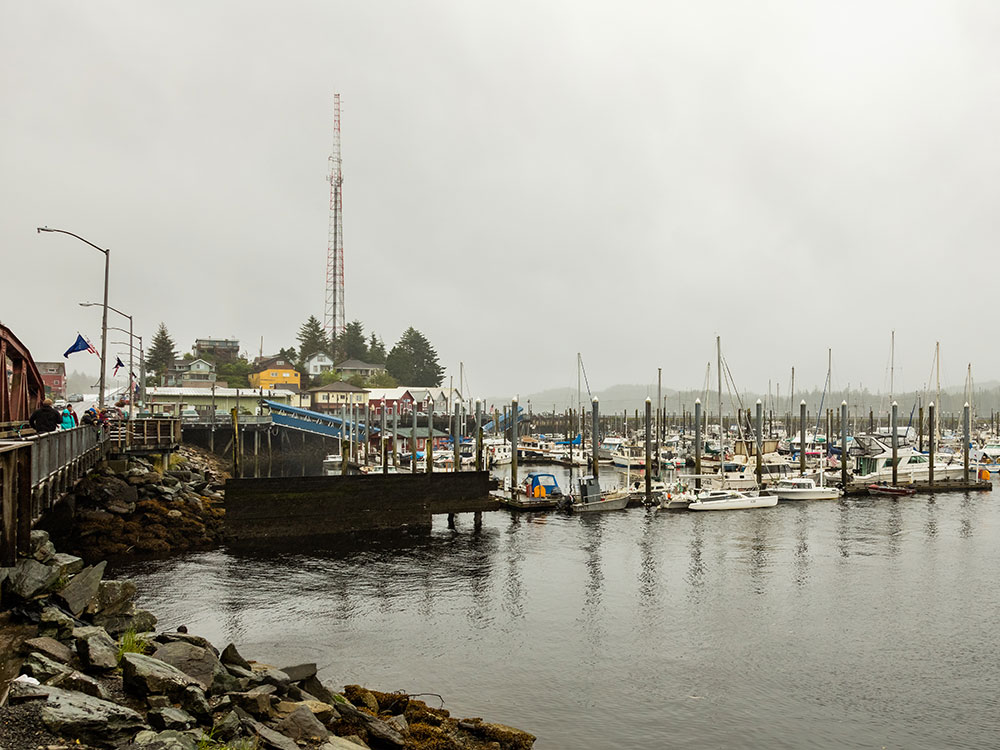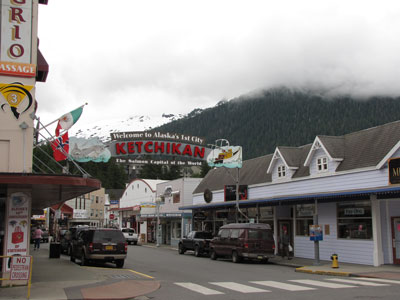
Coastal city featuring a bustling waterfront, historic districts, vibrant Native culture, and access to rainforest landscapes and wildlife-rich waterways.
General Information
- Hours:
- Open year-round as a public city; visitor centers typically operate daily with extended hours in summer and reduced hours in winter
- Fees:
- Free to visit; individual attractions, tours, and museums may charge separate fees
- Pet Policy:
- Pets are generally allowed in outdoor public areas on leash; policies vary by business and lodging
- Closest cities with hotels:
- Ketchikan
- Seasons:
- Best visited May through September for peak tourism, wildlife viewing, and full access to tours; accessible year-round with quieter conditions in winter
- Location:
- Ketchikan, AK 99901
- Website:
- visit-ketchikan.com
How to Get There
From Ketchikan International Airport (5 mi): Take the airport ferry across Tongass Narrows to downtown, then follow Tongass Ave south into the central waterfront area.
Overview
Ketchikan is the southernmost major city in Alaska, on Revillagigedo Island in the Inside Passage, and it is known as the "Salmon Capital of the World" and "First City" because it is the first stop for northbound ships. It is also known for having the most totem poles in the world, for the colorful boardwalks of Creek Street, and for its rainfall, about 150 inches a year. The city of about 8,000 is built on steep hillsides and over the water and is a major cruise port.
Visitors come to Ketchikan for Creek Street, for totem poles at Totem Bight State Historical Park and the Totem Heritage Center, and for salmon fishing. They also come for flightseeing to Misty Fjords National Monument, for the Southeast Alaska Discovery Center, and for lumberjack shows and bear viewing.
History
The Tlingit people fished at the mouth of Ketchikan Creek, whose name means "thundering wings of an eagle," and a salmon cannery and a sawmill, built in 1885 by Mike Martin, founded the modern town. Gold and copper prospecting in the 1890s brought a boom, and Ketchikan was incorporated in 1900. In the early twentieth century, the town's Creek Street was a notorious red-light district, whose most famous madam was Dolly Arthur. The city became the center of the salmon canning industry, and later timber and pulp, and today it is dominated by tourism and fishing.
Sightseeing and Popular Landmarks
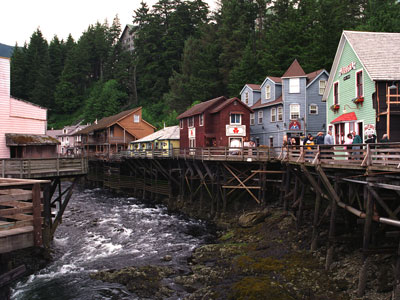
Creek Street, a boardwalk of colorful buildings on pilings over Ketchikan Creek, has shops, galleries, and Dolly's House Museum, and in summer salmon crowd the creek below. Totem Bight, a few miles north, has restored totem poles and a clan house, and the Totem Heritage Center has original poles from the 1800s. The Misty Fjords National Monument, reached by floatplane or boat, has granite cliffs and waterfalls, and the Tongass Historical Museum and the Saxman Native Village are other attractions.
Culture and Museums
The Totem Heritage Center has one of the largest collections of unrestored nineteenth-century totem poles, and the Southeast Alaska Discovery Center has exhibits on the Tongass National Forest. The Tongass Historical Museum covers the town's past, and the Totem Heritage Center and Saxman Native Village offer demonstrations of Native carving. The Great Alaskan Lumberjack Show is a popular summer attraction.
Parks
Ketchikan is surrounded by the Tongass National Forest, and trails such as Deer Mountain and Rainbird give views of the city and the channel. Misty Fjords National Monument has more than two million acres of fjords and forests, and Settlers Cove State Recreation Site has a beach and a waterfall. Fishing for salmon and halibut is a major activity, and the area has black and brown bears that can be viewed at Neets Bay and Traitors Cove.
Seasons and Weather
Ketchikan has a temperate rainforest climate and is one of the rainiest cities in the United States. Summers are mild, with highs in the upper 50s and low 60s°F, and winters are mild, with highs in the 40s°F, and snow in the town is light. Rain falls on about 230 days a year, and visitors should always bring waterproof clothing.
This article uses material from Wikipedia as well as information from official tourism and institutional sources. Key references include Visit Ketchikan, Totem Heritage Center, Tongass National Forest, Travel Alaska, and National Weather Service Juneau. Wikipedia material is from the article "Ketchikan, Alaska", and is available under the Creative Commons Attribution-Share-Alike License 3.0.
Featured Locations and Trails
Jerzystrzelecki, CC BY 3.0, via Wikimedia Commons; Image Size Adjusted
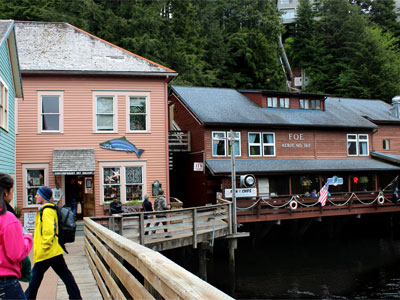
Creek Street
Historic wooden boardwalk lined with colorful stilted buildings, shops, and galleries set above a flowing salmon creek.
Richard N Horne, CC BY-SA 4.0, via Wikimedia Commons; Image Size Adjusted
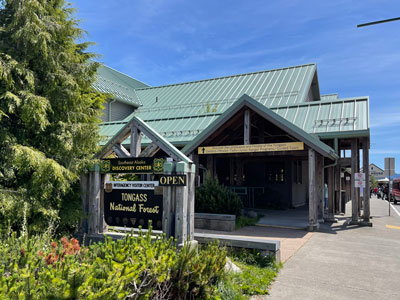
Southeast Alaska Discovery Center
Interactive visitor center featuring exhibits, films, and educational displays focused on rainforest ecosystems, wildlife, and Native cultures.


Joe+Jeanette Archie, CC BY 2.0, via Wikimedia Commons; Image Size Adjusted

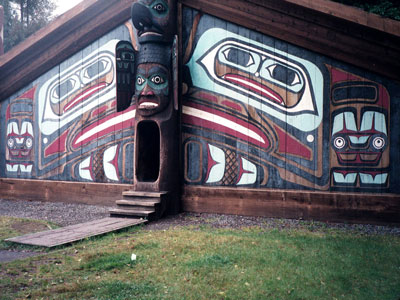
Totem Bight State Historical Park
Scenic coastal park featuring a collection of hand-carved totem poles and a reconstructed Native clan house set within a dense rainforest environment.
Richard N Horne, CC BY-SA 4.0, via Wikimedia Commons; Image Size Adjusted

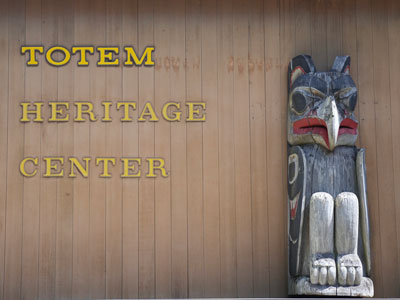
Totem Heritage Center
Museum preserving authentic 19th-century totem poles and Native artifacts through exhibits focused on Indigenous art, culture, and history.