Historic building in Boston, built in 1713, it was the seat of the Massachusetts General Court until 1798 and is one of the oldest public buildings in the United States
General Information
Closed Thanksgiving, Christmas, and New Year’s Day
Students & Seniors: $13
Children 12 and under: Free
Best visited spring through fall
How to Get There
From Downtown Boston (0.4 mi): Walk toward State Street following the Freedom Trail, and the Old State House is located at the corner of State and Congress Streets near Faneuil Hall.
Overview
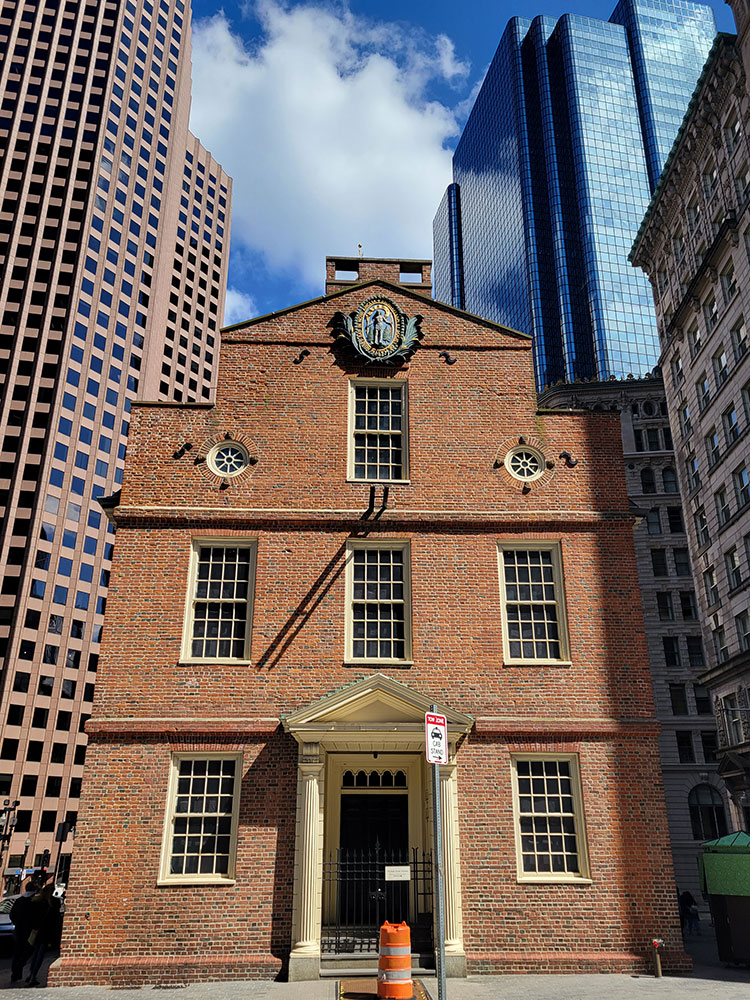
The Old State House is a historic building in Boston, Massachusetts. Built in 1713, it was the seat of the Massachusetts General Court until 1798. It is located at the intersection of Washington and State Streets, and is one of the oldest public buildings in the United States.
One of the landmarks on Boston's Freedom Trail, it is the oldest surviving public building in Boston, and now serves as a history museum that, through 2019, was operated by the Bostonian Society until January 2020. On January 1, 2020, the Bostonian Society merged with the Old South Association in Boston to form Revolutionary Spaces. The Old State House was designated a National Historic Landmark in 1960 and a Boston Landmark by the Boston Landmarks Commission in 1994.
The previous building, the wooden Town House of 1657, had burned in the fire of 1711. Today's brick Old State House was built in 1712–13.
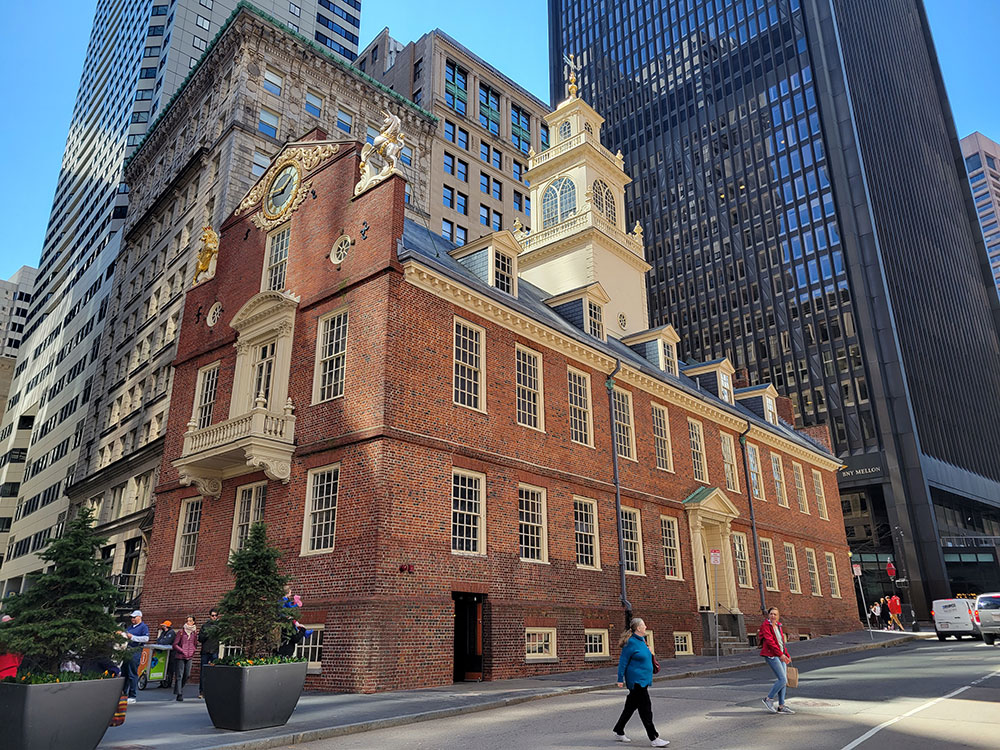
The building housed a Merchant's Exchange on the first floor and warehouses in the basement. On the second floor, the east side contained the Council Chamber of the Royal Governor while the west end of the second floor contained chambers for the Courts of Suffolk County and the Massachusetts Supreme Judicial Court. The central portion contained the chambers for the elected Massachusetts Assembly. This chamber is notable for including public galleries, the first known example of such a feature being included in a chamber for elected officials in the English-speaking world.
On July 18, 1776, the Declaration of Independence was proclaimed from the east side balcony to jubilant crowds by Col. Thomas Crafts (one of the Sons of Liberty). At one o'clock Crafts rose in the Council Chamber and read it to the members.
After the American Revolution, the building served as the seat of the Massachusetts state government before its move to the present Massachusetts State House in 1798.
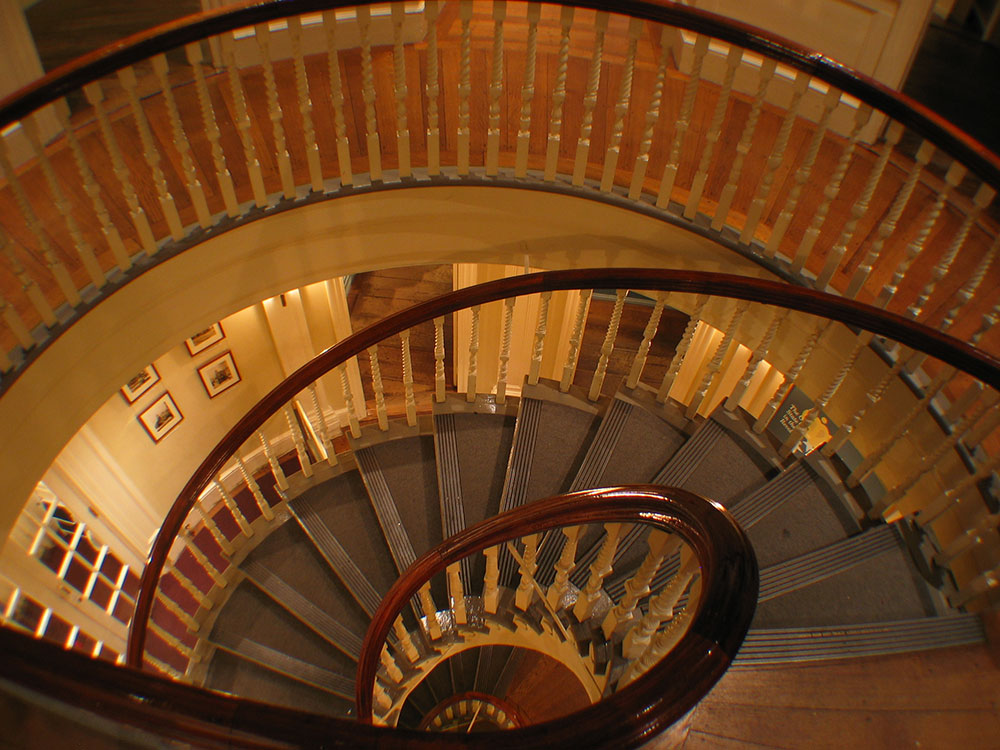
From 1830 to 1841, the building was Boston's city hall. Previously, the city's offices had been in the County Court House. In 1830, Isaiah Rogers altered the building's interior in a Greek Revival style, most notably adding the spiral staircase that remains today.
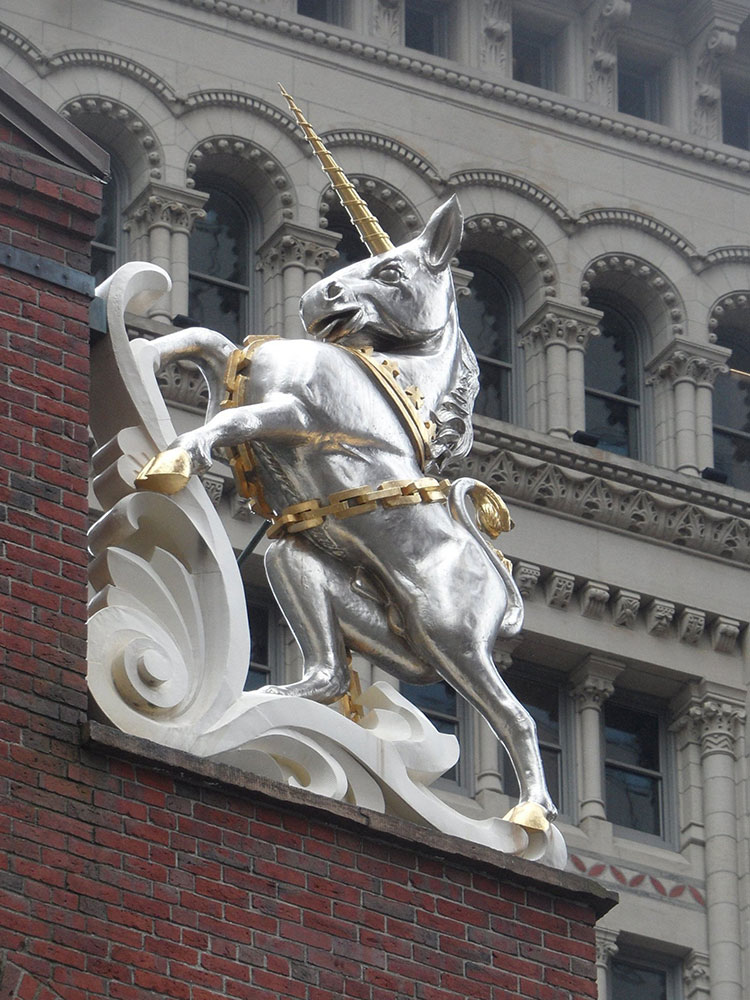
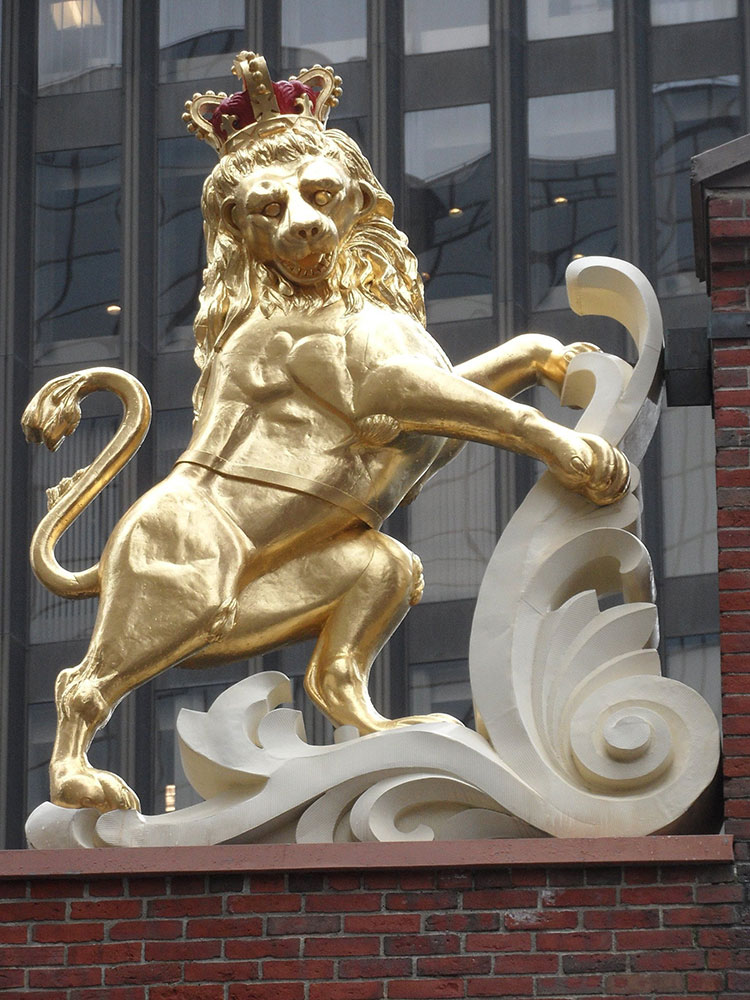
In 1881, in response to plans for the possible demolition of the building due to real estate potential, The Bostonian Society was formed to preserve and steward the Old State House. In 1881–1882, restorations were conducted by George A. Clough. In 1882, replicas of the lion and unicorn statues were placed atop the East side of the building, after the originals that had been burned in 1776. On the West side, the building sports a statue of an eagle, in recognition of the Old State House's connection to American history.
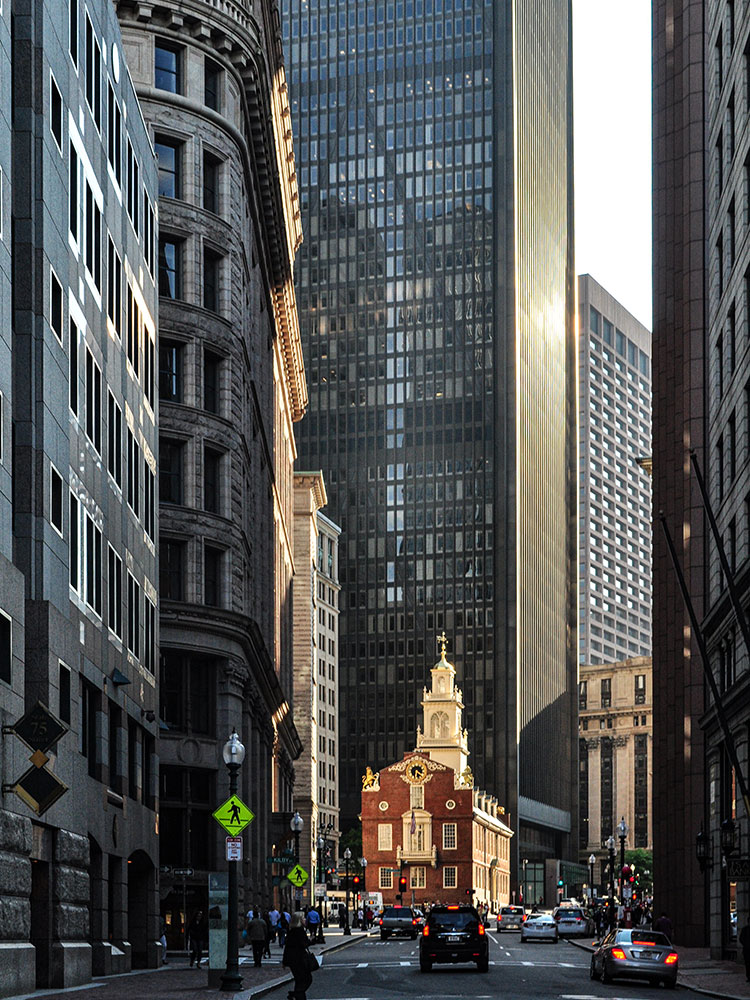
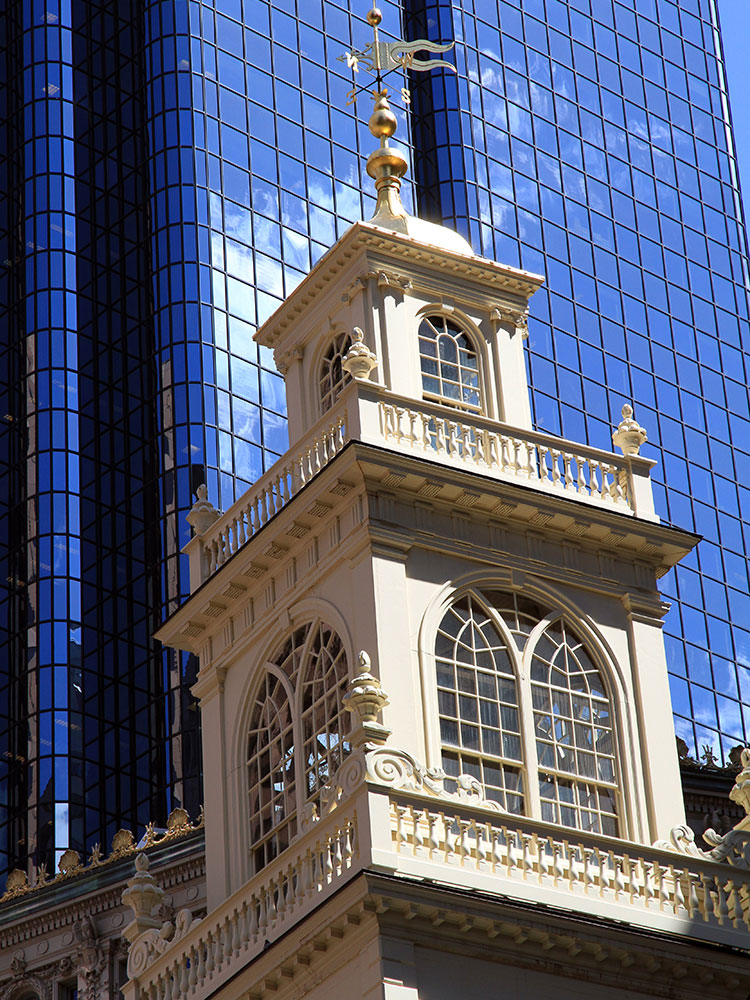
Today, tall buildings of Boston's financial district surround the Old State House. However, they do not entirely block the view of the building, and it can be seen clearly from a good distance away on the harborfront.
This article uses material from the Wikipedia article "Old State House (Boston)", which is released under the Creative Commons Attribution-Share-Alike License 3.0