Dorchester Heights

Louswimmin, CC BY-SA 4.0, via Wikimedia Commons; Image Size Adjusted

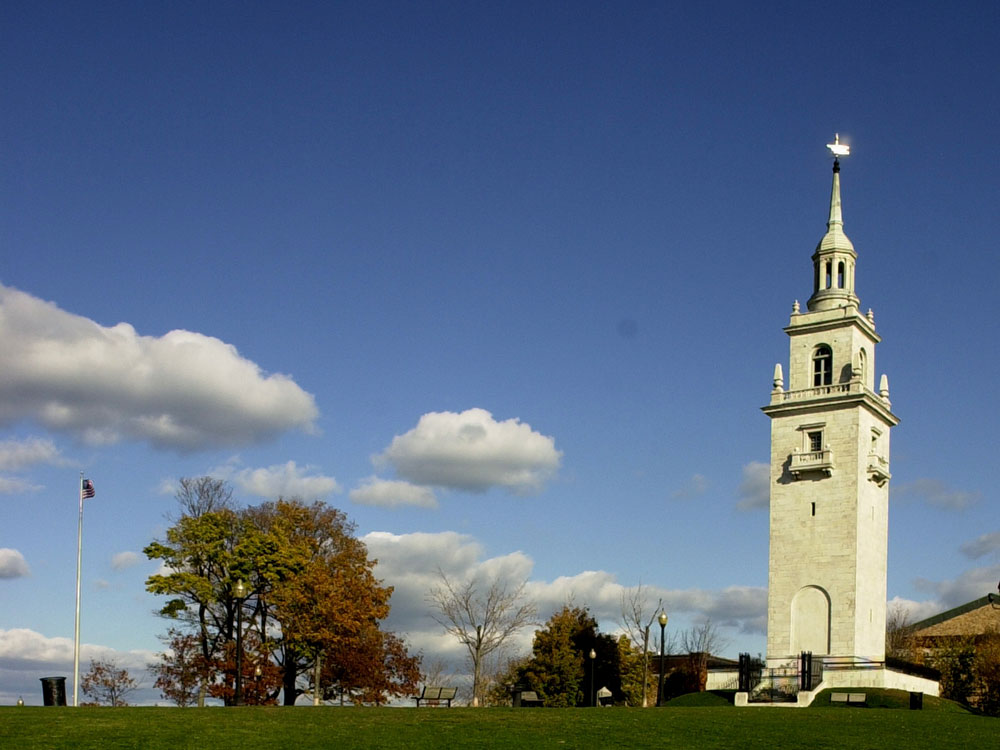
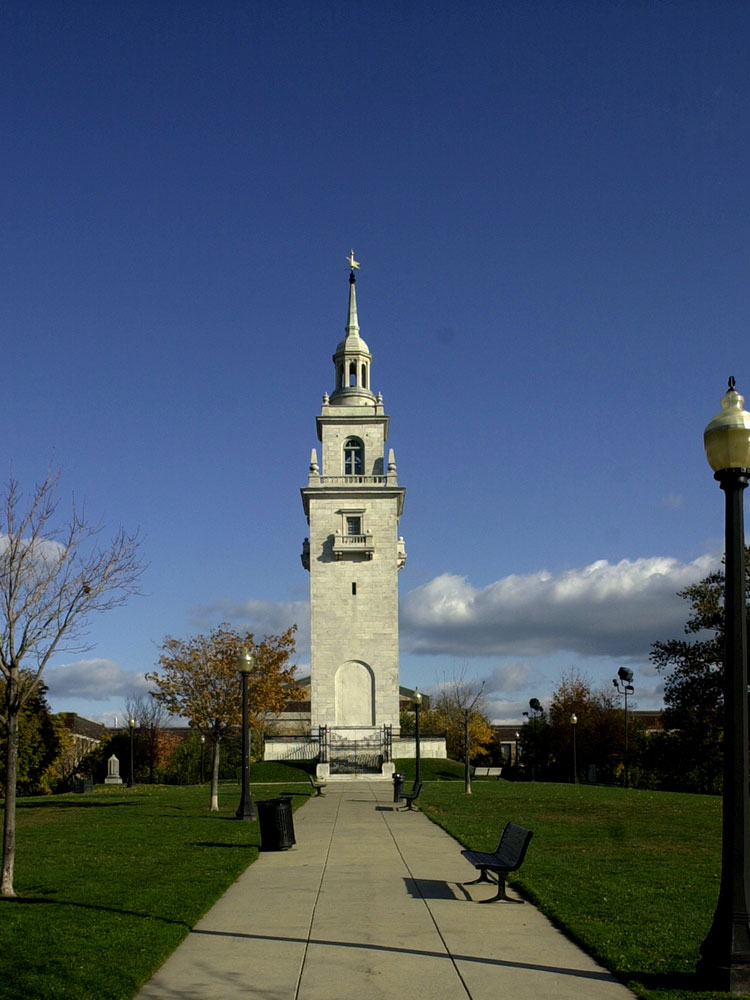
Central area of South Boston featuring a 115-foot (35 m) marble tower, honoring the evacuation of Boston during the American Revolutionary War

General Information

Hours:
Daily: 6:00am to 10:00pm
Open year-round
Fees:
Free admission
Pet Policy:
Dogs are allowed when kept on a leash
Closest cities with hotels:
South Boston / Downtown Boston
Seasons:
All year; spring through fall offers the best views and weather, winter is quieter and reflective
Location:
https://maps.app.goo.gl/VWj6J4zKxH5s9yZ77 Dorchester Heights National Historic Site, Boston, MA 02127
Website:
nps.gov/bost/dorchester-heights

From Downtown Boston hotels: Drive or take public transit toward South Boston, follow Dorchester Street to Telegraph Street, then continue uphill to Dorchester Heights, located near Thomas Park with sweeping views of Boston Harbor.

Overview

Dorchester Heights is the central area of South Boston. It is the highest area in the neighborhood and commands a view of both Boston Harbor and downtown.

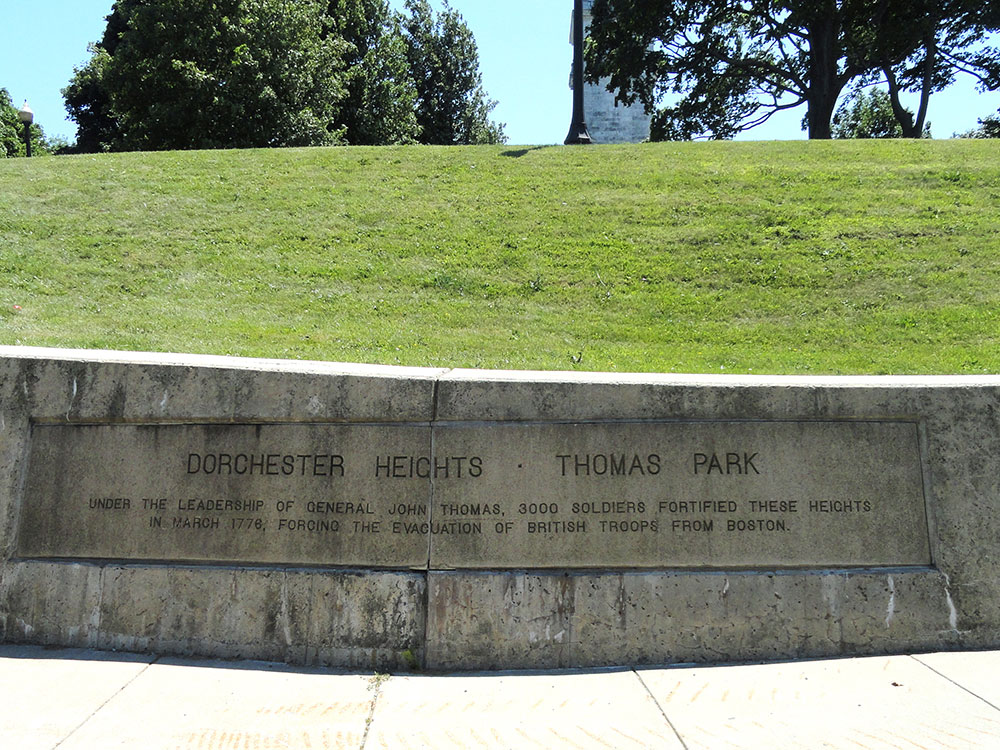
A 40-acre (16 ha) area of Dorchester Heights, centered on Thomas Park and the monument, was listed as the Dorchester Heights Historic District on the National Register of Historic Places in 2001, encompassing the period of residential development of the area beginning in the later decades of the 19th century. The Dorchester Heights monument area was separately listed on the National Register in 1966.

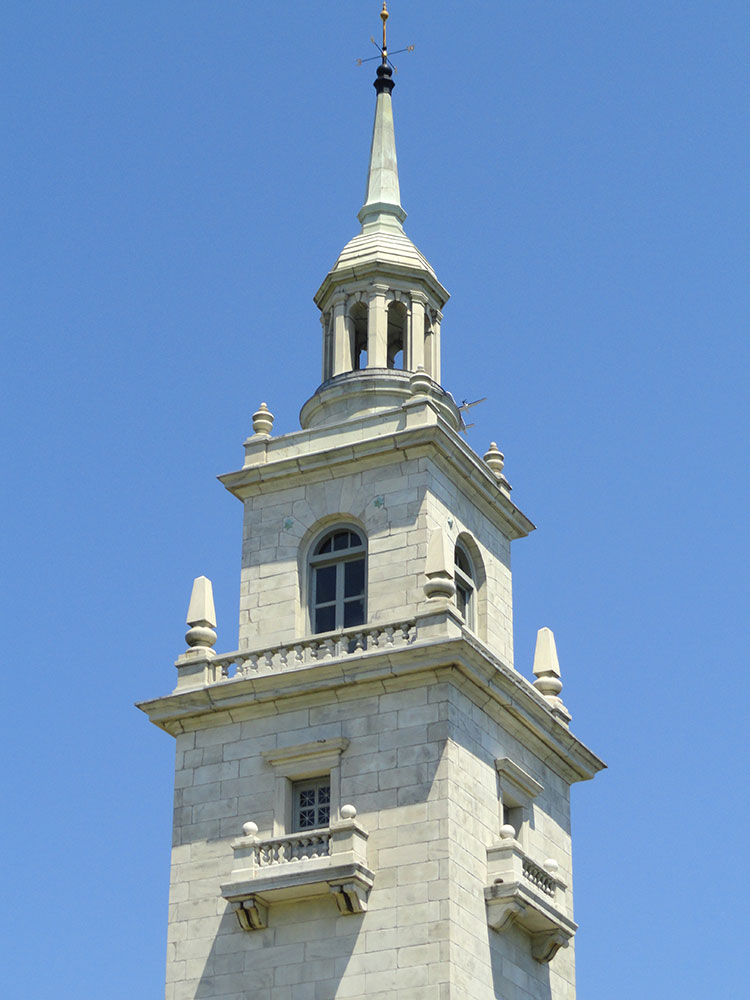
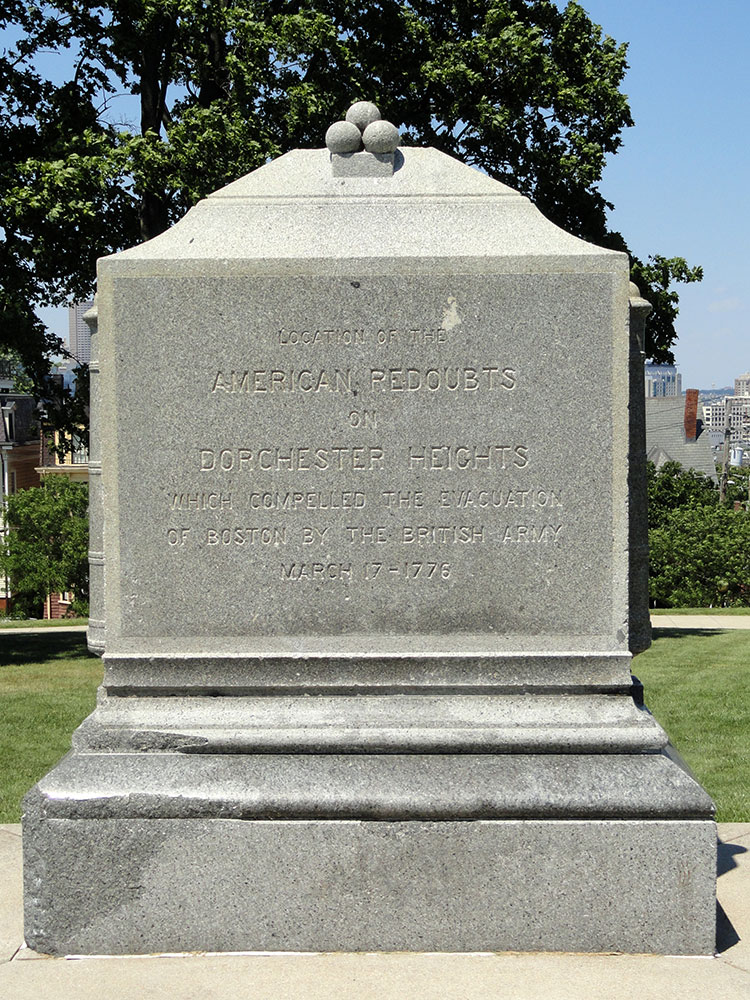
The Dorchester Heights Monument is a large public monument in the Dorchester Heights area. The monument, consisting of a 115-foot (35 m) marble tower, honors the evacuation of Boston during the American Revolutionary War, an early American victory in the conflict. The monument is located near where George Washington ordered the construction of a redoubt, an area which has since been developed as a public park. It was designed by the architectural firm of Peabody and Stearns and was dedicated on March 17, 1902 (Evacuation Day).

The monument is one of several in the city related to events from the American Revolution, including the Beacon Hill Monument and the Bunker Hill Monument.

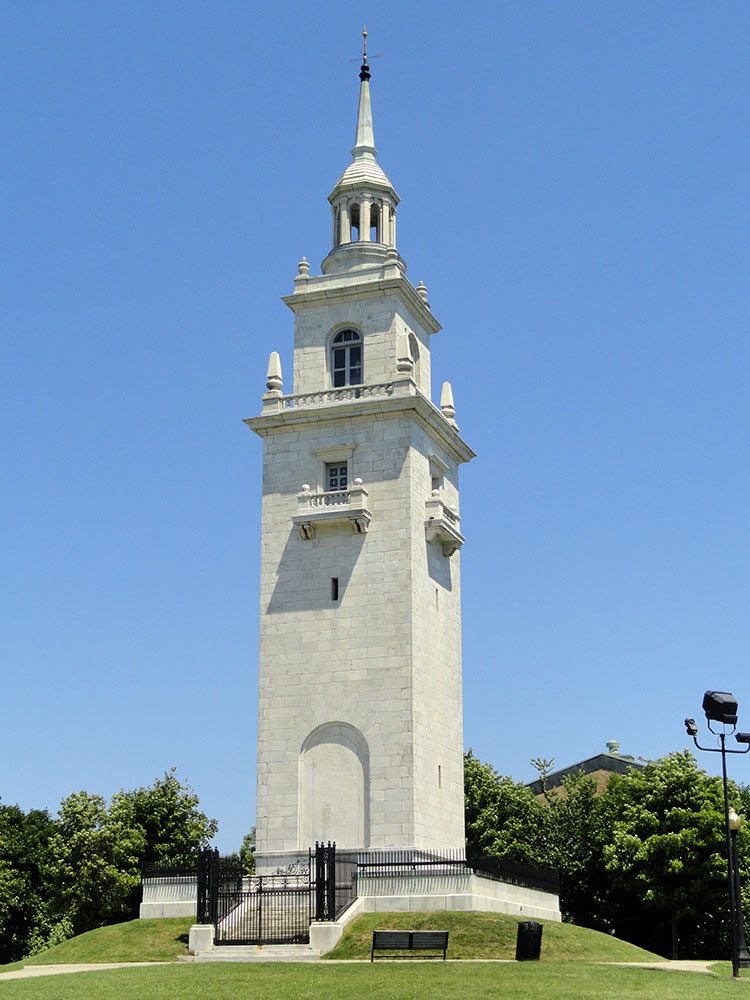
The monument's design is in the Georgian Revival architectural style. The monument consists of a four-sided shaft rising 60 feet (18 m) above the ground which has small balconies on each of its sides. This shaft has sides measuring approximately 18.3 feet (5.6 m) long. At the top of this shaft is a platform surrounded by a balustrade. Atop this shaft climbs another, smaller shaft which is topped by an octagonal lantern. Each shaft has an observation platform, with the top one giving a view of the city, Boston Harbor, and the surrounding area. The top of the monument features a cupola and a spire, topped by a weather vane. The total height of the monument is 115 feet (35 m).

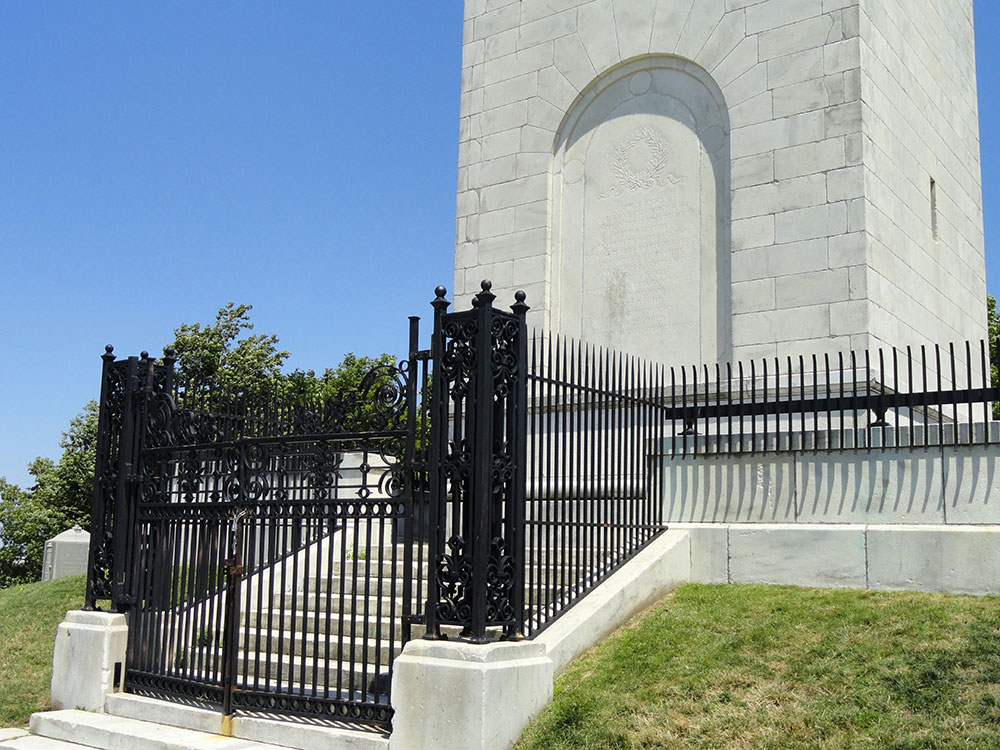
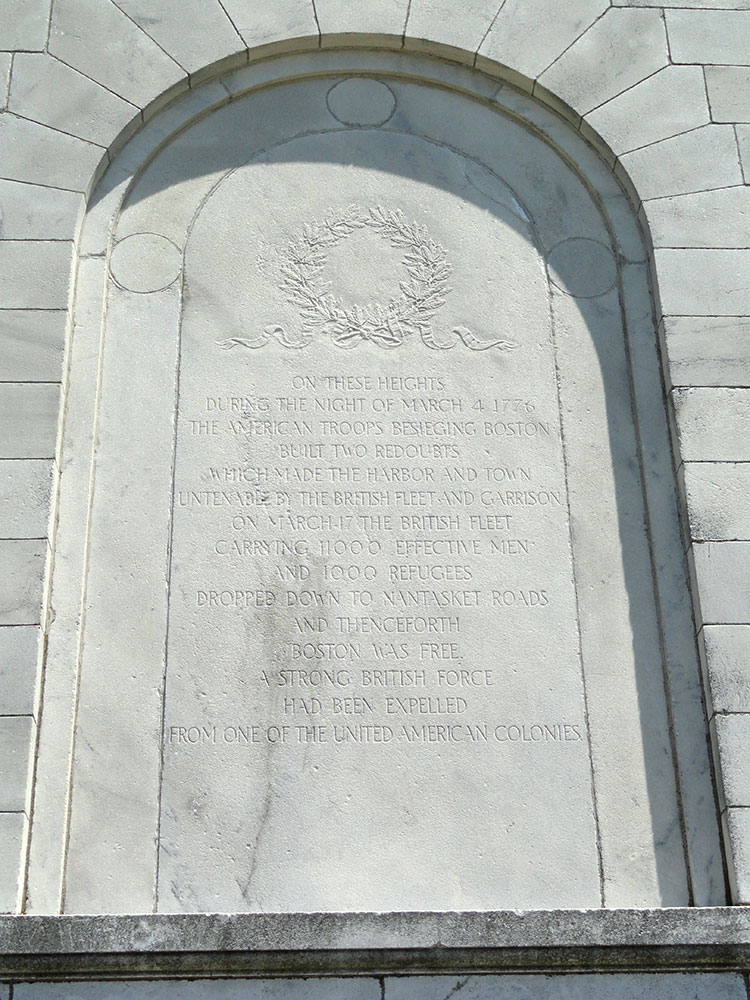
While initial considerations were given to brick or granite, the monument was ultimately constructed with white marble. The structure bears an intentional similarity to the steeple of colonial meeting houses. The entrance into the structure is located on its east side, while the west side bears a tablet containing gilded letters prepared by Charles William Eliot, President of Harvard University.

This article uses material from the Wikipedia article "Dorchester Heights", and "Dorchester Heights Monument", which is released under the Creative Commons Attribution-Share-Alike License 3.0
Daderot, Public domain, via Wikimedia Commons; Image Size Adjusted
Jameslwoodward, CC BY-SA 3.0, via Wikimedia Commons; Image Size Adjusted