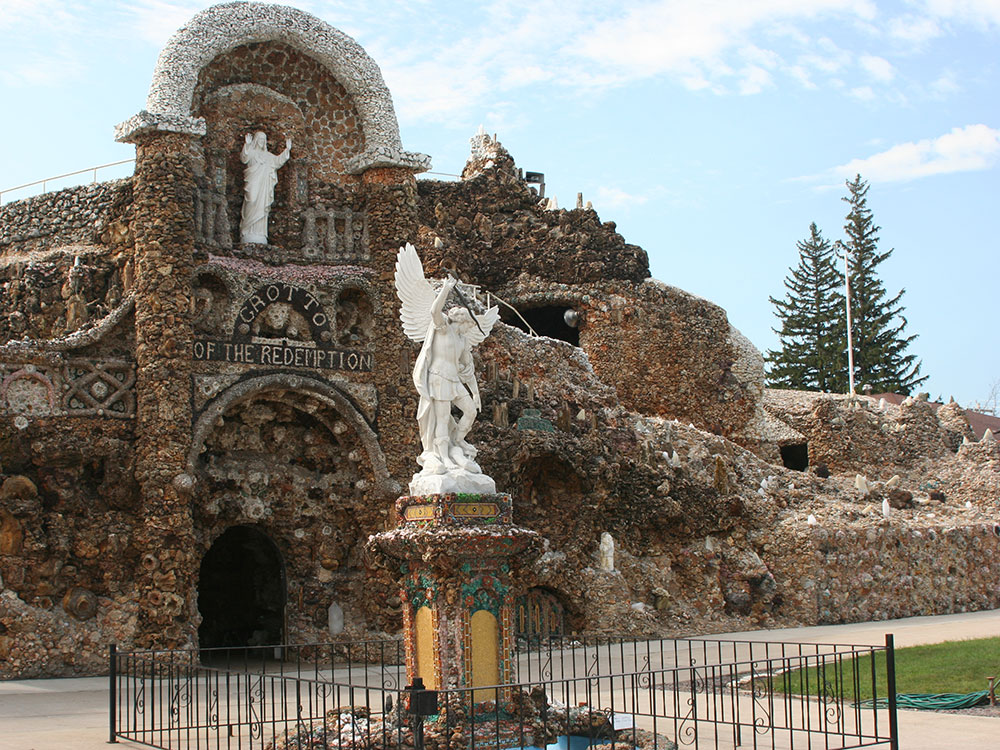
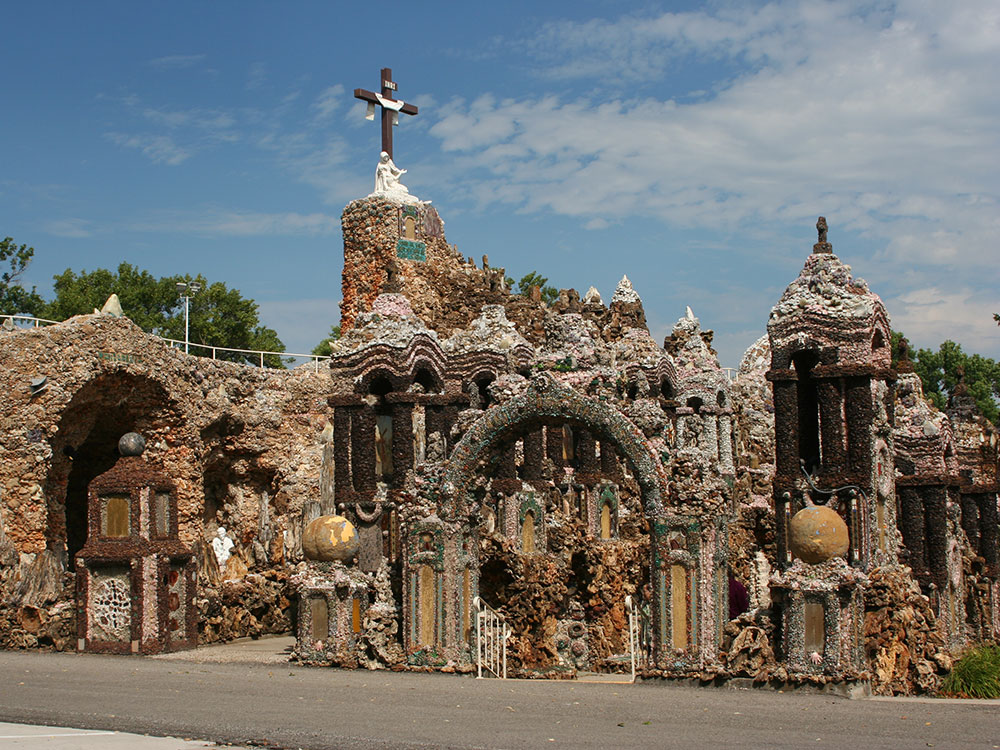
Religious shrine of nine grottos depicting scenes in the life of Jesus, contains a large collection of minerals and petrifications and is believed to be the largest grotto in the world.
General Information
- Hours:
-
Shrine grounds open 24 hours a day, 7 days a week
Guided tours: Daily, April through October, 10am to 5pm
Gift shop: May through October, 9am to 5pm; November through April, 9am to 4pm - Fees:
-
Admission: Free
Donations appreciated - Pet Policy:
- Well-behaved pets are permitted on the grounds when kept on a leash.
- Closest city with hotels:
- Algona, IA (15 mi)
- Seasons:
- All year; late spring through fall offers the best weather and full access to guided tours.
- Location:
- 208 1st Ave NW, West Bend, IA 50597
- Website:
- westbendgrotto.com
How to Get There
From Algona (15 mi): Take US-169 south to IA-15, continue west toward West Bend, then follow local signs to the Grotto of the Redemption at 208 1st Ave NW in West Bend.
Overview
The Shrine of the Grotto of the Redemption is a religious shrine in West Bend, Iowa, in the Roman Catholic Diocese of Sioux City. A conglomeration of nine grottos depicting scenes in the life of Jesus, it contains a large collection of minerals and petrifications and is believed to be the largest grotto in the world.
It includes a museum with precious and semiprecious stones from throughout the world, and photos and artifacts about the construction of the shrine.
History
Father Paul Dobberstein was a German immigrant ordained in 1897. He became critically ill with pneumonia and promised to build a shrine to the Virgin Mary if she interceded for him. After his recovery, he began stockpiling rocks and precious stones. Construction of the Grotto began in 1912 and continued year round for 42 years.
Father Dobberstein used the knowledge and skills gained during construction of his first grotto honoring Our Lady of Lourdes while training at St. Francis Seminary in St. Francis, Wisconsin. His method was to set fancy rocks and gems into concrete. In 1946, Father Louis Greving began helping Dobberstein with the construction. The Grotto covered an area the size of a city block when Dobberstein died in 1954. Matt Szerensce helped contribute the work until his retirement in 1959. The Grotto was maintained by Deacon Gerald Streit from 1994 until his retirement in the early 2000s.
History
Father Paul Dobberstein, a German-born priest, began building the grotto in West Bend in 1912 to fulfill a vow he made while seriously ill. He worked on it for 42 years until his death in 1954, and it is considered the largest grotto in the world, built of minerals, fossils and gemstones.
Things to Do
Walk Through the Grottos
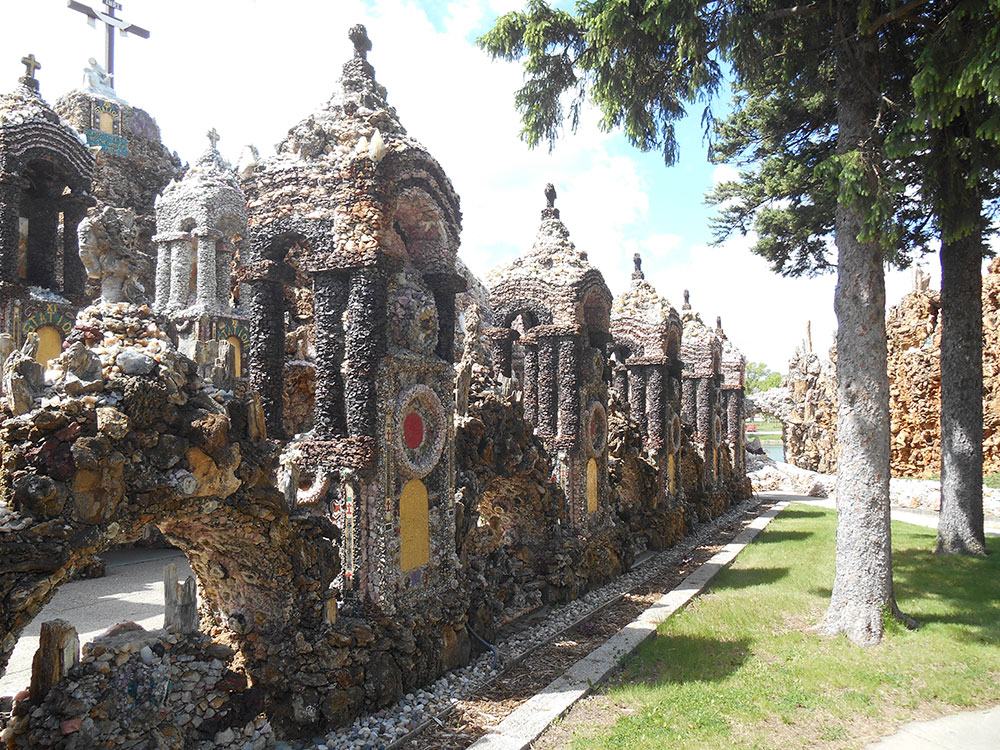
Nine grottos depict the life of Christ.
See the Gemstones
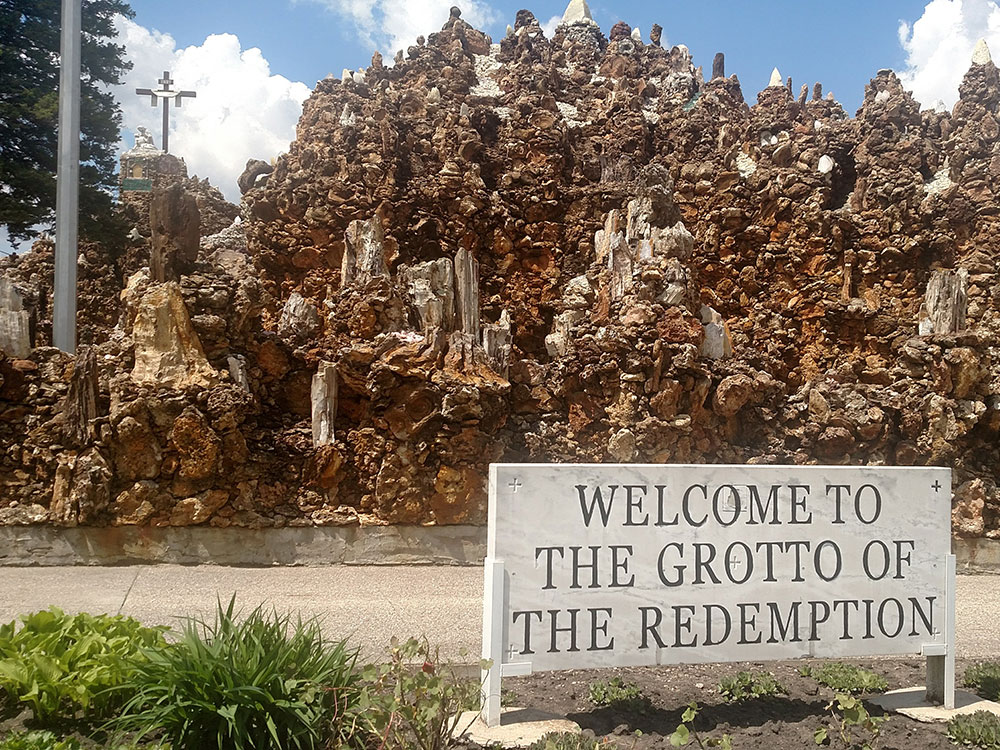
Shells, petrified wood and gems cover the walls.
Visit the Museum
The museum displays minerals and the story of the grotto.
Visit the Church
SS. Peter and Paul Church is next door.
This article uses material from the Wikipedia article "Grotto of the Redemption", which is released under the Creative Commons Attribution-Share-Alike License 3.0