Minneapolis Travel Guide
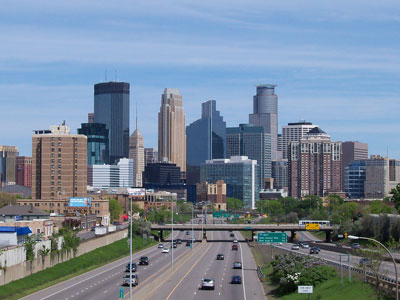
Most populous city in Minnesota lying along both banks of the Mississippi River, just north of its confluence with the Minnesota River, and adjoins Saint Paul, the state's capital with one of the nation's best park systems, the city is abundant in water, with thirteen lakes, wetlands, creeks, and waterfalls.
Places to See in St. Paul
Greg Gjerdingen from Willmar, USA, CC BY 2.0, via Wikimedia Commons; Image Size Adjusted

Bell Museum
Minnesota’s official natural history museum features world-class wildlife dioramas, interactive science exhibits, and a state-of-the-art planetarium that explores the wonders of the universe.
Greg Gjerdingen from Willmar, USA, CC BY 2.0, via Wikimedia Commons; Image Size Adjusted
Como Park Zoo & Conservatory
Free-admission attraction combining a zoo, botanical conservatory, gardens, and educational exhibits featuring animals and plants from around the world.
Greg Gjerdingen from Willmar, USA, CC BY 2.0, via Wikimedia Commons; Image Size Adjusted
Harriet Island Regional Park
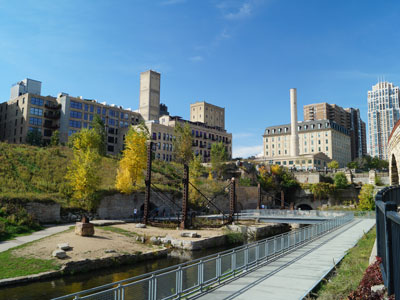
Scenic riverfront park featuring expansive green spaces, walking paths, event venues, and panoramic views of the Mississippi River and the downtown skyline.
Greg Gjerdingen from Willmar, USA, CC BY 2.0, via Wikimedia Commons; Image Size Adjusted
Minnesota History Center
Interactive museum exploring Minnesota’s history through immersive exhibits, artifacts, stories, and educational programs that bring the state's past to life.
Greg Gjerdingen from Willmar, USA, CC BY 2.0, via Wikimedia Commons; Image Size Adjusted
Minnesota Museum of American Art
Art museum dedicated to American art featuring historic and contemporary works that explore diverse artistic voices, cultural experiences, and creative expression across the United States.
Greg Gjerdingen from Willmar, USA, CC BY 2.0, via Wikimedia Commons; Image Size Adjusted
Minnesota Transportation Museum
Historic railway museum preserving Minnesota's transportation heritage through vintage locomotives, railcars, exhibits, and excursion train experiences.
Greg Gjerdingen from Willmar, USA, CC BY 2.0, via Wikimedia Commons; Image Size Adjusted
Science Museum of Minnesota
Interactive science center featuring hands-on exhibits, live demonstrations, immersive experiences, and collections that explore the natural world, technology, engineering, and human innovation.
Greg Gjerdingen from Willmar, USA, CC BY 2.0, via Wikimedia Commons; Image Size Adjusted
Upper Landing Park
Riverfront green space featuring walking trails, public art, open lawns, and scenic views of the Mississippi River and downtown skyline.
Greg Gjerdingen from Willmar, USA, CC BY 2.0, via Wikimedia Commons; Image Size Adjusted
Wabasha Street Caves
Historic sandstone caves transformed into entertainment venues, offering guided tours that explore gangster-era history, geology, and the underground heritage of the Twin Cities.
Overview
Saint Paul is the capital of Minnesota and the "other" half of the Twin Cities, on the east bank of the Mississippi River. It is known for its historic architecture, including the Minnesota State Capitol and the Cathedral of Saint Paul, for the Victorian mansions of Summit Avenue, and for its famous Winter Carnival. It is smaller and quieter than Minneapolis and has a strong sense of history, with a lively mix of museums, neighborhoods, and parks along the river bluffs.
Visitors come to Saint Paul for the Capitol and the Cathedral, for the Science Museum of Minnesota, the Minnesota History Center, and the Como Park Zoo and Conservatory, which has free admission. They also come for the riverfront at Harriet Island, the Xcel Energy Center and Allianz Field, and the restaurants and shops of Grand Avenue and Cathedral Hill. The city is known for its independent spirit and relaxed pace, as well as for its place in the literary history of F. Scott Fitzgerald.
History
The city began as a trading post called Pig's Eye Landing, named for a bootlegger named Pierre "Pig's Eye" Parrant, and was renamed Saint Paul in 1841 after a small chapel built by Father Lucien Galtier. It grew as the head of navigation for steamboats on the Mississippi and became the territorial capital in 1849 and the state capital when Minnesota became a state in 1858. Railroad baron James J. Hill, whose Great Northern Railway was headquartered here, built a mansion on Summit Avenue, and the city grew with immigrants from Germany, Ireland, and Scandinavia. The city is also known for its early twentieth century gangster history, as a safe haven for outlaws under the "O'Connor System."
Sightseeing and Popular Landmarks
The Minnesota State Capitol, designed by Cass Gilbert, has the largest unsupported marble dome in the world, and the Cathedral of Saint Paul is a Beaux-Arts landmark with a large copper dome that dominates the skyline. Summit Avenue has one of the best-preserved Victorian streets in the United States, with the James J. Hill House and the F. Scott Fitzgerald house, and the Wabasha Street Caves offer tours of caves once used by gangsters. Rice Park downtown, the Landmark Center, and the Saint Paul Winter Carnival ice palace are other sights.
Culture and Museums
The Science Museum of Minnesota has a huge array of interactive exhibits and an Omnitheater, and the Minnesota History Center tells the story of the state's past. The Minnesota Museum of American Art and the Minnesota Transportation Museum are other museums, and the Bell Museum is a natural history museum with a planetarium. The Ordway Center for the Performing Arts hosts opera, theater, and dance, and the Saint Paul Chamber Orchestra is internationally respected.
Parks
Saint Paul has more than 170 parks and open spaces. Como Park has the zoo, the conservatory, and a lake with paddleboats, and Harriet Island Regional Park has a riverfront walk and a floating pavilion. Upper Landing Park and the Mississippi River bluffs have views and trails, and the Mississippi National River and Recreation Area runs through the city. In winter, the Winter Carnival in late January and early February has ice sculptures and outdoor events.
Sports
Saint Paul has two major professional teams. The Minnesota Wild of the NHL play at the Grand Casino Arena, formerly the Xcel Energy Center, and Minnesota United of Major League Soccer play at Allianz Field.
Seasons and Weather
Saint Paul has a humid continental climate with warm, humid summers and long, cold winters. Summer highs are in the 80s°F, winter highs are in the teens and 20s°F, and snowfall averages about 55 inches. Spring and fall are short but pleasant, and summer is the best time for the riverfront and parks, while winter is the time for the Winter Carnival and outdoor sports.
This article uses material from Wikipedia as well as information from official tourism and institutional sources. Key references include Visit Saint Paul, Minnesota History Center, Science Museum of Minnesota, Como Park Zoo and Conservatory, Minnesota State Capitol, Minnesota Wild, and National Weather Service Twin Cities. Wikipedia material is from the article "Saint Paul, Minnesota", and is available under the Creative Commons Attribution-Share-Alike License 3.0.