Upper Peninsula Travel Guide
The Upper Peninsula of Michigan, often referred to as the "U.P.," is a rugged and scenic region known for its natural beauty, outdoor activities, and unique culture. It is bordered by Lake Superior to the north, Lake Michigan to the south, and Lake Huron to the east. The U.P. is home to dense forests, pristine lakes, waterfalls, and a variety of wildlife, making it a popular destination for nature lovers and outdoor enthusiasts. Visitors can explore charming small towns, experience Native American heritage, and enjoy activities such as hiking, fishing, skiing, and snowmobiling throughout the year.
-400.jpg)
Places to See in the Upper Peninsula
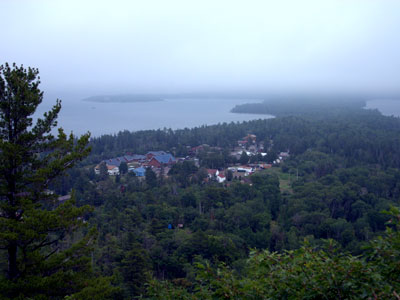
Grinnell Point and Swiftcurrent Lake from the Many Glacier Hotel
Jeff P from Berkeley, CA, USA, CC BY 2.0, via Wikimedia Commons; Image Size Adjusted


Overview
The Upper Peninsula of Michigan, often called the U.P., is a northern frontier shaped by water, stone, and time. Nearly surrounded by the vast inland seas of Lake Superior, Lake Michigan, and Lake Huron, the region feels remote and elemental, with forests that stretch to the horizon and rocky shorelines that meet restless waves.
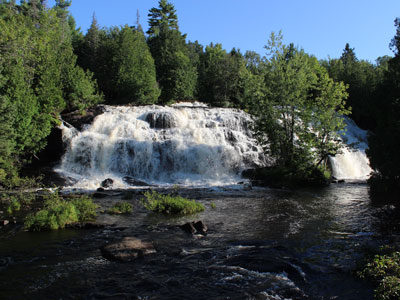
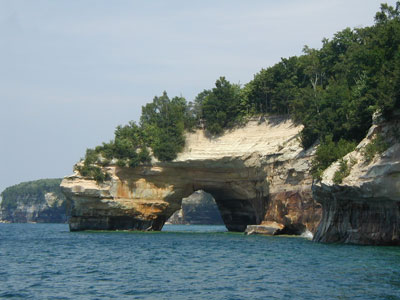
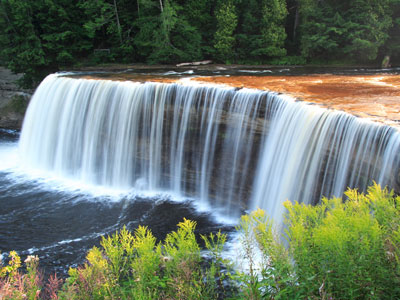
Nature is the main attraction. More than 300 waterfalls, including the thunderous Tahquamenon Falls, spill through mossy ravines, and the Lake Superior shore has sea caves, sandstone cliffs, and long sand beaches. Summer brings kayakers and hikers, autumn brings brilliant maple and birch color, and deep winter snow draws snowmobilers, ice climbers, and cross-country skiers.
Geography
The U.P. covers about 16,000 square miles, about 29 percent of Michigan’s land area but only about 3 percent of its population. It is connected to the Lower Peninsula by the five-mile Mackinac Bridge, which opened in 1957. Ancient volcanic ridges and billion-year-old bedrock, including the copper-rich Keweenaw Peninsula and the Porcupine Mountains, lie beneath boreal forest and wetlands. Lake Superior moderates the climate but brings heavy lake-effect snow, with more than 200 inches a year in the Keweenaw.
History
Ojibwe (Anishinaabe) communities have lived here for centuries. French explorers and fur traders arrived in the 1600s, and Sault Ste. Marie, founded in 1668, is one of the oldest European settlements in the Midwest. The 19th-century copper and iron boom drew waves of immigrants, including Finnish, Cornish, Italian, and French Canadian miners, and left behind mining towns, lighthouses, and shipwrecks. Their influences survive in saunas, pasties, and small-town festivals.
Cities and Towns
Marquette is the largest city, with a Lake Superior waterfront and Northern Michigan University. Houghton and Hancock anchor the Keweenaw Peninsula, Copper Harbor sits at its tip, and Munising is the gateway to Pictured Rocks. Sault Ste. Marie is home to the Soo Locks, and St. Ignace is the northern end of the Mackinac Bridge and the ferry to Mackinac Island.
National Protected Areas
Pictured Rocks National Lakeshore protects 40 miles of colorful sandstone cliffs, sea caves, and beaches on Lake Superior. Isle Royale National Park, a remote island wilderness reached by boat or seaplane, is known for its wolves and moose, and Keweenaw National Historical Park preserves the copper-mining heritage of Calumet and the surrounding area. Seney National Wildlife Refuge protects wetlands and loons, and the North Country National Scenic Trail crosses the peninsula.
State Parks and Historic Sites
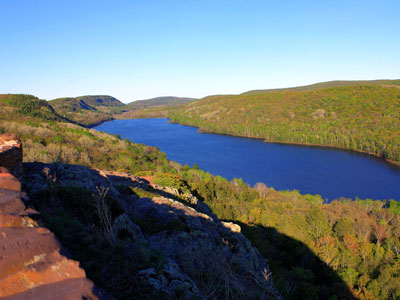
Tahquamenon Falls State Park has the Upper Falls, which are about 50 feet high and 200 feet wide, and a Lower Falls with islands reachable by rowboat. Porcupine Mountains Wilderness State Park is the largest state park in Michigan, with old-growth forest and Lake of the Clouds. Fort Wilkins Historic State Park in Copper Harbor preserves an 1844 army fort, and Fayette Historic State Park preserves an iron-smelting ghost town on Lake Michigan.
Seasons and Best Time to Visit
Summer is the main season for hiking, kayaking, camping, and lighthouses, though mosquitoes and black flies are active in late spring and early summer. Fall color usually peaks from late September to early October. Winter brings heavy snow, snowmobiling, skiing, and ice caves at Pictured Rocks, and the northern lights can be seen in any season on clear nights. Isle Royale is open from mid-April through October.
This article uses material from the Wikipedia articles and official tourism pages for the Upper Peninsula of Michigan, which are released under the Creative Commons Attribution-Share-Alike License 3.0. Additional information is from the National Park Service pages for Pictured Rocks National Lakeshore, Isle Royale National Park, and Keweenaw National Historical Park, Pure Michigan, and the Michigan Department of Natural Resources.
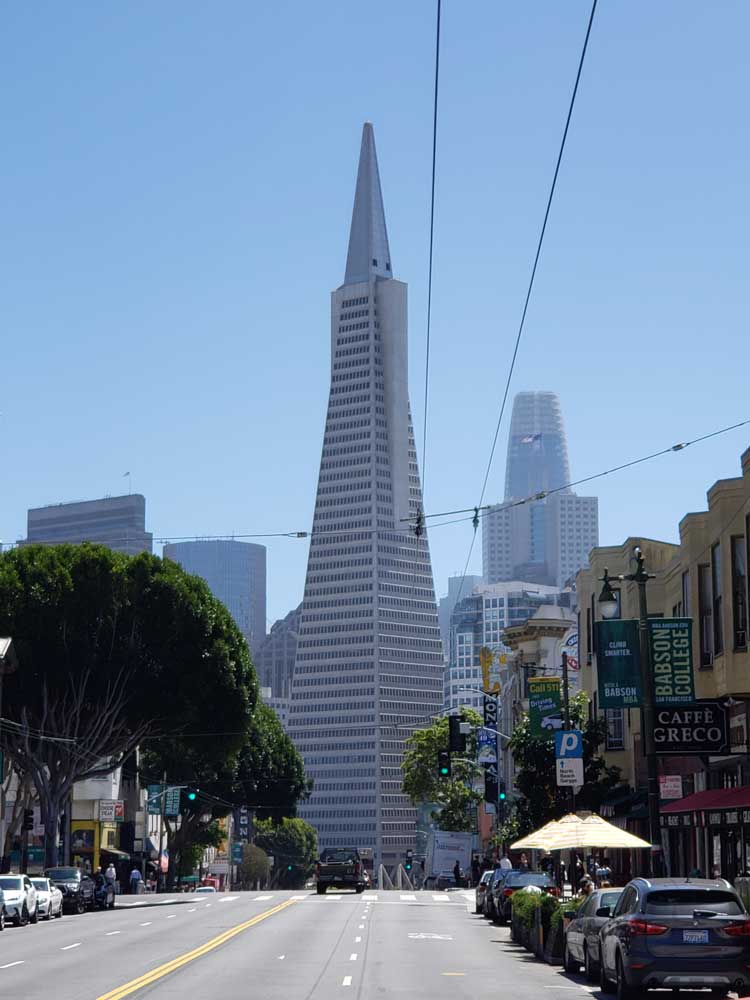
Transamerica Pyramid Building
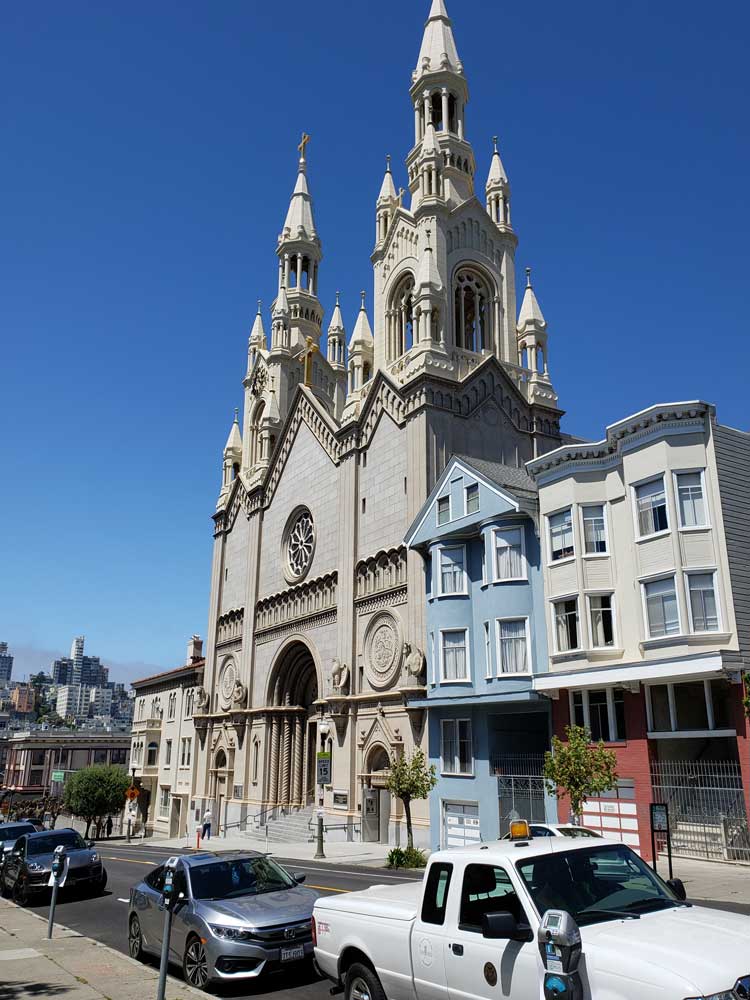
Saints Peter And Paul Church