Start your morning at the Harry Hampton Visitor Center, named for the journalist and conservationist who led the campaign to protect the forest. Exhibits introduce the floodplain ecosystem, the champion trees, and the wildlife that lives in the park, and displays explain how regular flooding shapes and nourishes the forest. Rangers can share current conditions for the trails and Cedar Creek.
Congaree National Park: Champion Trees, Cypress Swamps, and Quiet Waters
1 Day
Just 20 miles from Columbia, South Carolina, Congaree National Park protects the largest intact expanse of old-growth bottomland hardwood forest in the southeastern United States. Along the floodplain of the Congaree River, giant loblolly pines, bald cypress, and water tupelo form a canopy that reaches over 150 feet, one of the tallest temperate deciduous forest canopies remaining in the world. Saved from logging by a grassroots campaign led by local conservationists such as Harry Hampton, the area became a national monument in 1976 and a national park in 2003. This one-day itinerary combines the park's famous boardwalk, a hike to an oxbow lake, and an afternoon paddle on Cedar Creek. Longer and more remote routes such as the Kingsnake, Oakridge, and River trails are left out, as they are better suited to a full day of hiking or an overnight trip.
Day 1
The day begins at the Harry Hampton Visitor Center, where the boardwalk and most trails start. There is no entrance fee, and the park is open 24 hours a day. Spring and fall offer the most comfortable conditions, while summer is hot, humid, and buggy, so check the park's mosquito forecast and bring repellent. The forest floods several times a year, usually after heavy rain in winter and spring, so check trail and boardwalk conditions before you go. Canoe and kayak rentals are available from outfitters near the park, and ranger-led canoe tours are offered in season.
1
2
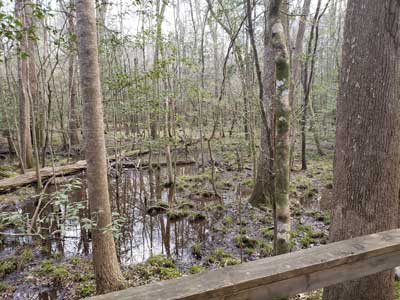
Walk the 2.4-mile Boardwalk Loop, the most popular way to experience the old-growth forest. The elevated boardwalk winds above the forest floor past towering loblolly pines, massive bald cypress surrounded by their knobby "knees," and dark, still sloughs. Interpretive signs along the way describe the trees and wildlife, and benches invite you to pause and listen for barred owls and pileated woodpeckers. The boardwalk is accessible and takes about an hour to complete at a relaxed pace.
3
From the boardwalk, continue onto the Weston Lake Loop, a flat trail of about 4.6 miles that leads deeper into the forest to Weston Lake, an oxbow lake left behind when the Congaree River changed course. Look for turtles basking on logs, wading birds along the shore, and river otters in the water. The trail passes some of the park's largest trees and offers a quieter, more immersive experience than the boardwalk. Trails can be muddy or flooded, so wear waterproof shoes.
4
In the afternoon, launch a canoe or kayak on Cedar Creek, which flows through the heart of the park along a 15-mile marked canoe trail. Paddling beneath the towering canopy offers a completely different view of the forest, with cypress trees rising from the dark water and sunlight filtering through the leaves. Watch for herons, turtles, and river otters as you glide along the peaceful creek. Shorter out-and-back paddles from the Cedar Creek landings are perfect for a half-day trip.
5
End the day with a short walk on the Bluff Trail, a 0.7-mile path along a ridge near the visitor center, as the forest quiets in the evening light. Congaree is an International Dark Sky Park, and on clear nights the stars shine brightly above the treetops. If you visit in late May or early June, the park's famous synchronous fireflies light up the forest at dusk, though viewing requires a lottery or reservation, so check the park website in advance.