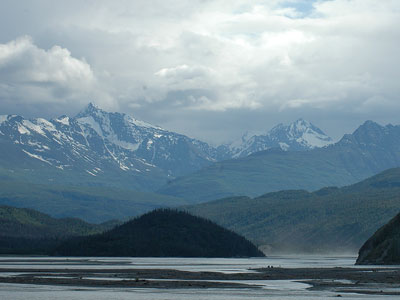

Arrive at the park's main visitor center in Copper Center, on the Richardson Highway along the park's western edge. Exhibits and a film introduce the park's immense mountains, glaciers, and the Ahtna Athabascan people whose homeland includes the Copper River valley. On clear days, the short Boreal Forest Trail offers views of the Wrangell Mountains, including Mount Drum, Mount Wrangell, and Mount Sanford.
Wrangell-St. Elias National Park: Glaciers, Giant Peaks, and the Kennecott Mill Town
3 Days
Wrangell-St. Elias National Park and Preserve is the largest national park in the United States, covering about 13.2 million acres, roughly the size of six Yellowstones. Four major mountain ranges meet here, and the park holds nine of the 16 highest peaks in the country, including Mount St. Elias at 18,008 feet. Glaciers cover about a third of the park, and in the heart of it all stands Kennecott, a historic copper mining town whose towering red mill climbs a hillside above the Kennicott Glacier. Because the park is so vast and remote, reaching its most visited area requires a long drive and a slow gravel road, so three days is ideal for an average traveler. This itinerary travels from the Copper Center Visitor Center to Chitina, follows the McCarthy Road into the park, and spends a full day exploring Kennecott and the Root Glacier. The quieter Nabesna Road, the strenuous Bonanza Mine Trail, and the remote coastal areas near Yakutat are left out to keep the trip relaxed.
Day 1
The first day travels from Anchorage toward the park along the Glenn and Richardson highways, a drive of about four hours to Copper Center with spectacular mountain scenery along the way. Visitor centers in the park are open from about mid-May through mid-September, and June through September is the best time to visit. Fill your gas tank and stock up on supplies, as services become very limited beyond Glennallen.
1
2
Follow the paved Edgerton Highway east to the small town of Chitina, at the confluence of the Copper and Chitina rivers. The road passes lakes and forests with views of the Wrangell Mountains, and Chitina is a good place to spend the night before tackling the McCarthy Road the next morning.
3
In the evening, walk down to the banks of the Copper River near Chitina, where fishwheels turn in the swift glacial current and dipnetters catch salmon in summer. More than 2 million salmon spawn in the Copper River watershed each year, and its king and sockeye salmon are famous across the country. Watching the fishwheels at work offers a glimpse into a way of life that has sustained people along this river for generations.
Day 2
Today follows the McCarthy Road into the heart of the park. The gravel road runs about 59 miles from Chitina along the bed of the old Copper River and Northwestern Railway, and it is a slow, bumpy drive of about two to three hours. Many rental car companies do not allow their cars on it, so check your rental agreement or take a shuttle. The road ends at a footbridge over the Kennicott River, and vehicles must be left in the parking areas before the bridge.
1
Set out from Chitina on the McCarthy Road, which crosses the Copper River and follows the old railroad grade through forest, past small lakes, and along rivers. About 17 miles in, cross the Kuskulana Bridge, a historic railroad bridge that spans a deep river gorge, and stop to take in the dramatic view. Drive slowly, as old railroad spikes and potholes can cause flat tires.
2
At the end of the road, cross the footbridge over the Kennicott River and walk into McCarthy, a tiny, remote town with historic frontier-era buildings, rustic lodges, and a handful of restaurants. Once a lively spot for miners from nearby Kennecott, McCarthy today has a small year-round population and a quirky, welcoming character. Settle into your lodging and enjoy lunch in town.
3
Take the shuttle about 5 miles up the road to Kennecott, a National Historic Landmark where five mines produced a fortune in copper from 1911 to 1938. Stop at the Kennecott Visitor Center, open from late May through mid-September, and wander among the stabilized red-and-white buildings, including the general store, power plant, and bunkhouses. The massive mill climbing the hillside above the Kennicott Glacier is one of the most iconic sights in Alaska. Spend the evening in Kennecott or McCarthy beneath the towering mountains.
Day 3
Today is spent exploring Kennecott and the glaciers that surround it. Guided mill tours and glacier hikes are offered by local outfitters in summer, so reserve them in advance. Bring sturdy shoes, layers, and rain gear, and if you plan to walk on the glacier, join a guided tour or bring proper traction devices. In the late afternoon, begin the return trip along the McCarthy Road, or stay an extra night to break up the drive back to Anchorage.
1
Join a guided tour of the 14-story concentration mill, where copper ore was crushed, sorted, and processed before being shipped out by railroad. Climbing through the building's narrow stairways and walkways, you will see original machinery and learn about the miners and families who lived and worked in this isolated company town. The views from the upper floors across the rubble-covered Kennicott Glacier are spectacular.
2
Hike the Root Glacier Trail, which leaves Kennecott and follows the edge of the Kennicott Glacier across rocky moraine to the Root Glacier. Along the way, pass old mining ruins and enjoy views of the surrounding peaks. At the glacier's edge, you can step onto the ice with proper traction devices, or join a guided glacier hike to explore blue pools, ice caves, and deep crevasses safely. It is one of the most accessible glacier experiences in Alaska.
3
If weather allows, end your visit with a flightseeing trip from McCarthy, the best way to grasp the enormous scale of the park. Flights soar over vast icefields, towering peaks, and glaciers that stretch for dozens of miles, and on clear days some routes reach the high summits of the Wrangell and St. Elias mountains. It is an unforgettable way to say goodbye to the largest national park in the country.