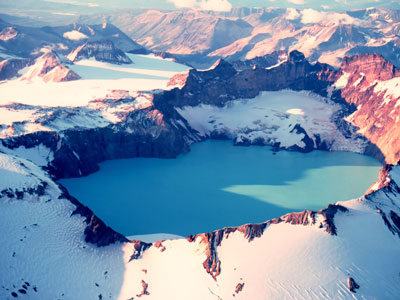

Begin in King Salmon, the gateway to Katmai and home to the park's headquarters. This small community on the Naknek River is reached only by air and has lodges, fishing guides, and a few restaurants. From the river, floatplanes depart for the short, scenic flight to Brooks Camp, passing over tundra, lakes, and the wide expanse of Naknek Lake.
Katmai National Park: Brown Bears, Brooks Falls, and the Valley of Ten Thousand Smokes
2 Days
Katmai National Park and Preserve protects about 4.1 million acres of volcanoes, lakes, rivers, and rugged coastline on the Alaska Peninsula. It is world-famous for its brown bears, with about 2,200 living in the park, one of the largest protected populations on Earth. Each summer, bears gather at Brooks Falls to catch sockeye salmon leaping up the falls, one of the most iconic wildlife scenes in the world. The park also holds the Valley of Ten Thousand Smokes, buried under hundreds of feet of ash in June 1912 when Novarupta erupted in the largest volcanic eruption of the 20th century. This two-day itinerary centers on Brooks Camp, pairing a full day of bear watching with a bus tour into the volcanic valley. Remote coastal bear-viewing areas such as Hallo Bay are left out, as they require separate floatplane charters, and backcountry trips into the valley require wilderness experience.
Day 1
The trip begins with a flight of about one hour from Anchorage to King Salmon, followed by a floatplane hop of about 30 minutes to Brooks Camp on the shore of Naknek Lake. Brooks Camp is open from June through mid-September, with peak bear viewing in July and September. Lodging at Brooks Lodge and the Brooks Camp Campground is extremely limited and books far in advance, so many visitors stay in King Salmon. Pets are not allowed at Brooks Camp.
1
2
After landing on the beach at Brooks Camp, every visitor attends a short bear safety orientation at the visitor center before exploring. Rangers explain how to keep a safe distance from bears, which roam freely through camp, and how to behave if one approaches. Afterward, take time to explore the camp, which sits at the mouth of the Brooks River and holds archaeological sites showing human use of the area for thousands of years, including a reconstructed traditional dwelling.
3
Walk to the platform near the mouth of the Brooks River, where bears often fish, rest, and wander along the riverbanks and beaches. The floating bridge across the river is sometimes closed temporarily when bears are nearby, so be patient and follow ranger instructions. This is an excellent spot to watch young bears and mothers with cubs, especially early and late in the season.
4
Follow the trail of about 1.2 miles through the forest to the elevated viewing platform at Brooks Falls, the most famous place in the world to watch brown bears catch leaping sockeye salmon. In July, dozens of bears may gather at the falls, with the largest and most dominant bears claiming the best fishing spots at the lip of the falls. During busy periods, rangers manage a waitlist and limit the time on the main platform, so plan to spend the afternoon here. Watching a bear snatch a salmon from midair is an experience you will never forget.
Day 2
Today travels into the volcanic heart of the park on the daily bus tour from Brooks Camp to the Valley of Ten Thousand Smokes, which runs from early June through mid-September. The tour is a full-day trip along the park's only road, so reserve it in advance and pack a lunch, water, and warm layers. Return to Brooks Camp in the afternoon for a final round of bear watching before your flight back to King Salmon.
1
Board the bus for the 23-mile ride along the only road in the park, traveling from Brooks Camp through forest and tundra toward the Aleutian Range. A guide shares the story of the 1912 eruption along the way, and bears and moose are sometimes spotted from the bus. The road ends at the Robert F. Griggs Visitor Center at Three Forks Overlook, named for the botanist whose National Geographic expeditions explored the steaming valley and led to the creation of Katmai National Monument in 1918.
2
From Three Forks Overlook, gaze across the Valley of Ten Thousand Smokes, a 40-square-mile valley filled with ash up to 700 feet deep, framed by volcanic peaks. When explorers arrived in 1916, thousands of fumaroles were steaming across the valley floor, and a few still steam today. Hike the Ukak Falls Trail, which descends about 1,000 feet to the valley floor, where rivers have carved narrow, colorful canyons through the ash. The climb back up is steep, so take your time.
3
Return to Brooks Camp in the afternoon and make one last visit to the Brooks Falls platform or the river's lower platform. Bears are often active in the evening, and the softer light makes for excellent photography. Then catch your floatplane back to King Salmon, flying over the shimmering waters of Naknek Lake on the way out.