
Begin your morning at the Indiana Dunes Visitor Center on State Road 49 in Porter, the main gateway to the park. Exhibits and a short film introduce the dunes, wetlands, and remarkable plant diversity of the southern Lake Michigan shore, along with the conservationists who fought to protect it. Rangers can share current beach and trail conditions and help you plan your route along the lakeshore.
Indiana Dunes National Park: Lake Michigan Beaches, Living Dunes, and Prairie Heritage
1 Day
Stretching for about 15 miles along the southern shore of Lake Michigan, Indiana Dunes National Park protects sandy beaches, towering dunes, wetlands, prairies, and woodlands just an hour from Chicago. For its size, it is one of the most biologically diverse parks in the system, with more than 1,100 kinds of native plants, from oak savannas and prickly pear cactus to rare bog plants. Authorized as a national lakeshore in 1966 after a long campaign by conservationists, it became the 61st national park in 2019. Because the park is made up of separate areas strung along the lakeshore, this one-day itinerary moves from the visitor center west to the beaches near Gary and Portage, then east through the park's historic sites to finish at sunset on Mount Baldy. Longer hikes such as the Cowles Bog and Tolleston Dunes trails, and the adjacent Indiana Dunes State Park, are left out to keep the day relaxed.
Day 1
The day follows the lakeshore by car, with short drives of 15 to 30 minutes between stops along US-12, US-20, and State Road 49. Late spring through early fall offers the best beach weather, while fall brings colorful foliage and fewer crowds. Bring sunscreen, water, and sturdy shoes, as walking in soft sand can be tiring, and stay on marked trails to protect the fragile dunes. A park entrance fee is required for vehicles.
1
2
Drive west to West Beach in Gary, home to a long sandy beach that is lifeguarded in summer. Walk the Dune Succession Trail, a loop of about one mile with stairways and boardwalks that climbs over the dunes and shows how the landscape changes from bare beach to grasses, shrubs, and finally forest. From the top, enjoy sweeping views of Lake Michigan, and on clear days the Chicago skyline rises across the water. Spend some time relaxing on the beach or wading into the lake before moving on.
3
Continue to the Portage Lakefront and Riverwalk, a modern lakeshore area with a beach, a pavilion, and a paved riverwalk that leads out to a breakwater pier where the Burns Waterway meets Lake Michigan. It is one of the park's best spots for birdwatching and for views along the shoreline, especially during spring and fall migration.
4
Head east to Chellberg Farm, a preserved farmstead that tells the story of a Swedish immigrant family who farmed here from the late 1800s, with a red barn, farmhouse, and outbuildings set among fields and woods. A short trail connects the farm to the Bailly Homestead, where fur trader Joseph Bailly established a trading post in 1822, and to the walled Bailly Cemetery, which preserves the legacy of one of the region's earliest Euro-American families.
5
Drive to the lakeshore community of Beverly Shores to see the Century of Progress homes, five experimental houses built for the 1933 Chicago World's Fair to showcase the future of residential design and later moved here by barge and truck. Each home displays bold ideas of the era, from glass walls to new building materials. The homes are privately leased and can be viewed from the road along Lake Front Drive, with interiors open only during special tours.
6
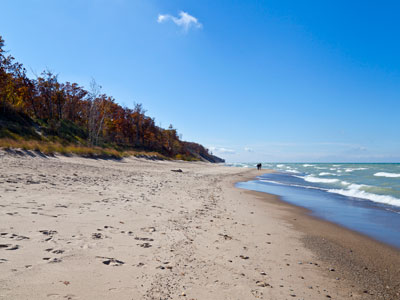
End the day at Mount Baldy near Michigan City, a towering "living dune" that is slowly moving inland as the wind pushes its sand. Follow the beach trail to the shoreline of Lake Michigan, and note that the summit of the dune is open only on ranger-guided hikes to protect visitors and the fragile landscape. As the sun sets over the lake, the sand glows gold and the Chicago skyline may appear on the horizon, a perfect finale to a day along the dunes.